
I remember standing in a sodden field back in ’98, watching a dozen hungry ewes strip a paddock down to the bare dirt because I’d been too optimistic about the spring growth. I thought I was managing the land, but I was really just gambling with my margins. Most of the fancy agricultural consultants will tell you that success is about high-input fertilizers or some new, expensive chemical spray, but they’re selling you a dream that doesn’t account for a wet May. The truth is much simpler and far more disciplined: if you want to stop chasing your tail, you need to learn how to build a grass wedge that actually holds up when the weather turns foul.
I’m not here to give you a lecture on botanical theory or show you a shiny spreadsheet that looks good in a boardroom. I’m going to tell you how to manage your rotation so you have a buffer of forage when the rain won’t stop, and how to avoid the mistake of overgrazing the very grass you’ll need to survive the autumn. We’ll look at the hard numbers, the timing of your moves, and exactly how to keep your stock fed without breaking the bank.
Table of Contents
Guide Overview
Tools & Supplies
- Utility knife or heavy-duty shears for cutting sod
- Hand trowel or shovel for shaping the base
- Measuring tape for precision
- Fresh sod or turf rolls (approx. 2-3 sq ft)
- Garden soil or topsoil (1 small bag)
- Water spray bottle for hydration
Step-by-Step Instructions
- 1. First, you need to stop looking at your fields as one big green carpet and start looking at them as a series of individual fuel tanks. You can’t build a wedge if you don’t know what you’re working with. Take a walk through your paddocks when the ground is firm—not when it’s a bog—and assess your current sward height. If you don’t know your starting point, you’re just guessing, and guessing is a quick way to find yourself buying expensive bagged feed in November.
- 2. Get your measurements right; we aren’t doing garden landscaping here. You need to decide on your target height for grazing and your target height for recovery. Most of the lads I know try to graze it down to the dirt, but that’s a recipe for disaster. You want to aim for a residual height—usually around 4 or 5 centimetres—that allows the plant to bounce back before the weather turns or the soil gets too poached.
- 3. Map out your rotation based on your stocking density, not just your gut feeling. This is where most people trip up. You have to calculate how many head you actually have and how much they can realistically clear in a set number of days. If you’ve got a heavy set of cattle on ground that’s already soft from a week of rain, your wedge is going to collapse faster than a cheap gate.
- 4. Set your “sacrifice” area or your reserve. You need to identify a portion of your forage that stays strictly off-limits during the peak of the season. This isn’t about being stingy; it’s about insurance against a bad spring. If you graze every last blade of grass in May, you’ll be staring at bare earth and empty stomachs by August when the growth inevitably stalls.
- 5. Implement the move. This is the actual “wedge” part—moving the animals to fresh ground before they start eating the roots. The goal is to keep them on the “front” of the growth. If you see them starting to linger and nibble on the old, stemmy stuff, you’ve waited too long. You want them moving through the grass like a controlled fire, cleaning it up and leaving it ready to regrow, rather than trampling it into a mess.
- 6. Keep a sharp eye on the weather and the soil. I don’t care what your written plan says; if the rain hasn’t stopped for four days, you need to adjust your rotation. A grass wedge is a living thing, not a static spreadsheet. If the ground is getting soft, you move the stock to higher, firmer ground or bring them in, otherwise you’re just paying to turn your best pasture into a muddy graveyard.
Understanding How to Build a Grass Wedge

Before you start moving fences, you need to understand that a grass wedge isn’t just a way to partition a field; it’s a way to manage your bank balance. Most people jump straight into the physical labor without considering the grass wedge design principles that actually make the system work. You aren’t just dividing hectares; you are creating a rolling buffer of forage. If you design a system where the cows finish a paddock just as the next one is hitting its peak nutritional value, you’ve won half the battle. If you don’t, you’ll find yourself staring at a field of rank, stemmy grass that’s more straw than nutrition, or worse, a patch of bare earth that’ll invite every weed in the county.
Don’t go thinking this is a “set and forget” job. Even the best setup requires regular grass wedge maintenance tips to stay effective. I’ve seen plenty of lads invest in high-end electric fencing only to have it fail because they didn’t account for the ground sloping or the heavy soak in a wet October. You have to keep an eye on your gate placements and wire tension; if your boundaries aren’t tight, your stock will find the one weak spot and turn your carefully managed forage into a free buffet in the wrong paddock.
Key Things to Know
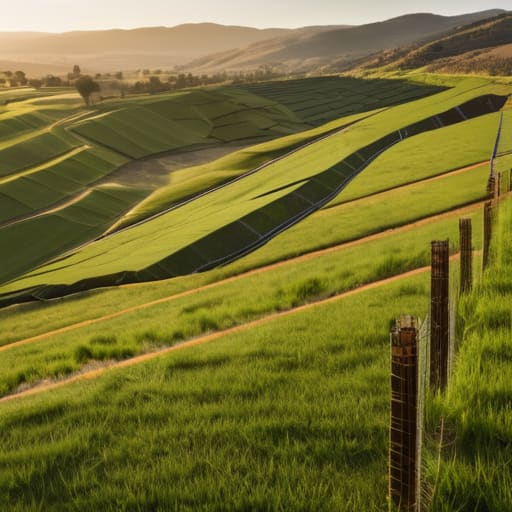
Before you go out and start moving fences, you need to understand that a grass wedge isn’t just a way to tidy up a field; it’s your primary tool for managing the bank balance. If you ignore the ground and the rainfall, you’re just building a fancy way to starve your stock. I’ve seen men spend a fortune on high-end electric fencing only to realize they’ve put the paddock in a hollow that turns into a bog by November. You have to consider grass wedge design principles that account for the actual topography of your land, not just what looks neat on a map.
Don’t get caught up in the “gear” trap, either. You don’t need a shed full of specialized gadgets to get this right. When it comes to grass wedge installation tools, a decent pair of fencing pliers, a sturdy post driver, and some reliable polywire will do more for you than any overpriced kit sold at the mart. The real trick is ensuring the structural integrity of your perimeter. If a heifer can find a weak spot in a corner, she’ll be out in the hedgerow before you’ve finished your tea, and that’s just more money walking away.
Five Ways You’ll Likely Mess Up Your Grass Wedge
- Stop looking at the calendar and start looking at the soil. If you try to set your rotation based on what the textbook says you should do in May, but you’ve had three weeks of sodden ground and no sun, your wedge is dead before it starts. The weather dictates the pace, not your diary.
- Don’t get greedy with the stocking density. I’ve seen many a young lad try to squeeze an extra ten head onto a paddock because the grass looks lush, only to find they’ve turned the field into a mud bath by Tuesday. A wedge only works if the animals aren’t eating the roots into oblivion.
- Watch your residual height like a hawk. If you let them graze it down to the dirt, you aren’t “maximizing utilization,” you’re just killing your regrowth and inviting weeds to take over the space where your forage should be. Leave enough leaf to get that engine started again.
- Check your fences before you move the stock. There is nothing more expensive than a cow finding a gap in a temporary electric fence because you were too rushed to check the tension. A broken fence means your controlled grazing becomes a free-for-all, and your wedge vanishes overnight.
- Keep your eyes on the actual growth, not the theoretical yield. You can have the best nutrients and the best seed in the world, but if the ground is too wet to carry the weight or the temperature drops, that grass isn’t coming. Adjust your numbers to what is actually happening in the field, not what you wish was happening.
The Bottom Line on Grass Management
If you aren’t building a grass wedge, you’re essentially flying blind and leaving money on the table every time you turn out your stock.
Forget the fancy gadgets; a wedge only works if you actually respect the ground and don’t try to push more mouths onto it than the rainfall can support.
Watch your margins, not just your sheep—every inch of wasted forage is just cash leaking out of your pocket and into the soil.
The Bottom Line on Grass

At the end of the day, building a grass wedge isn’t about following some fancy nutritional spreadsheet or buying the latest paddock management app; it’s about having the discipline to watch the soil and the sward. You need to keep your eyes on the residual height, ensure your rotation isn’t outrunning your regrowth, and, most importantly, never let your stock graze the profit right out of the ground. If you ignore the timing of your breaks or fail to account for a wet spell that slows everything down, you aren’t managing a wedge—you’re just watching your margins disappear into the mud. It’s a simple cycle of grass, feet, and cash flow, and if you get the forage right, the rest of the numbers usually follow.
I’ve seen plenty of lads try to shortcut this by overstocking when the sun is out, only to find themselves staring at bare earth and empty stomachs when the weather turns. Don’t be that person. Farming is a game of patience and observation, and a well-managed grass wedge is the best insurance policy you can have against a bad season. It won’t make you a millionaire overnight, but it will stop you from making the expensive mistakes that keep you awake at night. Get your system in place now, while the ground is working with you, so that when the hard years come, you’re actually prepared to weather them.
Frequently Asked Questions
How much extra work is this actually going to add to my daily routine once the weather turns sour?
It’ll add an hour of walking the fences and checking the gates, but it’ll save you ten hours of chasing a mob of hungry ewes through a bog. When the rain starts coming down sideways, you won’t be scrambling to move stock because they’ve eaten the ground down to the dirt. If you’ve planned your rotation, the weather just dictates the pace; it doesn’t change the math. Plan for the mud, or you’ll pay for it.
Do I need to change my entire grazing rotation, or can I fit this into the way I'm already moving the stock?
You don’t need to tear up your whole system, but you can’t just bolt this on like a new trailer hitch. If your current rotation is a mess, a grass wedge won’t fix it; it’ll just highlight the gaps. Start by adjusting your current moves. Use the wedge to bridge the gap between your heavy grazing and your recovery periods. It’s about fine-tuning the timing, not reinventing the wheel every Tuesday.
At what point does the cost of the fencing and the extra time spent moving them stop being worth the extra bit of grass?
It stops being worth it the moment your labour costs more than the weight gain you’re chasing. If you’re spending three hours a day wrestling with electric polywire just to squeeze an extra ten kilos of grass out of a corner field, you’ve lost the plot. I look at the margins. If the extra forage doesn’t cover the diesel, the fence rolls, and your own time, you aren’t farming—you’re just playing in the mud.
