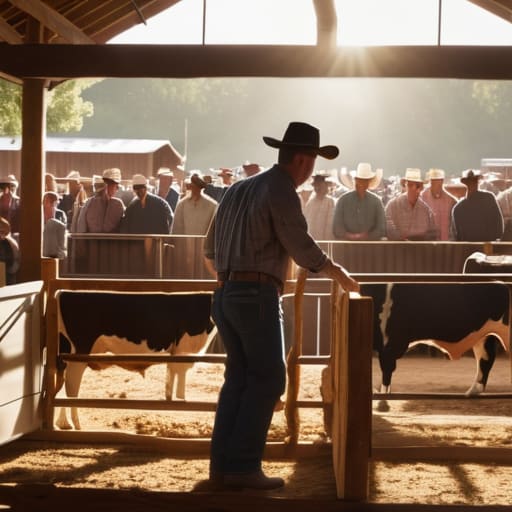
Understanding how country shows and markets work.

Why the Show Still Matters

I remember standing in the auction ring twenty years ago, watching a man pay a premium for a bull that looked like a champion but had the temperament of a cornered badger. He was so busy admiring the coat and the frame that he completely missed the way the animal was shifting its weight on its hocks. Most people think understanding how country shows and markets work is about learning how to groom a fleece or how to talk to a buyer, but they’ve got it backwards. If you’re looking for a lesson in agricultural marketing or how to win a blue ribbon, you’ve come to the wrong place; I’m more interested in why that man lost three hundred pounds the moment he walked back through his farm gate.

I’m not here to sell you a dream or a new way of doing things that requires a shiny brochure to explain. What I’ll give you is the truth about where the money actually moves when the gates open and the shouting starts. We’re going to look at the real margins behind the spectacle, from the cost of transport to the actual value of a pedigree versus a practical animal. I’ve spent forty years watching people chase shadows in the show ring, and I intend to show you how to focus on the cash flow instead.

Table of Contents

The Hidden Math Behind How Country Shows and Markets Work

The Hidden Math Behind How Country Shows and Markets Work

Most people look at a show day and see a bit of a social outing, but if you look closer, you’ll see the livestock exhibition logistics are actually a massive, high-stakes gamble on time and transport. You aren’t just paying for the entry fee or the fuel to get the trailer there; you are paying for the opportunity to prove your breeding line has value beyond the farm gate. I’ve seen men spend three months perfecting a heifer’s coat only to realize the cost of the feed and the extra labor has completely eaten the potential premium at the sale ring.

It’s easy to get swept up in the excitement of regional trade and agriculture, but you have to look at the math. When you factor in the loss of a working day on the farm, the transport costs, and the sheer physical toll, the margin for error becomes razor-thin. If you aren’t going in with a specific target price in mind, you aren’t participating in commerce; you’re just subsidizing the local vendors and the show committee with your hard-earned cash.

Livestock Exhibition Logistics Where Good Animals Meet Bad Math

Livestock Exhibition Logistics Where Good Animals Meet Bad Math

You can spend a fortune on the best pedigree bulls in the county, but if you haven’t mastered the actual livestock exhibition logistics, you’re just moving expensive meat from one field to another. I’ve seen men arrive at the showground with animals that look like a million pounds, only to spend the entire week fighting with broken trailers, inadequate water troughs, or pens that don’t hold. It’s a logistical nightmare that eats your margin before you’ve even stepped into the ring. If the transport costs more than the premium you’re aiming for, you haven’t made a sale; you’ve just paid for a very stressful commute.

Then there is the reality of the trade floor. While everyone talks about the cultural heritage through festivals, the actual business happens in the quiet corners between the cattle pens. You have to understand the local vendor market dynamics—who is actually buying, who is just window shopping, and who is looking to offload stock because they’ve overextended themselves. It’s not about the spectacle; it’s about the handshake and the price per head. If you aren’t watching the movement of the crowd as closely as you watch your stock, you’re missing the real market.

Regional Trade and Agriculture Chasing Ribbons vs Chasing Profit

Regional Trade and Agriculture Chasing Ribbons vs Chasing Profit.

The problem with most people looking at regional trade and agriculture is that they see a festival, whereas I see a ledger. There’s a lot of talk about the agricultural fair economic impact on the local village, and don’t get me wrong, the pub and the hardware shop certainly feel the bump when the crowds arrive. But for the man with the trailer, the math is different. You have to decide if you’re there to actually move stock or if you’re just participating in a bit of expensive theatre.

I’ve seen too many lads spend three months conditioning a steer just to win a blue rosette, only to realize they’ve spent more on premium feed and transport than the animal is actually worth at the mart the following Tuesday. That isn’t business; it’s a hobby. If you aren’t looking at the local vendor market dynamics to see where the actual buyers are standing, you’re just chasing a bit of glory. In this business, you can either celebrate your cultural heritage through festivals or you can pay your bills, but you’ll find it very hard to do both in the same afternoon.

Local Vendor Market Dynamics and the Cost of Tradition

You’ll see the same faces every year at the local mart—the same men selling the same feed bags and the same lads trying to sell you a tractor part that’s seen better days. There is a certain comfort in that, a sense of rural community commerce that keeps the town breathing when the weather turns and the crops fail. But don’t mistake the nostalgia for a business plan. These vendors aren’t there because they love the smell of diesel and manure; they are there because the footfall is guaranteed.

The trouble is, a lot of that trade is circular. You buy a bag of mineral lick from the man three stalls down, who then buys a new pair of boots from the shop in town, using the profit from the lick. It’s a closed loop of cultural heritage through festivals that keeps the local economy spinning, but it doesn’t always translate to a better margin for the man in the field. If you spend your afternoon chatting about the old days instead of checking the fine print on a new supplement, you’re just contributing to the scenery, not your bottom line.

Agricultural Fair Economic Impact Dont Spend Your Years Profit

When people talk about the agricultural fair economic impact, they usually point to the influx of money into the local pub or the hardware shop. And don’t get me wrong, that’s fine for the village, but it’s a different story when you’re looking at your own ledger. A fair is a massive drain on your time and your fuel, often for the slim hope of a sale that might not even cover the cost of the transport. You have to look at it as a high-stakes gamble rather than a simple outing.

If you aren’t careful, you’ll find yourself caught up in the cultural heritage through festivals side of things, spending more on grooming, feed, and fancy bedding than the animal is actually worth on the mart. I’ve seen too many lads go into debt trying to present a beast that looks like a million quid, only to sell it for a price that barely covers the diesel back home. If the math doesn’t work on the paper before you load the trailer, don’t bother loading the trailer.

Five Lessons from the Show Ring (That Won't Cost You a Year's Profit)

  • Check the ground before you check the entries. I don’t care how much a prize heifer is worth if the walk from the trailer to the ring turns her feet into a mess of mud and stress; a bruised animal is a depreciating asset the moment it hits the scales.
  • Treat the vendor stalls like a tax on your vanity. You’ll see men spending three months’ worth of diesel on a new branded jacket or a shiny new grooming kit, but if that kit doesn’t help you turn a calf faster or keep a ewe in lamb, it’s just expensive clutter for the shed.
  • Don’t mistake a blue ribbon for a better margin. A trophy looks grand on the mantle, but it doesn’t pay the vet bill or the feed bill; if the cost of getting that animal to the show exceeds the premium you’ll get at the mart, you aren’t exhibiting, you’re just donating to the committee.
  • Watch the crowd, not just the cattle. The real business at these shows happens in the corners of the tents and the quiet corners of the market, not under the spotlights; learn who is actually buying and who is just there to look at the sheep, because one of them is a customer and the other is a distraction.
  • Keep your eyes on the cash flow, not the pedigree. It’s easy to get caught up in the excitement of a high-end auction, but if you’re overextending your credit to chase a “showstopper” animal, you’re forgetting that a steady, hard-working suckler cow with good feet is what keeps the farm in the black.

The Bottom Line Before You Load the Trailer

Don’t mistake a blue ribbon for a better price; a show ring is for prestige, but the market is for profit, and they rarely use the same math.

If you haven’t accounted for the extra feed, the transport, and the days you’ll spend away from the farm, you aren’t marketing stock—you’re paying for a very expensive hobby.

Focus on the animal’s utility and its ability to turn grass into weight, because a customer might admire a pretty coat, but they’ll only pay for what’s underneath it.

The Bottom Line at the Gate

At the end of the day, these shows and markets are a mixed bag of tradition and expensive distractions. We’ve looked at how the math often fails the producer, how the logistics can eat your margins before you’ve even sold a single head, and how easily a shiny ribbon can mask a poor return on investment. If you’re going to step into the ring, you need to know exactly why you’re there. Are you there to improve your genetics through a well-placed sale, or are you just there to spend money on transport, entry fees, and grooming kits that won’t pay for themselves? If you haven’t tallied the true cost of the day against the projected profit, you aren’t marketing stock; you’re just subsidising a festival.

My advice is simple: don’t lose sight of the farm while you’re chasing the prestige. The show ring is fine for a bit of pride, but the real work—and the real profit—happens in the fields, in the pens, and in the ledger. Use these markets to learn, to see what the next generation is bringing to the table, and to keep your finger on the pulse of the region. But never, ever let the excitement of a crowded market make you forget that cash flow is king. Keep your eyes on the grass, the feet, and the bank balance, and you’ll find that the shows serve you, rather than you serving them.

Frequently Asked Questions

When is the right time to stop breeding for the show ring and start breeding strictly for the sale yard?

You stop when the cost of the extra effort—the specialized feed, the extra handling, and the time spent grooming—exceeds the premium you get at the auction. If you’re breeding for a blue ribbon but your weaning weights are lagging because you’re too busy polishing coats to manage the grass, you’ve lost the plot. Breed for the show ring if you have a niche buyer; breed for the sale yard if you want to stay in the black.

How do I work out if the cost of transport and entry fees for a show is actually worth the potential premium on the animal?

You don’t start with the ribbon; you start with the trailer and the diesel. Add up the transport, the entry fees, the feed for the journey, and the time you’re not in the yard. If that total doesn’t leave you a margin that’s at least double what you’d get at the mart, you’re just paying for a holiday. If the “premium” is only a few hundred quid, you’ve better off staying home.

If I’m not showing, which local markets are actually providing a fair price versus just being a place to swap stories?

If you aren’t showing, you’re looking for volume and transparency, not a chat. Avoid the small, local livestock auctions where the same five families have been trading the same sorts of sheep since my father was in short trousers; those are for swapping stories, not finding value. Look for the larger, regional marts with higher turnover. More buyers means more competition, and competition is the only thing that keeps the price from being dictated by whoever’s feeling generous that morning.

Guide on how to run a village organisation.

Keeping a Village Hall Open

I spent three hours last Tuesday listening to a consultant in a crisp suit explain why our parish council needed a “digital engagement framework” to improve community cohesion. It was the kind of expensive, polished nonsense that makes me want to walk back into the fields and stay there. Most people approach the question of how to run a village organisation by chasing these shiny, complicated distractions, thinking a new website or a fancy mission statement will fix the cracks. But if you haven’t sorted out who is actually showing up to do the heavy lifting, and whether your bank balance can survive the next insurance hike, all that digital window dressing is just expensive smoke.

I’m not here to sell you a management seminar or a glossy handbook that gathers dust on a shelf. What I want to do is strip the nonsense away and look at the actual mechanics of keeping a local group upright. I’ll tell you how to manage your people, your pennies, and your priorities so you don’t end up burning out by mid-summer. We’re going to talk about the hard numbers and the human realities that actually matter, because if you don’t get the foundations right, the whole thing will collapse when the first real problem hits.

Table of Contents

The People the Paperwork and the Purse How to Run a Village Organisation

The People the Paperwork and the Purse How to Run a Village Organisation book.

Most village committees spend half their time arguing about the colour of the new community hall noticeboard and the other half wondering where the money went. It’s a bit like a farm: you can have the best intentions in the world, but if your village committee structure is a mess of people who only show up when there’s a cake stall to run, you’re in trouble. You need a clear division of labour. I’ve seen groups collapse because they had five people who wanted to lead and no one willing to sit down with a spreadsheet and actually track the pennies.

Then there is the matter of the long game. I handed the daily grind of the farm to my daughter last year, and it taught me that leadership transition planning isn’t something you do when the person in charge retires; it’s something you do while they’re still healthy. If your local group relies entirely on one person’s energy, you aren’t building a community; you’re just running a one-man show that’s destined to stall. You have to focus on engaging local residents who actually have a stake in the outcome, rather than just the loudest voices in the pub.

Choosing Your Community Governance Models Without Breaking the Spirit

Choosing Your Community Governance Models Without Breaking the Spirit.

Now, this is where most village committees trip over their own feet. They spend six months debating the nuances of various community governance models as if they were drafting a constitutional treaty, when all they really need is a way to make sure the person holding the keys to the village hall isn’t also the one holding the chequebook. I’ve seen groups try to mimic large-scale non-profit management for small towns, bringing in layers of bureaucracy that would make a civil servant weep. It’s a mistake. If your structure is so heavy that you can’t get three people in a room to agree on a paint colour without a sub-committee meeting, you aren’t governing; you’re just stalling for time.

You need a village committee structure that is lean enough to actually move. It should be like a good suckler herd: you want enough variety to keep things resilient, but nothing that’s just taking up space and eating the profit. Focus on clear roles and, more importantly, leadership transition planning. The biggest killer of local groups isn’t a lack of funds; it’s the moment the one person who knows where the light switches are decides to retire and leaves everyone else staring at a dark room.

Why Poor Village Committee Structure Costs More Than Bad Grants

Why Poor Village Committee Structure Costs More Than Bad Grants

I’ve seen it a dozen times: a village group spends six months sweating over a grant application, only to lose the money because they couldn’t figure out who was actually responsible for the keys to the hall. People treat grant writing for community groups like it’s the finish line, but it’s really just the starting gun. If your village committee structure is a mess—with three people doing everything and ten people doing nothing—that money will vanish into a black hole of “miscellaneous expenses” and unreturned phone calls. It’s not the lack of funds that kills a project; it’s the friction caused by people tripping over each other’s toes.

A bad structure is like a leaky trough; you can keep topping it up with new donations or subsidies, but you’ll never see the level rise. When you don’t have clear roles, you end up wasting hours in meetings that should have been a two-minute chat over a fence. You lose your best people to burnout because they’re tired of carrying the weight, and suddenly, you have no leadership transition planning in place. Without a solid foundation, you aren’t building something for the town; you’re just managing a slow-motion collapse.

Managing Community Assets Before They Become Expensive Liabilities

Managing community assets is a lot like maintaining an old tractor: if you only pay attention to it when it stops working, you’ve already lost the battle. Most village committees treat their hall, their playing field, or their community van as if they’re permanent fixtures of the landscape that don’t require a penny of thought. They don’t. I’ve seen too many groups get caught out by a leaking roof or a broken mower because they were too busy with the social side of things to look at the maintenance schedule. You have to treat these things like livestock; if you don’t keep an eye on the condition of the asset, it’ll eventually cost you more in emergency repairs than it ever earned you in hire fees.

The real danger in managing community assets isn’t the big, sudden disasters, though; it’s the slow bleed of neglected maintenance. When you’re looking at non-profit management for small towns, you have to account for the “hidden” costs—the insurance hikes, the inevitable repairs, and the depreciation that no one wants to talk about during the AGM. If you haven’t set aside a small pot of cash specifically for when the boiler inevitably packs up in January, you aren’t managing an asset; you’re just waiting for a crisis.

Leadership Transition Planning Avoiding the Costly Mistakes of Burnout

I learned the hard way that when you run a farm, you don’t just plan for the next season; you plan for the day you can’t get out of the truck. Village committees are no different. Most groups fall into the trap of letting one or two people do everything—the heavy lifting, the bank reconciliations, and the endless emails. It feels efficient at first, but it’s a slow-motion train wreck. You end up with a handful of exhausted residents and a total vacuum of knowledge when they finally decide they’ve had enough.

True leadership transition planning isn’t about writing a fancy handbook that sits in a drawer; it’s about making sure the person coming in next year actually knows where the keys are kept and how the accounts work. If your village committee structure relies entirely on the memory of one person, you aren’t running an organisation; you’re running a cult of personality. You need to build a system where knowledge is shared, not hoarded. If you don’t prepare for the hand-off, the first time a key player burns out, the whole operation will stall out just like a tractor with a dead battery in mid-January.

Five Ways to Keep the Village Group From Running into the Hedge

  • Don’t mistake a busy committee for a productive one. I’ve seen village groups spend six months debating the colour of the new community hall bunting while the roof is literally rotting off the rafters. If your meetings don’t end with a clear list of who is doing what, and exactly what it’s going to cost, you aren’t running an organisation; you’re just having a very expensive social club.
  • Watch your “stocking rates” of volunteers. Just because you have twenty people willing to help with the summer fête doesn’t mean you have a sustainable workforce. If you rely on the same three people to do all the heavy lifting, they’ll burn out by October, and you’ll be left with a dead organisation and a lot of resentment. Spread the load, or prepare for the collapse.
  • Treat the petty cash like it’s your own daughter’s inheritance. I don’t care if it’s only fifty quid for tea and biscuits; if you don’t have a paper trail for every single penny, you’re asking for a row that will tear the village apart. Transparency isn’t about being difficult; it’s about making sure nobody can point a finger at you when the books don’t balance at the end of the year.
  • Avoid the “Shiny New Toy” syndrome. Every time a new grant comes in, there’s a rush to buy some high-tech piece of equipment or a fancy new software system that promises to “revolutionise” how you manage the village hall. Most of that kit ends up sitting in a cupboard gathering dust because nobody knows how to use it or it’s too fiddly for the people actually doing the work. Buy what you need, not what looks good in a brochure.
  • Listen to the ground before you plant the seed. In farming, you don’t talk about how many sheep you want until you’ve checked the rainfall and the quality of the grass. In a village, don’t launch a new project or a big community event until you’ve checked if the people actually want it and if you’ve got the actual capacity to see it through. If the foundation isn’t there, the whole thing will just sink into the mud.

The Bottom Line: What Actually Keeps the Lights On

Stop chasing the shiny new grant if your core foundation is cracked; a village group with a massive budget but no clear roles is just a way to spend money faster on things nobody actually needs.

Treat your community assets like I treat my breeding ewes—if you aren’t keeping a constant eye on their condition and their “cost of upkeep,” they’ll become a liability that drains your reserves before you even notice they’re sick.

Succession isn’t a luxury for when things get quiet; it’s a necessity for when things get hard, and if you haven’t trained someone to hold the reins, the whole operation will stall the moment the person in charge gets tired.

The Bottom Line

At the end of the day, running a village group isn’t about having the fanciest website or the most impressive-sounding committee titles. It’s about the same things that keep a farm running: knowing exactly where your money is going, making sure your assets aren’t rotting in the rain, and ensuring you have a succession plan before the person currently doing all the heavy lifting decides they’ve had enough. If you ignore the boring administrative foundations and focus only on the shiny projects, you’ll find yourself with a lot of community goodwill but absolutely no way to pay the electric bill for the village hall. You have to manage the margins if you want the mission to survive the winter.

I’ve spent forty years learning that things only last when they are built on solid ground, not on enthusiasm alone. A village organisation is a living thing, much like a good flock of ewes; it requires constant, quiet attention to the small details to prevent a total collapse when the weather turns. Don’t be afraid to be the one who asks the difficult questions about the bank balance or the maintenance schedule. It might not make you the most popular person at the pub for an hour, but it ensures that your community has something worth preserving for the next generation to take over.

Frequently Asked Questions

How do I deal with that one person who wants to take over everything but won't actually do any of the heavy lifting?

We call them “shed directors.” They’ll tell you exactly how to drive the tractor, but they won’t touch a shovel. In a village group, it’s the same. They want the title and the seat at the table, but they won’t do the actual work. Don’t argue politics with them; just look at the task list. If they aren’t contributing labour or funds, they don’t get a vote on the direction. Stick to the work, not the talk.

If we've got a bit of a reserve in the bank, should we be putting it into something permanent or just keeping it liquid for when the roof inevitably fails?

Don’t be seduced by the idea of a “legacy project” just because the bank balance looks healthy. I’ve seen many a farm—and I’d wager many a village hall—go bust because they spent their contingency on a fancy new marquee or a permanent sign, only to have a slate blow off the roof three months later. Keep it liquid. Until that roof is patched and the drainage is sorted, that money isn’t “reserve”; it’s an emergency fund waiting to be used.

How much of our time should we actually be spending on the "official" paperwork versus just getting on with the work that the village actually cares about?

If you’re spending more time filling in forms than you are fixing the village hall roof, you’ve lost the plot. I’ve seen it on the farm: you can have the most meticulous breeding records in the county, but if the fences are down and the cows are starving, those papers are just expensive scrap. Do the minimum required to stay legal and insured, then get back to the work. If the village doesn’t see the results, the paperwork won’t save you.

How rural volunteering sustains services in communities.

The Same Six People Run Everything

You can pour all the grant money you want into a village hall or a local clinic, but if you don’t have a handful of locals willing to show up when the heating fails or the rota goes blank, that money is just expensive wallpaper. I’ve seen plenty of “strategic community development” schemes fall flat because they focused on shiny new buildings rather than the people actually running them. The truth is, understanding how rural volunteering sustains services isn’t about complex social engineering or high-level policy; it’s about the grit of a neighbor who turns up at 6:00 AM because they know if they don’t, the whole system grinds to a halt.

I’m not here to give you a lecture on “civic engagement” or some polished pamphlet from a consultancy firm. I want to talk about the real cost of absence and why the backbone of our countryside isn’t made of cash flow, but of unpaid sweat equity. I’ll be sharing what I’ve learned from forty years of watching these community lifelines hold together—and where they snap—so you can understand the practical reality of keeping a village alive when the official support inevitably dries up.

Table of Contents

Understanding How Rural Volunteering Sustains Services

Understanding How Rural Volunteering Sustains Services.

If you look at a map, a village looks like a collection of houses and roads. If you look at it through the eyes of someone who actually lives there, you see the rural social infrastructure that keeps the whole thing from tilting over. It’s the person who keeps the village hall keys, the neighbor who checks the elderly widow’s woodpile, and the group that manages the local cricket pitch. None of that shows up on a balance sheet, but without it, the town becomes nothing more than a dormitory for people who work elsewhere.

The trouble is, we tend to treat these services like they’re permanent fixtures, like a stone wall or a well-established hedgerow. They aren’t. They are living, breathing things that require constant upkeep. When we talk about community resilience in remote areas, we aren’t talking about some grand political theory; we are talking about the thin line between a functioning village and a ghost town. If you rely too heavily on the same three people to run every committee, you aren’t building a service—you’re just waiting for the inevitable collapse when those people finally burn out.

Key Things to Know

Key Things to Know: Rural Infrastructure.

If you’re looking for a tidy spreadsheet to explain why this works, you won’t find one. What you’ll find is that rural social infrastructure isn’t built on grants or government mandates; it’s built on the person who shows up to fix the boiler when the heating fails in February. You can’t quantify the value of a neighbor who manages the village hall or keeps the local shop’s books, but without them, the whole system collapses. It’s about keeping the lights on when the formal economy decides our postcode isn’t worth the investment.

However, there is a hard truth most people ignore: you can’t run a village on grit alone. I’ve seen too many good people try to carry the weight of three different committees until they simply snap. Preventing volunteer burnout is just as critical as finding the hands to do the work in the first place. If you treat your volunteers like an inexhaustible resource, you’ll find yourself with a very quiet community center and a lot of empty chairs by next season. It’s a delicate balance of people and pace.

Practical Tips and Steps

Practical Tips and Steps for local involvement.

If you’re looking to get people involved, don’t start by asking for a massive commitment. I’ve seen too many well-meaning schemes collapse because they asked a farmer to commit to every Tuesday morning, forgetting that Tuesday is when the vet comes or the tractor breaks down. Start small. Build your local service delivery models around tasks that can be picked up and put down without the whole system grinding to a halt. If the job is too heavy, people will bolt, and you’ll end up with nothing but resentment and a half-finished project.

The real trick is preventing volunteer burnout before it starts. You can’t run a village hall or a local group on the backs of the same three people indefinitely; that’s a recipe for disaster. Instead of looking for “leaders,” look for people who can manage a single, discrete task—like the accounts or the keys. It’s about building community resilience in remote areas through a wide, shallow base of help rather than a narrow, deep one. If you rely on one person to hold the keys, the moment they move away or get sick, the whole thing is dead in the water.

Common Mistakes to Avoid

The biggest mistake I see is treating volunteers like a free, infinite resource, much like a farmer treats a field that hasn’t been limed in a decade. You can’t just keep pulling at the same patch of ground without expecting it to turn sour. People often mistake enthusiasm for longevity, but if you don’t focus on preventing volunteer burnout, you’ll find yourself staring at an empty community hall by mid-winter. It’s not about the initial burst of energy; it’s about the steady, sustainable pace that keeps the lights on.

Another error is trying to build a massive, complex system when you only have the hands to manage a small one. I’ve seen too many local committees try to replicate big-city local service delivery models that require more paperwork than a pedigree sheep registry. It creates a bottleneck that kills momentum. If you overcomplicate the management, you’ll end up with a few exhausted people doing everything and everyone else feeling too intimidated to help. Keep the structure lean, keep the tasks clear, and for heaven’s sake, don’t let the bureaucracy outgrow the actual work.

Final Thoughts

At the end of the day, you can’t build a community on a spreadsheet or a government grant that disappears the moment the wind changes. These services—the shops, the halls, the little bits of glue that hold a parish together—depend entirely on people willing to give their time when there isn’t a direct profit in it. It’s about rural social infrastructure, the kind of stuff that doesn’t show up on a balance sheet but keeps a place from becoming a ghost town. If we stop showing up, the services don’t just get more expensive; they simply vanish.

But I’ve seen enough to know that you can’t run a village like you run a high-intensity grazing system; you’ll exhaust the land and the people. If you aren’t careful about preventing volunteer burnout, you’ll find yourself with a lot of empty chairs and a lot of broken promises. It’s a delicate balance of managing the workload so the same three people aren’t doing everything until they drop. We have to look after the people doing the work, or there won’t be anyone left to do it next season.

Five Ways to Keep the Local Engine Running Without Going Bust

  • Don’t mistake enthusiasm for a long-term plan; a volunteer who burns out in three months is just more work for the rest of us, so build tasks around seasons, not just good intentions.
  • Keep the bureaucracy light, because if you ask a man who’s just finished a twelve-hour shift to fill out a twelve-page compliance form just to help at the village hall, he won’t be coming back.
  • Focus on the skills we actually have in the parish—if you need a shed built, don’t look for a committee, look for the bloke with the welder who’s willing to give two hours on a Saturday.
  • Make sure the “thank you” isn’t just a polite nod; in a small community, people show up because they feel part of the fabric, and if they feel like unpaid cogs in a machine, that fabric starts to fray.
  • Plan for the gaps, because unlike a hired hand, a volunteer might decide they’d rather be fixing their own fence or watching the weather than helping with your committee meeting.

The Bottom Line on Rural Volunteering

You can’t substitute local sweat for a government grant; when the funding dries up, it’s the people who show up to keep the village hall heated and the community bus running.

Don’t mistake “helping out” for a professional service; if you don’t respect the time people give, they’ll stop giving it, and you’ll be left with nothing but an empty schedule and a broken service.

Treat volunteers like you treat your best breeding ewes—if you don’t invest the time in looking after them and making sure they’re valued, they won’t stick around for the next season.

The Bottom Line on Community

At the end of the day, you can look at the spreadsheets and the subsidy figures all you want, but they don’t tell the whole story of how a village stays upright. We’ve talked about the mechanics of it—how local services depend on people showing up, the pitfalls of trying to run everything like a corporate franchise, and why sweat equity is often more valuable than a grant that comes with too many strings attached. If you rely solely on cash flow to keep your community services running, you’re building on sand. It’s the volunteer who mends the hall door or drives the elderly neighbor to the chemist that provides the actual structural integrity of rural life. Without that unpaid labor, the margins on our social survival simply wouldn’t add up.

I’ve spent forty years watching seasons turn and markets crash, and if there is one thing I’ve learned, it’s that you cannot outsource the soul of a place. You can buy the best machinery and the most expensive consultants, but you can’t buy the sense of belonging that comes from a neighbor helping a neighbor without being asked. Don’t wait for a committee to form or a budget to be approved before you step in. Real resilience is grown in the small, unglamorous moments of service that no one puts on a CV. If we want our communities to be more than just collections of houses on a map, we have to be the ones willing to lean on the gate and get to work.

Frequently Asked Questions

If the local volunteer numbers start dropping, is there any real way to bring people back, or is the community just past the point of no return?

It’s not a death sentence, but you can’t fix a dry field by wishing for rain. If the numbers are dropping, it’s usually because the workload has become a grind rather than a contribution. You don’t bring people back with glossy leaflets; you bring them back by making the jobs smaller and more manageable. People will give an hour if they know exactly what’s expected, but they’ll run if they feel they’re being asked to carry the whole farm.

How do you stop the same three or four people from doing everything until they burn out and leave the whole thing to collapse?

It’s the same problem as a farm run by one man; eventually, the engine seizes. You can’t run a village committee like a solo operation. You have to stop asking for “volunteers” in general—that’s just an invitation for the same four people to say yes out of guilt. Instead, break tasks into small, bite-sized jobs. Don’t ask for a Secretary; ask for someone to type up ten minutes of notes once a month. Low stakes, low commitment. If you don’t build a succession plan, you aren’t building a service, you’re just managing a slow-motion collapse.

Is there a way to actually measure if these volunteer services are worth the time we're putting in, or are we just spinning our wheels to keep things from getting worse?

You don’t measure it in spreadsheets, you measure it in what stays standing. If the village hall isn’t boarded up and the local shop hasn’t turned into a derelict shell, you’re winning. But if you’re just working harder to prevent a total collapse without seeing any actual improvement, you’re just treading water. Look at the usage, not the effort. If the services are being used, the sweat is worth the salt.

How to build a social life rurally.

Making Plans When Everyone Is an Hour Away

I’ve sat through enough “community building” seminars in drafty village halls to know they’re usually just a way for someone to sell you a membership to a club you’ll never visit. They talk about “networking” and “social engagement” like you’re heading to a boardroom in London, rather than trying to find a decent conversation after twelve hours of working a wet field. The truth is, learning how to build a social life rurally isn’t about joining a committee or attending a curated event; it’s about the unplanned mechanics of being a neighbour when the weather is foul and everyone is tired.

I’m not here to give you a list of hobbies that cost more than a new set of tyre treads. Instead, I want to talk about the actual overhead of isolation and how to manage it without wasting your time or your dignity. I’ll tell you which local gatherings are worth the diesel and which ones are just a vacuum for your cash flow, and more importantly, how to turn a passing nod at the mart into a connection that actually matters. This is about building a support network that is as reliable as a good fence, not some polished social calendar that falls apart at the first sign of lambing season.

Table of Contents

The Hidden Cost of Isolation Why Loneliness Erodes Your Resilience

The Hidden Cost of Isolation Why Loneliness Erodes Your Resilience.

People tend to think of isolation as a mental problem, something you sort out with a bit of grit or a long walk. But if you’ve ever spent a week staring at a broken gate or a sick calf while the rain turns the yard to soup, you know it’s a physical drain. When you’re working solo, your decision-making gets narrow. You stop weighing up the risks because there’s no one to talk sense into you. That’s where the mistakes happen—the ones that cost more than a bad year of beef prices. Loneliness is a quiet tax on your judgment, and it eats away at your ability to bounce back when the weather or the markets turn sour.

I’ve seen good men lose their way because they thought they could weather every storm in a vacuum. Overcoming rural isolation isn’t about finding a hobby; it’s about protecting your most important asset, which is your own head. If you aren’t actively building local connections, you’re essentially running your business without a safety net. When the pressure mounts, a man who has no one to lean on is a man who is much more likely to break.

How to Build a Social Life Rurally Without Wasting Time

How to Build a Social Life Rurally Without Wasting Time

Now, I’m not one for wasting daylight, and I suspect most of you feel the same. If you’re going to spend your evening out of the house, it ought to be for something that doesn’t feel like a chore. The mistake most people make is treating socialising like a formal meeting—something you schedule and then dread. In reality, building local connections is much more effective when it’s incidental. It’s the livestock mart on a Tuesday, the occasional grain merchant who stays for a brew, or the local auction. You don’t need a grand strategy for making friends in remote areas; you just need to show up to the places where the people you actually respect tend to congregate.

Don’t bother with the high-maintenance social clubs that require a membership fee and a suit. Instead, look for the practical intersections. Whether it’s a machinery demonstration or a local charity auction, these are the venues where the conversation is grounded in something real. It’s about low-stakes engagement—showing your face, nodding to the right people, and being part of the landscape. If you try to force it, you’ll find it as unnatural as trying to graze cattle on a paved road.

Finding Community in Small Towns Is Better Than Fencing Off

Finding Community in Small Towns Is Better Than Fencing Off.

You’ll find that some folks treat their social circle like a high-security perimeter, thinking that if they just keep their head down and focus on the work, they’re doing fine. But a farm is no place to live if you’ve built a wall around yourself. Finding community in small towns isn’t about joining a club or sitting through endless committee meetings; it’s about the butcher, the vet, or the man at the feed merchant. These aren’t just transactions. If you can’t have a five-minute chat about the weather or the price of diesel without checking your watch, you’re missing the point.

The real trick to building local connections is showing up when you aren’t strictly required to be there. It’s the pub on a Tuesday, or the local livestock market, or even just the parish hall when there’s a bit of a stir. You don’t need to be the life of the party, but you do need to be present. If you spend your whole life just moving from the yard to the kitchen, you’ll find that overcoming rural isolation is a lot harder than fixing a broken gate.

Making Friends in Remote Areas Avoiding the Lone Wolf Mistake

There’s a certain kind of pride that comes with being able to fix your own gates, handle your own calving, and keep your head down when the weather turns foul. I used to think that being self-sufficient meant I didn’t need anyone else’s input or company. But that’s a dangerous way to run a life, much like trying to run a farm on nothing but grit and no diesel. When you adopt the “lone wolf” mentality, you aren’t being strong; you’re just becoming a single point of failure. Making friends in remote areas isn’t about finding a crowd to drink with; it’s about building a network of people who can spot a problem before it becomes a catastrophe.

If you spend all your time hunkered down in the yard, you’ll miss the subtle shifts in the local landscape. Building local connections means showing up to the mart or the local pub, even when you’ve got a mountain of paperwork waiting. It’s about showing your face so that when the hard times hit—and they always do—you aren’t a stranger to the people who might actually be able to lend a hand.

Building Local Connections to Stop Overcoming Rural Isolation Alone

You can’t fix a broken gate with a prayer, and you can’t fix a sense of isolation by just staring at the horizon. I’ve learned the hard way that building local connections isn’t about finding a group of people to go to the pub with every Friday night; it’s about creating a network of people who know your name and, more importantly, know when your tractor hasn’t moved from the yard by ten in the morning. It is about moving from being a person who merely occupies a postcode to someone who is part of the local fabric.

When you start focusing on community engagement in the countryside, you realize that the most valuable assets aren’t the ones you can buy at a mart. It’s the neighbor who shares a tip on a local vet or the person at the feed merchant who actually remembers your preferences. Don’t treat these interactions like a chore on a to-do list. If you treat people like they are just another overhead to be managed, they’ll treat you like a stranger. You have to put the work in, much like tending a difficult field, if you want the results to hold.

Five Ways to Stock Your Social Life Without Letting the Work Slip

  • Show up to the things that matter, even when the weather’s rubbish. You don’t need to stay for the whole parish meeting or the entire pub session, but being a face that people recognise is half the battle. If you only ever appear when you need a favour or a hand with a broken gate, people will start treating you like a contractor rather than a neighbour.
  • Use the gate as a tool, not a barrier. I’ve spent too many years keeping my head down and my eyes on the ground, thinking I was being productive. Most of the real intelligence on what’s happening with prices or local disease outbreaks doesn’t come from a newsletter; it comes from a ten-minute chat over a fence. If you aren’t talking, you aren’t learning.
  • Don’t wait for an invitation that isn’t coming. Out here, everyone is busy and everyone is tired. If you wait for someone to knock on your door to bring you into the fold, you’ll be waiting until the cows come home. You have to be the one to suggest the coffee or the walk, even if it feels a bit awkward at first.
  • Find your people through shared struggle, not just shared interests. You might not care much for local politics or the village choir, but you’ll find common ground with the person at the mart or the vet who understands exactly why a late frost is a disaster. Connection is built on understanding the weight of the work, not just having the same hobbies.
  • Be useful, but don’t be a martyr. There is a fine line between being a good neighbour and being the man who does everything for everyone else just to feel needed. True social connection is a two-way street; it’s about a mutual exchange of time and help, not you running yourself into the ground trying to buy a sense of belonging.

The Bottom Line on Rural Connection

Treat your social capital like your soil health; if you don’t actively manage the connections and put in the groundwork when things are good, you’ll find the ground is too hard to work when a crisis hits.

Stop viewing time spent at the mart or the local pub as “time away from the farm” and start seeing it as essential maintenance for the person running the business.

Don’t wait for an invitation to join the community, because in a rural setting, nobody is coming to knock on your door—you have to be the one to lean on the gate first.

The Bottom Line on Staying Connected

At the end of the day, building a social life out here isn’t some luxury or a hobby for when the weather is fine; it’s a necessary bit of infrastructure maintenance. We’ve talked about why isolation eats away at your mental resilience, why you can’t just fence yourself off from the small town, and why playing the lone wolf is a losing game. Just like you wouldn’t ignore a leaking water trough or a lame ewe and hope it fixes itself by spring, you can’t ignore the social fabric of your community. If you don’t invest the time into those local connections and town gatherings, you’ll find yourself running on empty when the real hard years hit.

I’ve spent forty years watching the seasons turn, and I can tell you that no man is an island, no matter how many hectares he holds in his name. The most successful farmers I know aren’t just the ones with the best grass or the cleanest books, but the ones who have a network of neighbors they can actually rely on when the machinery breaks or the prices drop. Don’t wait until you’re staring at a quiet yard and a heavy heart to start reaching out. Put in the work now, tend to your relationships like you tend to your best stock, and you’ll find that a bit of human connection is the most reliable hedge you have against the uncertainty of rural life.

Frequently Asked Questions

What do I do if the local crowd is a closed shop and they don't seem interested in letting a newcomer in?

It’s like trying to graze sheep on ground that’s already been overstocked; there’s no room for you if you just push your way in. If the local crowd is a closed shop, stop trying to join the club and start being useful. Show up at the mart, help a neighbour fix a broken gate, or just be a consistent face at the creamery. You don’t win them over with talk; you win them over by proving you’re reliable.

How much time am I actually supposed to carve out for this without letting the daily chores and the stock suffer?

You don’t carve out a block of time like you’re scheduling a tractor service. If you try to find a free Tuesday afternoon, you’ll find it doesn’t exist. It’s about the margins. You find the gaps between the chores—the twenty minutes after the cattle are fed or the hour while the rain is too heavy to be out on the hill. It’s small, incremental, and if you try to do too much at once, the stock will pay the price.

Is it worth trying to join these local groups if most of the people there are just looking for someone to complain to about the weather and the subsidies?

Look, I’ve sat in those meetings. Half the time, it’s just a circle of people venting about the rain and the latest nonsense from Whitehall. It’s tedious, I’ll grant you that. But don’t mistake the grumbling for the whole crop. You go for the weather talk, but you stay for the information. You find out who has a working quad bike when yours breaks, or who knows a vet that actually answers the phone. It’s about the network, not the gossip.

How rural schools and childcare work.

Childcare When the Nearest Nursery Is Twenty Miles

You can spend thousands on a fancy new tractor or a more efficient feeding system, but if your daughter can’t find a nursery place that actually aligns with the calving season, you’re just running on empty. I’ve seen plenty of young families pack up for the cities, not because they couldn’t make the margins work on the land, but because they couldn’t figure out how rural schools and childcare work when the school run clashes with a broken fence or a late lambing. It’s a logistical nightmare that most policy papers in London seem to think simply doesn’t exist, but out here, it’s the difference between a viable farm and a hobby that’s bleeding you dry.

I’m not here to give you any glossy brochures or government-funded fairy tales about “community hubs.” I’m going to tell you the truth about the gaps in the system, the hidden costs of commuting for childcare, and how to actually navigate the patchwork of local services without losing your mind or your shirt. We’ll look at what actually keeps a rural school running and where the cracks are, so you can plan your life around the seasons, rather than letting a lack of childcare dictate your entire bottom line.

Table of Contents

The Real Cost of How Rural Schools and Childcare Work

The Real Cost of How Rural Schools and Childcare Work.

You can look at the spreadsheets all day, but the numbers don’t tell the whole story until you factor in the time lost to the road. I’ve seen good lads and lasses struggle to keep a handle on the herd because they’re spending three hours a day playing taxi for their children. When you look at rural childcare availability and costs, it isn’t just about the weekly fee; it’s about the opportunity cost of being stuck in a car instead of being in the yard when a heifer is calving or a fence needs mending.

The reality is that remote school transportation logistics often dictate the rhythm of a working farm more than the seasons do. If the bus doesn’t run until 4:00 PM and the local nursery closed three years ago, you aren’t just managing a farm; you’re managing a logistical nightmare. We talk a lot about the importance of the next generation, but we rarely talk about how the lack of access to early childhood education in rural areas acts like a slow leak in a radiator—it doesn’t stop the engine immediately, but it eventually drains your ability to keep moving.

Broken Logistics and the Rural Education Infrastructure Challenges

Broken Logistics and the Rural Education Infrastructure Challenges

The problem isn’t just that the schools are far away; it’s that the whole system assumes you’ve got a paved road and a reliable engine. When you look at the actual rural education infrastructure challenges, you see a massive gap between policy and the reality of a muddy track in February. You can’t just “log in” to a classroom when the broadband is as patchy as a grazed pasture, and you certainly can’t rely on a bus schedule that’s designed for a suburb.

The real headache is the remote school transportation logistics. I’ve seen good, capable hands lost to the cities because they couldn’t find a way to get their kids to a classroom and themselves to the yard by 7:00 AM. We talk about “efficiency” in the boardroom, but in a small town, efficiency means having a reliable way to move people. Without decent community-based childcare solutions, you aren’t just losing time; you’re losing the next generation of people who actually know how to work the land. It’s a logistical nightmare that most people in an office simply haven’t factored into their spreadsheets.

Why Remote School Transportation Logistics Bleed Your Time Dry

Why Remote School Transportation Logistics Bleed Your Time Dry

You can have the most efficient breeding program in the county, but if you’re spending three hours a day behind a steering wheel, you aren’t managing a farm; you’re running a taxi service. The issue with remote school transportation logistics isn’t just the fuel bill or the wear on the diesel, though those add up. It’s the sheer, unrecoverable loss of time. When the school bus route is designed for a town center rather than a network of single-track lanes and farm tracks, you end up being the one filling the gap. I’ve seen good lads lose their edge because they’re too busy shuttling siblings to the nearest secondary school to actually get out into the yards when the weather is right.

It’s a systemic drain. When access to early childhood education in rural areas relies on a parent being able to drive forty minutes each way, it creates a bottleneck that hits your productivity harder than a late frost. You aren’t just losing minutes; you’re losing the ability to be present when the machinery breaks or the ewes need watching. It’s a logistical leak that most people don’t account for in their annual overheads, but it’s there, bleeding the day dry.

The Brutal Reality of Rural Childcare Availability and Costs

You can look at a spreadsheet and see a gap in the workforce, but you won’t see the truth until you’re standing in a muddy yard at 6:00 AM, wondering how you’re going to get a toddler to a nursery that isn’t a forty-minute drive away. The reality of rural childcare availability and costs is that it isn’t just about the hourly rate; it’s about the sheer impossibility of the geography. In a town, you might walk to a playgroup. Out here, if the one local provider decides to close their doors because they can’t find a way to make the math work, you aren’t just inconvenienced—you’re effectively sidelined from the economy.

I’ve seen good, capable people—people who could run a decent herd or manage a complex accounts ledger—forced to scale back because access to early childhood education in rural areas is more of a theoretical concept than a practical reality. We talk about community-based childcare solutions like they’re easy fixes, but you can’t just conjure a regulated, safe environment out of thin air in a village with a declining population. When the cost of the childcare exceeds the margin on the work being done, the math simply stops working, and that’s when the local community starts to bleed out.

Scaling Community Based Childcare Solutions Without Breaking the Bank

Now, you can’t just wait for a government grant to drop from the sky to fix this; that’s a fool’s errand. If we’re looking at community-based childcare solutions, we have to stop thinking like bureaucrats and start thinking like neighbors. I’ve seen plenty of well-meaning committees spend six months debating a policy only to realize they haven’t accounted for the actual cost of fuel or the fact that nobody wants to drive twenty miles at 7:00 AM. The most practical way forward is through shared resources—cooperatives that pool funds to hire a single, reliable provider for a cluster of farms, rather than every household trying to reinvent the wheel.

It’s about finding that middle ground where the math actually works. If you try to build a massive, centralized facility, you’ve just traded one problem for another: crippling transportation costs. Instead, look at smaller, localized hubs that sit right alongside existing structures. When you integrate childcare into the existing rural education infrastructure challenges we already face, you stop bleeding cash on redundant buildings and start focusing on what matters: keeping the local workforce on the land and the kids in the classroom.

Five ways to stop the childcare drain from swallowing your margins

  • Stop planning your farm day around a school bell. If you haven’t mapped out the exact minutes you’ll spend idling in a car park or waiting for a bus that’s twenty minutes late, you haven’t planned your day at all. That lost time is a hidden tax on your labour, and it adds up to more than a few missed gates.
  • Look for the “neighbor effect” before you look for a professional service. In a small community, the most reliable childcare isn’t always the one with the fancy website; it’s the person three farms over who actually understands that a calving emergency doesn’t wait for a scheduled nursery drop-off. Build those local networks before you need them.
  • Factor the “commute penalty” into your family budget. If your nearest decent school or nursery is a thirty-minute drive away, you aren’t just paying for fuel; you’re paying for the wear on the vehicle and the sheer mental exhaustion of being a chauffeur before you’ve even stepped into a muddy field.
  • Don’t buy into the “one-size-fits-all” childcare models being sold by consultants. They work in the suburbs where everything is ten minutes apart. On a farm, you need flexibility that accounts for seasonal surges—the times when you need more hands in the field and less time spent on the school run.
  • Treat your local school infrastructure like you treat your drainage. You can ignore a blocked ditch for a season, but eventually, the field is going to be underwater. If the local school or childcare provision is failing, don’t just grumble about it over a pint; get involved in the committee or the local council, because if that infrastructure collapses, your ability to run the farm goes with it.

The Bottom Line on Rural Survival

Stop looking at childcare as a social service and start looking at it as a piece of essential farm infrastructure; if the school run is broken, your ability to manage the labor on your own land is broken too.

Don’t get lured by flashy, expensive “community solutions” that promise the world but lack the local grit to actually function when the weather turns or the transport fails.

Efficiency on a farm isn’t just about fuel consumption and feed conversion; it’s about how much of your day is being bled dry by logistical nonsense that has nothing to do with the livestock and everything to do with a lack of local support.

The Bottom Line on Rural Survival

At the end of the day, you can’t manage a farm if you’re spending four hours a day playing taxi driver for the school run or worrying if there’s a single pair of hands available to watch the kids while you’re out in the yard. We’ve looked at the broken transport links, the staggering costs of childcare that eats your margins, and the way the current infrastructure treats rural families like an afterthought. It’s not just a matter of convenience; it is a matter of operational viability. If the logistics of your family life are constantly bleeding your time and your cash flow, you aren’t running a business—you’re just running in place.

I’ve seen plenty of schemes come and go, most of them designed by people who think a village is just a dot on a map. But the strength of a rural community has always been its ability to patch things up when the official systems fail. We don’t need more glossy brochures or complicated subsidies that disappear by next season; we need practical, local solutions that respect the way we actually live. If we can find a way to shore up these basics, we aren’t just helping parents; we are securing the future of the land itself. It’s hard work, and it’s rarely glamorous, but it is the only way to ensure the next generation actually wants to stay.

Frequently Asked Questions

If the local school is too far to drive every morning, are there any practical ways to pool transport costs with other families without it becoming a legal or insurance headache?

You can’t just throw kids in the back of a Land Rover and hope for the best; if there’s an accident, the insurance company will treat you like a criminal. The only way that works without the headache is a formalised carpool agreement. Get it in writing with the other parents—who’s driving, who’s paying for petrol, and most importantly, a signed waiver. Better yet, see if the school runs a subsidized bus; it’s often cheaper than the diesel you’re burning yourself.

How much of a dent does an unreliable childcare setup actually make to the annual profit of a medium-sized livestock operation?

It’s not just a line item on a spreadsheet; it’s a leak in your cash flow that never stops dripping. If you’re losing two hours a day playing taxi because a nursery closed early, that’s time you aren’t checking fences or managing the herd. Between the extra fuel, the part-time help you have to hire to cover the gaps, and the missed opportunities in the market, it can easily swallow 5% to 10% of your net margin.

When the government talks about "rural support," is any of that money actually reaching the local providers, or is it all getting swallowed up by the administrative overheads in the cities?

Most of it gets swallowed by the bureaucracy before it even reaches the gate. You see these grand announcements about “rural investment,” but by the time the consultants in London have taken their cut and the administrative hoops are jumped through, there’s nothing left for the actual providers. It’s like buying a high-spec tractor only to find the fuel budget has been spent on the showroom’s electricity. The money vanishes into the overheads, leaving the local nursery with nothing but a thicker stack of paperwork.

Learning how to value unpaid family labour.

Counting the Work That Never Appears in the Accounts

I remember sitting at the kitchen table ten years ago, staring at a spreadsheet that looked more like a work of fiction than a farm account. My wife was in the yard fixing a broken gate while the kids were helping with the lambing, and on paper, our “costs” looked incredibly low. But that was a lie. If you try to follow the textbook advice on how to value unpaid family labour without looking at the actual hours being bled out of your household, you aren’t running a business; you’re running a charity. Most accountants will give you a formula that works in an office, but they’ve never stood in a freezing field at 4:00 AM relying on a daughter who isn’t being paid a penny for her expertise.

I’m not here to give you some academic theory or a complicated spreadsheet that requires a degree to operate. I want to show you how to account for the real cost of the people who keep this farm from folding. We’re going to look at the actual market rate for the work your family does, so you can finally see if your margins are real or just a mathematical illusion. I’ve made the mistake of treating family time as a free resource, and I’m telling you now: it’s the most expensive mistake you’ll ever make.

Table of Contents

The Invisible Drain Why Free Family Labour Is Costing You Dearly

The Invisible Drain Why Free Family Labour Is Costing You Dearly

The problem with calling family help “free” is that it isn’t. It’s just a debt you aren’t recording in the ledger. When my daughter took over the day-to-day last year, I didn’t just lose a pair of hands; I realized how much of our actual margin was being propped up by her ability to manage the books and the vet calls simultaneously. If she weren’t doing that, I’d be paying a farm manager a salary that would make my eyes water. By not measuring household contribution properly, you’re essentially running a business on a fantasy. You look at the bank balance and think you’re doing well, but you’re actually just ignoring a massive, hidden expense.

It’s a classic trap, and it usually falls on the women in the family. There is a massive opportunity cost of unpaid care that most men in this business are too stubborn to acknowledge. If your wife is spending twenty hours a week on the books or sorting the feed, that is time she isn’t earning elsewhere, and it’s time the farm is “borrowing” without interest. If you don’t account for that, your true cost of production is a total fiction.

Measuring Household Contribution Without Losing Your Mind or Your Shirt

Measuring Household Contribution Without Losing Your Mind or Your Shirt.

Now, I’m not suggesting you sit down with a stopwatch and a clipboard every time your daughter helps with the calving or your wife manages the farm books. That’s a fast track to an argument and a headache. But if you want to see the truth of your margins, you have to account for the opportunity cost of unpaid care. If your wife wasn’t handling the admin and the house, you’d be paying a part-time clerk and a housekeeper, and those wages come straight out of your cash flow.

To get a real sense of the measuring household contribution without turning your kitchen into an accounting office, look at it this way: what would it cost to replace that person for a week? If you had to hire a farm hand to cover the hours your son spends fixing fences or the time your wife spends on the vet calls, what would that invoice look like? That figure is your baseline. It’s not “free” money; it’s capital you’ve reinvested into the farm’s survival. If you don’t track it, you’re just guessing at your profit.

Calculating How to Value Unpaid Family Labour for the Bank

Calculating How to Value Unpaid Family Labour for the Bank.

When you sit down across from a loan officer, they want to see a clean ledger. They want to see the diesel receipts, the feed invoices, and the sale prices at the mart. But if you’re presenting a profit margin that relies on your daughter working sixty hours a week for nothing, you aren’t showing them a healthy business; you’re showing them a subsidised illusion. To make the numbers real for a bank, you have to stop treating family help as a gift and start treating it as a line item.

The easiest way to do this is to look at the opportunity cost of unpaid care. Ask yourself: if you had to hire a farm hand to do exactly what your spouse or child does—the bookkeeping, the lambing, the late-night vet calls—what would the hourly rate be? You don’t need to actually pay them that from the farm account, but you must include it in your internal projections. If you don’t account for that hidden cost of labour, you’ll find yourself asking for a loan based on a profit figure that simply doesn’t exist in the real world.

The Shadow Economy and Family Care Your Real Bottom Line

It’s easy to look at the ledger and see a tidy profit, but that’s usually because you’re ignoring the person keeping the chaos at bay. I’ve seen too many young lads think they’re “making it” because the bank balance looks healthy, failing to realize that their success is being subsidized by a spouse or a daughter who has effectively stepped out of a career to manage the household and the farm’s social fabric. This isn’t just sentiment; it’s the shadow economy and family care that actually keeps the gates swinging. If you had to hire a professional to do the bookkeeping, the meal prep, the school runs, and the frantic midnight calls to the vet, your “profit” would vanish into thin air.

When you ignore the opportunity cost of unpaid care, you aren’t just being polite—you’re being dishonest with yourself. You’re treating a vital resource as if it’s infinite and free, when in reality, it’s the most fragile part of your business. If that person decides they’ve had enough of the grind, the farm doesn’t just lose a pair of hands; it loses its foundation.

The Opportunity Cost of Unpaid Care and the Gendered Division

It’s easy to look at a spreadsheet and see a tidy profit, but that number is a fiction if you haven’t accounted for the opportunity cost of unpaid care. If my daughter weren’t here managing the daily movement of the herd and the calving, I’d have to hire a contractor to do half of it. That isn’t “free” help; it’s capital that is being redirected from the farm’s growth into the household’s survival. When you ignore what that time would fetch on the open market, you aren’t just being sentimental—you’re miscalculating the very viability of the business.

There is also a heavy, often unspoken, gendered division of labour that settles on the farm. It’s rarely the man sitting in the kitchen at 10:00 PM managing the books, the vet appointments, or the seasonal feeding schedules that keep the wheels turning. It’s usually the women. We tend to treat this work as a natural byproduct of being married to a farmer, rather than a professional contribution. If you don’t start measuring the economic value of domestic work with the same rigour you use to weigh a yearling, you’ll never truly know if your farm is making money or just running on the fumes of your family’s exhaustion.

Five ways to stop treating your family like a line item of zero

  • Stop looking at the bank balance and start looking at the clock. If your daughter spent six hours today fixing a stone wall or sorting sheep, that isn’t “free time”—that’s a six-hour wage you’ve simply decided not to pay. Write it down in a notebook, not a spreadsheet, just to see the truth of it.
  • Run a “replacement cost” test in your head. If your wife or son walked off the farm tomorrow, what would the local contractor charge you to do the exact same job? That number isn’t a suggestion; it’s the actual market value of the work being done under your roof.
  • Factor in the “mental load” as a tangible cost. It’s not just the physical labor; it’s the person who remembers the vet appointment, tracks the subsidy deadlines, and knows which heifer is acting off. That management isn’t a hobby, and it carries a heavy price tag when you try to value the business accurately.
  • Don’t let “helping out” become a permanent way to hide a loss. If the farm only breaks even because three people are working for nothing, you don’t have a profitable business; you have an expensive way to keep a family busy. You need to know if the farm could actually stand on its own two feet without the unpaid sweat.
  • Treat family wages as a fixed cost, not a luxury. When you’re sitting there trying to figure out if you can afford that new feeder or a better tractor, you must include what you should be paying your family in that calculation. If the math doesn’t work with them getting paid, the math doesn’t work at all.

The bottom line you can't afford to ignore

If you’re treating your daughter’s or wife’s labor as a zero-cost input, your profit margin is a fiction and your business model is built on sand.

Stop looking at the bank statement alone; if you had to hire a stranger to do the books, drive the tractor, and manage the livestock, you’d likely find your “profitable” year is actually a deficit.

Accounting for family labor isn’t about being sentimental—it’s about knowing exactly how much cash flow is actually being generated versus how much is being subsidised by the people living under your roof.

The Bottom Line

At the end of the day, if you keep treating your family’s time as a zero-cost input, you aren’t running a business; you’re running a charity that happens to own a tractor. We’ve looked at the math, from the shadow economy of household care to the brutal reality of what it would actually cost to hire a hand to do what your daughter or wife does every single day. You cannot fix a leak in your cash flow if you refuse to acknowledge the biggest hole in the bucket. Stop looking only at the grain and diesel receipts and start looking at the human capital that actually keeps the gates swinging and the books balanced.

I’ve seen many a fine farm stumble not because the weather turned or the prices dropped, but because the people holding it together finally reached their breaking point. Recognizing the true value of family labour isn’t about being sentimental; it’s about survival and respect. When you finally put a real number on that work, you aren’t just tidying up your spreadsheets—you are building a foundation that can actually withstand the next bad decade. Treat your family’s contribution with the same rigorous accounting you give your best breeding ewes, and you might just find the farm has a future worth passing on.

Frequently Asked Questions

If I start putting a price tag on my daughter's time, am I going to cause a row at the dinner table or actually make the business stronger?

You’ll likely cause a row, but it’ll be a necessary one. If you treat her time as a gift, you’re treating her like a hobbyist, not a partner. Putting a price on her work isn’t about devaluing her; it’s about showing the bank—and yourselves—exactly what this farm is worth. It’s better to have a sharp argument over a spreadsheet now than a bitter resentment over a broken business later.

How do I explain these "imaginary" numbers to a bank manager who only wants to see the hard cash moving through the farm account?

You don’t call them “imaginary” numbers; you call them “unrealised liabilities.” If you had to hire a manager to do what your daughter does, or a contractor to cover her hours, that money would be leaving your account in cold, hard cash. Tell the manager that your current profit margin is a fiction because it assumes your family’s time has a zero price tag. If they can’t see the value in that, they don’t understand the business.

At what point does a family member stop being "help around the farm" and officially become a wage-earning employee in my books?

The moment they stop being “helping out” and start being an employee is when their presence is no longer a variable, but a fixed cost. If you can’t run the farm without them—if their absence means a missed calving or a broken routine—they aren’t a hobbyist; they’re a staff member. Once you’re counting their hours to see if the margins still hold, you’ve crossed the line. Treat them as a wage-earner in your books, or your profit is a fantasy.

How to handle disagreement in a family business.

Disagreeing With Family About the Business

I’ve sat through enough seminars on corporate governance and “synergistic communication” to know that most of the advice on how to handle disagreement in a family business is written by people who have never had to look a cousin in the eye over a broken gate or a disputed heifer. They want to talk about mediation frameworks and formalised conflict resolution, but they don’t account for the fact that you’re talking to someone who shared your breakfast table for twenty years. You can’t solve a fundamental rift in the way a boardroom does when the person you’re arguing with is also the person who knows exactly which button to push to make you lose your temper.

I’m not here to sell you a management textbook or some expensive consultancy package that’ll sit on your shelf gathering dust. I’m going to tell you how we actually settle things when the tension is thick enough to cut with a knife and the bank is watching the margins. We’ll look at where the real friction lies—usually in the gap between tradition and the new way of doing things—and how to stop those rows from bleeding your cash flow dry.

Table of Contents

Blood and Business How to Handle Disagreement in a Family Business

Blood and Business How to Handle Disagreement in a Family Business

The problem with most of us is that we treat the kitchen table like a boardroom and the boardroom like a kitchen table. You’ll be sitting there, halfway through a Sunday roast, and suddenly you’re debating whether to invest in a new feeder or replace a heifer, only to end up shouting about something that happened in 1994. That’s where the rot sets in. If you can’t master the art of separating family emotions from business decisions, you aren’t running a farm; you’re just running a high-stress drama that happens to have livestock attached to it.

I’ve seen more farms buckle under the weight of a bad argument than a heavy snow year. It usually happens because there’s no clear line drawn between who is the father and who is the manager. You might think you can wing it, but you eventually need some form of family business governance structures to keep the peace. It isn’t about being “corporate” or fancy; it’s about having a set of rules that says, “We talk about the accounts on Tuesday, and we talk about your brother’s driving on Saturday.” Without that distinction, you’re just bleeding cash and goodwill at the same time.

Separating Family Emotions From Business Decisions Before They Cost You

Separating Family Emotions From Business Decisions Before They Cost You

The problem with most of us is that we think because we share a surname, we automatically share a vision. That’s a dangerous bit of nonsense. I’ve seen men lose a perfectly good herd because they couldn’t distinguish between a grudge held over a Sunday roast and a genuine disagreement about a capital investment. If you’re making decisions based on who offended whom at Christmas, you aren’t farming; you’re just nursing a grievance at the expense of your margins.

You have to start separating family emotions from business decisions before the resentment becomes baked into the soil. It sounds clinical, I know, but you need a way to step back. For some, that means establishing family business constitutions—not some fancy legal document meant for city bankers, but a simple, written agreement on how we decide who buys the new tractor and who gets the say on the breeding line. If you don’t have a framework for when things go sideways, you’ll find yourself fighting about the past when you should be looking at the weather and the bank balance.

The Cost of Chaos Why Professionalizing Family Business Operations Matters

The Cost of Chaos Why Professionalizing Family Business Operations Matters

You can call it “keeping it in the family,” but if you don’t have a system for making decisions, you aren’t running a business; you’re just running a high-stakes argument. I’ve seen men lose half their acreage because they couldn’t agree on a capital investment, purely because they were too proud to sit down and look at the ledger. Professionalizing family business operations isn’t about bringing in suits and fancy consultants to tell you how to drive a tractor; it’s about deciding, while the sun is still up and everyone is calm, how you’ll handle it when the sun goes down and the tempers rise.

When you lack clear family business governance structures, every minor disagreement over a new piece of machinery or a change in breeding policy becomes a referendum on who’s in charge. It turns a simple operational choice into a personal slight. Without a framework, you aren’t just losing sleep; you are bleeding money through indecision. If you can’t agree on the rules of the game before the season gets heavy, you’ll find yourselves fighting over the scraps of a business that should have been thriving.

Paperwork Over Pride Establishing Family Business Constitutions for Surviva

I spent thirty years thinking a handshake and a shared bloodline were enough to keep a farm running, but I was wrong. Relying on “we’ll figure it out when it happens” is just a slow way of ensuring the next generation inherits a grudge instead of an asset. You need to get serious about establishing family business constitutions while everyone is still speaking to each other politely. It isn’t about being cold or corporate; it’s about writing down the rules for how decisions are made—and how they are broken—before the pressure of a bad year or a failed crop turns a disagreement into a permanent rift.

A constitution isn’t a fancy document to show the bank; it is your roadmap for succession planning and family disputes. It defines who has the final say on the capital spend, how much profit stays in the business, and exactly what happens when a family member wants out. If you don’t have these structures in place, you aren’t running a business; you’re just running a high-stakes argument that happens to have livestock attached to it.

Succession Planning and Family Disputes Avoiding the Final Blow

Most people think succession planning is about deciding which child gets the tractor or who stays in the farmhouse. It isn’t. If you wait until you’re too tired to argue to decide who’s in charge, you’ve already lost. I’ve seen too many farms stall out because the previous generation held onto the bank passwords like they were religious relics, leaving the next generation to run the business with one hand tied behind their back. Succession planning and family disputes usually boil down to a lack of clarity; when the rules aren’t written down while everyone is still speaking to each other, they’ll certainly be shouted when the money runs thin.

You can have the best soil and the healthiest herd in the county, but if your transition plan is just a vague “we’ll sort it out later,” you’re inviting disaster. You need to treat the hand-over like a formal business transaction, not a holiday dinner conversation. This means professionalizing family business operations by setting hard dates, clear roles, and measurable milestones. If you don’t have a roadmap that everyone has signed off on, you aren’t planning for the future—you’re just waiting for the inevitable row to tear the place apart.

Five Ways to Stop a Row from Killing the Farm

  • Set a ‘Gate Rule’ for arguments. If you can’t settle a dispute while standing at the gate with the facts in front of you, you don’t settle it at the kitchen table over Sunday roast. Keep the business talk out of the house, or you’ll find you’ve got no home left, let alone a business.
  • Stop making decisions based on who’s been here longest. I’ve seen many a farm crippled because “that’s how Grandad did it,” even when the ground has changed and the prices have plummeted. Use the records, not the memory; the numbers don’t have an ego and they don’t care about family hierarchy.
  • Define the roles before the pressure hits. You wouldn’t have a sheepdog trying to drive the tractor, so why let a sibling who knows nothing about margins try to dictate the feed budget? Everyone needs a clear patch of ground to manage, and everyone needs to respect the boundaries of that patch.
  • Get a neutral third party in when the blood starts boiling. Sometimes you need someone who doesn’t share your surname to look at the ledger and tell you that you’re both being fools. A good vet or an accountant can say things to you that your own kin can’t without it turning into a blood feud.
  • Focus on the cash flow, not the grudge. When a disagreement breaks out, ask yourself: “Is this argument going to put more grass in the field or more money in the bank?” If the answer is neither, you’re just wasting daylight and burning through the very resources you’re supposed to be protecting.

The Bottom Line on Keeping the Peace

If you can’t separate a row over a Sunday roast from a decision on a heifer, you’ve already lost. Business decisions need to be driven by the margins and the ground, not by who’s currently annoyed with whom at the kitchen table.

Don’t wait for a crisis to decide who does what. Get the roles written down on paper while everyone is still speaking to each other; it’s much harder to argue with a signed agreement than it is to ignore a verbal promise when the cash flow gets tight.

Professional help isn’t a sign of failure; it’s an insurance policy. Bringing in an outsider to settle a dispute isn’t about being “soft,” it’s about making sure a family grudge doesn’t end up costing you the very land you’re fighting over.

The Long View

At the end of the day, managing a family farm isn’t just about keeping the fences mended or the cattle fed; it’s about managing the people who hold the keys. We’ve looked at why you need a constitution, why professionalizing your operations keeps the peace, and why letting a grudge sit at the dinner table is a fast track to bankruptcy. You can have the best ground in the county and the finest genetics in the breed, but if you can’t settle a disagreement without it bleeding into your cash flow, you aren’t running a business—you’re just presiding over a slow-motion collapse. Get the rules written down while everyone is still speaking to one another, because once the resentment takes root, no amount of paperwork will fix it.

I’ve spent forty years watching men twice my age lose everything because they thought pride was more important than a clear succession plan. Farming is hard enough without having to fight your own kin for the right to make a decision. If you take care of the structure, the business can survive the bad years, the price drops, and the droughts. But if you neglect the human side, the farm won’t survive the people meant to inherit it. Build something that can outlast your arguments, and you might just find that the legacy you leave behind is actually worth keeping.

Frequently Asked Questions

When do you draw the line between a healthy debate about the farm's direction and a personal grudge that's actually hurting the bottom line?

You draw the line when the argument stops being about the quality of the forage or the cost of the diesel and starts being about who’s right and who’s in charge. A debate about whether to invest in a new feeder is business; a grudge about who gets to sit at the head of the table is a parasite. If the conversation isn’t helping you manage your grass or your cash flow, it’s just noise costing you money.

If I’ve spent forty years making the calls, how do I step back and let the next generation make their own mistakes without feeling like I'm letting the farm go to ruin?

You have to distinguish between a mistake that costs a season and one that costs the farm. If they want to try a new grazing system or a different supplement, let them. If they’re about to sell the best heifer in the herd for a quick buck, you step in. You aren’t there to manage their day-to-day; you’re there to protect the capital. Let them bleed a little on the small stuff so they learn how to hold the line on the big stuff.

How do you handle a family member who is technically part of the business but refuses to follow the systems or paperwork we’ve put in place to keep things professional?

It’s usually the one who’s been here the longest or thinks they know better because they’ve got the mud on their boots. You can’t run a farm on “knowing” things; you run it on records. If they won’t use the system, they aren’t working for the business, they’re working for their own ego. Sit them down and show them the math. If their refusal to log a single movement or feed cost is bleeding the cash flow, then they aren’t a partner—they’re a liability.

How farming families share work together.

Working With Family Without Resentment

I spent most of my thirties listening to consultants in clean wellies talk about “human resource optimization” and “synergistic labor models,” as if managing a farm was the same as running a software firm in London. They’ll sell you a complex spreadsheet to manage your staff, but they never mention that the real problem with how farming families share work isn’t a lack of data—it’s the unspoken resentment simmering over a cold breakfast. I’ve seen more farms buckle under the weight of a poorly timed argument in the cattle shed than they ever have from a bad season of grass or a dip in beef prices.

I’m not here to give you a management seminar or a list of buzzwords that look good on a grant application. I’m going to tell you what actually happens when you try to balance the books against the reality of a daughter taking over the day-to-day while the old man still thinks he knows best. I’ll be talking about the hard, practical lines you need to draw between family and business, so you can stop chasing shadows in the yard and start protecting your cash flow and your sanity.

Table of Contents

Understanding How Farming Families Share Work

Understanding How Farming Families Share Work.

You can’t look at a farm as just a business and a home as just a house; they’re tangled up like a mess of old fencing wire. If you try to apply a corporate handbook to the way we split the day, you’ll find it doesn’t hold water. In my experience, the division of labor in agriculture isn’t decided in a boardroom; it’s decided at 5:00 AM in the yard or over a lukewarm tea when the tractor’s gone sideways. It’s about who has the eye for the sheep and who has the patience for the bookkeeping.

The real trouble starts when those roles aren’t spoken out loud. I’ve seen too many lads think they’re doing their bit just by being present, while the women are running the entire supply chain in their heads. If you don’t get a handle on intergenerational farm management early on, you aren’t just risking a bad harvest—you’re risking the relationship. You have to be honest about who is actually steering the ship and who is just helping to row, because if everyone thinks they’re the boss, nobody is actually working.

Key Things to Know

Key Things to Know: Managing farm life.

First, you have to accept that a farm isn’t a business that happens to have a family attached; it is a family that happens to run a business. The biggest mistake I see is treating the division of labor in agriculture like a corporate spreadsheet. You can’t just assign tasks based on who is most efficient on paper. You have to account for the fact that the person doing the heavy lifting in the muck is often the same person trying to maintain a marriage or raise children. If you don’t account for the human cost of the workload, the whole system will eventually fracture.

Second, don’t mistake silence for agreement. In many of these households, people stop arguing because they’ve simply given up, not because they’ve reached a consensus. This is where managing family farm conflicts becomes a matter of survival rather than just “good communication.” If you aren’t talking about who is responsible for what—and more importantly, who is responsible for the failures—you are essentially building a house on soft ground. You can have the best stock in the county, but if the people running them are working against each other, you’ll never see the profit.

Practical Tips and Steps

Practical Tips and Steps for agricultural labor.

First, you need to sit down at the kitchen table—not in the yard, and not while someone is halfway through a milking session—and actually map out who does what. I spent too many years assuming my daughter knew which fences needed checking just because she grew up watching me do it. It doesn’t work that way. You have to be explicit about the division of labor in agriculture, distinguishing between the heavy lifting in the fields and the mountain of paperwork that sits on the desk. If the books aren’t being looked at with the same rigor as the livestock, you aren’t running a business; you’re just running a very expensive hobby.

Second, don’t treat succession planning for farmers like a conversation you can kick down the road until the next drought. It’s a practical necessity, not a sentimental luxury. You need to establish clear boundaries so that “helping out” doesn’t turn into “stepping on toes.” Define the decision-making power now, while everyone is still speaking the same language, rather than waiting for a crisis to force your hand. If you don’t clarify who holds the purse strings and who holds the keys, you’ll spend more time managing family farm conflicts than you will actually making a profit.

Common Mistakes to Avoid

The biggest blunder I see is the assumption that because someone is “family,” they automatically know where they fit in the daily grind. People tend to fall into these rigid, outdated gender roles in farming households where the men handle the heavy machinery and the women handle the books or the calving. It’s a trap. When you don’t explicitly define who is responsible for what, you end up with two people trying to drive the same tractor or, worse, a vital job like checking the foot rot in the bottom field simply falling through the cracks because everyone thought someone else had it covered.

Another mistake is treating succession planning for farmers like it’s a single event—a big meeting over a Sunday roast where you hand over the keys. It isn’t. If you wait until you’re ready to retire to actually talk about the division of labor, you’ve already lost. I’ve seen too many lads come home from college only to find they have all the responsibility for the livestock but zero authority over the budget. That’s how you breed resentment, and resentment is a lot harder to fix than a broken gate.

Final Thoughts

At the end of the day, there isn’t a manual in the world that can tell you exactly how your specific lot will function when the weather turns and the pressure mounts. You can map out every hour of the day, but if you haven’t built a foundation of trust, the whole structure will buckle under the first real crisis. Most of the trouble I’ve seen doesn’t come from a lack of skill, but from a failure in intergenerational farm management—where the old way of doing things hits the new way, and neither side is willing to bend.

Don’t let the silence in the kitchen become the thing that breaks you. If you aren’t talking about the division of labor now, while things are calm, you’ll find yourselves shouting about it when the calf crop is down or the machinery fails. Success isn’t just about having the best genetics or the cleanest grass; it’s about making sure the people running the business don’t end up hating the land they’re trying to save. Keep the books clear and the conversations harder.

Five Ways to Stop the Yard from Becoming a Battleground

  • Stop assuming everyone knows what needs doing just because they’ve lived on the farm since they were in nappies. I spent years thinking my daughter knew the calving schedule as well as I did, only to find out we were working off two different versions of reality. Write the tasks down, even if it feels like schoolwork. If it isn’t on the list, it didn’t happen.
  • Learn to distinguish between ‘essential’ and ‘ego’ work. You’ll find yourself arguing over whether the hedges should be trimmed on Tuesday or Thursday, while the actual cash-flow-killing problems—like a broken gate or a leaking trough—sit ignored because everyone is too busy fighting over the small stuff.
  • Respect the person holding the checkbook as much as the one holding the pitchfork. My daughter took over the day-to-day last year, and it taught me a hard lesson: you can be the best stockman in the county, but if you don’t respect the person doing the books, the whole operation will bleed out from the inside.
  • Set hard boundaries around the kitchen table. If every meal becomes a debate about the price of diesel or the state of the silage, nobody ever actually rests. Pick a time to talk business, and once that’s done, leave the farm at the door. A tired, resentful family is a liability you can’t afford.
  • Match the job to the temperament, not just the availability. Some of my best hands are useless at the paperwork, and some of the sharpest minds I know can’t drive a tractor without making a mess of the field. Forcing a square peg into a round hole doesn’t just waste time; it wastes money and breeds bitterness.

The Bottom Line on Keeping the Family Working

Stop treating labor like an infinite resource; if you haven’t mapped out who is doing what, you aren’t managing a farm, you’re just managing chaos that eats your margins.

Clear communication isn’t about being “nice,” it’s about preventing the kind of resentment that leads to mistakes in the field and money leaking out of the bank account.

Respect the boundaries between the yard and the kitchen table, because if the work never stops, the people doing it won’t either, and a burnt-out family is a liability no insurance policy can cover.

The Bottom Line

At the end of the day, sharing the workload isn’t about being “fair” in some abstract, academic sense; it’s about making sure the farm doesn’t collapse under the weight of poor communication. We’ve looked at why you need to map out who is doing what, the danger of letting resentment fester in the yard, and the necessity of treating your family’s time with the same respect you’d give a hired hand. If you don’t get the family working in sync, you’ll end up spending more time chasing people around the yard than actually fixing the problems that are bleeding your bank account dry. You can have the best genetics in the county and the finest grass in the parish, but if the people running the operation are constantly at loggerheads, you are essentially working against your own margins.

I’ve spent forty years watching seasons turn and markets shift, and I can tell you that the most resilient farms aren’t necessarily the ones with the most capital or the newest machinery. The ones that survive the bad decades are the ones where the family understands that they are a single unit, moving in the same direction. It won’t always be easy, and there will be days when the division of labor feels lopsided or the tension is thick enough to cut with a shears. But if you prioritize clear expectations and honest talk over pride, you aren’t just managing a business; you are building a legacy that can actually withstand the weather. Keep your eyes on the grass, your boots on the ground, and your family talking to each other.

Frequently Asked Questions

How do you actually split the books and the dirt without someone feeling like they're doing the heavy lifting for nothing?

You have to stop treating the books and the dirt as two different worlds. If your daughter is handling the paperwork, she needs to see the cost of a broken fence or a bad batch of feed in real-time, not just at tax time. Conversely, if you’re out in the fields, you need to know exactly how much that extra hour of tractor work is costing you in diesel and depreciation. If the numbers don’t reflect the mud, someone’s getting cheated.

When the weather turns and everyone is exhausted, how do you stop the arguments from turning into permanent resentment?

When the rain is coming down sideways and the calves are calving at three in the morning, nobody has the temperament for a debate. You don’t solve resentment in the middle of a crisis. You wait until the sun is up and the kettle is on. If you let an argument fester when you’re both running on four hours’ sleep, you’re just burning daylight and goodwill. Address the friction when the boots are off, not when the mud is flying.

Is there a way to bring the next generation into the decision-making without them feeling like they're just being used for cheap labor?

You have to stop treating them like a pair of extra hands and start treating them like a pair of eyes. If they’re only ever told which gate to latch or which calf to pull, they’ll never care about the margin. Sit them down with the books—not just the profit, but the actual cost of the feed and the diesel. Once they see how the numbers move, they aren’t just working; they’re managing.

How to keep children safe on a farm.

A Farm Is a Workplace and Children Live in It

I remember standing in the yard back in ’94, the smell of wet diesel and silage heavy in the air, watching my own lad chase a stray lamb toward the heavy feeder. My heart didn’t just skip; it hit the floor. You can buy all the high-tech fencing and expensive signage in the world, but if you think a shiny new gate latch is the secret to how to keep children safe on a farm, you’ve been listening to the wrong people. Most of the safety advice out there is written by people who have never had to scrub blood off a concrete floor or explain to a terrified child why the tractor doesn’t stop just because they’ve shouted “stop.”

I’m not here to sell you a safety course or a glorified plastic barrier that’ll crack after one season in the sun. I want to talk about the real hazards—the ones that hide in plain sight, from the blind spots of a slurry tanker to the way a child’s curiosity can turn a productive afternoon into a disaster. I’m going to share what I’ve learned from forty years of making mistakes, focusing on the practical, common-sense habits that actually work when you’re too busy with the stock to watch every single step.

Table of Contents

Understanding How to Keep Children Safe on a Farm

Understanding How to Keep Children Safe on a Farm

You can’t just slap a “keep out” sign on a gate and call it a day. On a working farm, the danger isn’t just one big thing; it’s a thousand small things that look perfectly normal to a child. They don’t see a PTO shaft that can take a limb in a heartbeat, or a grain hopper that can swallow a small person whole. They just see a shiny bit of machinery or a new place to hide. Real agricultural hazard prevention starts with looking at your land through their eyes—if it looks like a playground, they’ll treat it like one, and that’s when the trouble starts.

I’ve seen enough to know that you can’t build a completely childproof farm environment without essentially turning your livelihood into a museum. It’s not about that; it’s about boundaries. You have to establish strict rules for where they can go and, more importantly, what they can touch. Whether it’s teaching them the basics of livestock handling for kids or simply ensuring they know that a tractor is never a climbing frame, you’re teaching them to respect the machinery and the animals. If they don’t respect the power of what we work with, they’re a walking liability.

Key Things to Know

Key Things to Know: Agricultural Hazard Prevention

If you’re looking for a checklist of rules to pin on the fridge, you’re wasting your time. Real agricultural hazard prevention isn’t about a list; it’s about understanding that a farm is a living, breathing machine that doesn’t care if you’re ten or sixty. I’ve seen a child’s curiosity turn into a crisis in the time it takes to walk from the yard to the gate. You have to look at your land through their eyes—where is the mud too deep, where is the machinery left idling, and which gate doesn’t quite latch?

You can’t just tell them to “be careful.” That’s a useless instruction. You need to teach them why a certain area is off-limits. It’s about establishing farm equipment safety protocols that are as second nature to them as brushing their teeth. If they don’t understand that a tractor isn’t a toy and a grain store isn’t a playground, you haven’t taught them anything at all. It’s better to be overly cautious now than to spend your evening explaining to a vet why a child was playing near the cattle crush.

Practical Tips and Steps

Practical Tips and Steps for farm safety.

First, you have to treat the farm like a living thing that doesn’t care about your plans. I tell my daughter that if she’s letting the grandkids run about, she needs to look at the farm through their eyes—which means everything is at eye level and everything is a potential lever or a hiding spot. You can’t just rely on a “stay back” command; you need actual agricultural hazard prevention built into the daily routine. That means securing the heavy feeders, double-checking that gate latches actually catch, and making sure no one is leaving a quad bike or a mower with the keys in the ignition. If it can move, it’s a risk.

Second, when it comes to the animals, you have to be blunt. I’ve seen plenty of “gentle” sheep or a “docile” heifer turn a situation sour in a heartbeat because a child stepped in the wrong place. Effective livestock handling for kids isn’t about teaching them to herd; it’s about teaching them distance. They need to understand that an animal’s flight zone isn’t a playground. Never let a child enter a pen alone, no matter how much they’ve bonded with a particular calf. It only takes one spooked animal to turn a quiet afternoon into a very expensive, very painful mistake.

Common Mistakes to Avoid

The biggest mistake I see is the assumption that “they know better” because they grew up in the yard. You can spend all day teaching a child about agricultural hazard prevention, but the second they see a pet lamb or a shiny piece of machinery, that training goes out the window. I’ve seen plenty of parents let kids wander near a heavy feeder or a loose gate just because they were busy with a calving, thinking the child is “part of the team.” That’s a dangerous bit of complacency. A farm isn’t a playground; it’s a working environment where the rules don’t change just because a child is present.

Another trap is thinking that childproof farm environments are about locking every single shed. It isn’t that simple. The real error is failing to account for the “what if” factor—what if a gate isn’t latched properly, or what if a tractor is left idling while you’re in the house? You can have the best farm equipment safety protocols in the world written in a binder on your desk, but if you aren’t physically checking the pins and the locks every single time, they won’t stop a disaster.

Final Thoughts

At the end of the day, you can buy all the fancy safety signage and high-tech fencing in the world, but they won’t do a lick of good if you don’t have a culture of awareness. I’ve seen plenty of men talk a big game about agricultural hazard prevention while leaving a gate unlatched or a tractor key in the ignition. It’s not about being paranoid; it’s about understanding that a farm is a working machine, not a playground. You have to treat every bit of machinery and every restless heifer with the respect they deserve, because they don’t have a sense of mercy when things go wrong.

If you want to pass this life on to the next generation, you have to teach them the boundaries early. It’s about more than just preventing farm accidents; it’s about teaching them to read the environment. They need to know that a quiet field can turn sour in a second and that certain sounds mean they need to move, fast. It’s a hard lesson to teach, but I’d much rather spend my time explaining why they can’t climb the feeder than spend it in a hospital waiting room.

Five ways to keep the small ones from becoming a permanent part of the farm's history

  • Treat every gate like a boundary between safety and a crisis; if a child is old enough to walk, they’re old enough to know that a latch left undone is an invitation to wander into a field they have no business being in.
  • Stop assuming they understand the physics of a heavy feeder or a moving tractor; a child sees a bright red machine as a toy, not as several tonnes of steel that won’t even feel them if they get caught underneath.
  • Watch the chemistry as closely as you watch the weather, because a spilled bottle of pour-on or a forgotten container of mineral lick is a fast track to a vet bill you can’t afford and a child in the hospital.
  • Don’t let “just for a second” become a habit when it comes to supervision; I’ve seen more trouble caused by a farmer turning his back to check a teat or a fence than by any actual disease, and it usually happens when you think things are quiet.
  • Teach them that the livestock aren’t pets, they’re unpredictable animals with a lot of weight and very little patience; a curious hand reaching for a cow’s nose can turn a calm afternoon into a frantic dash for the gate in a heartbeat.

The Bottom Line on Farm Safety

Never mistake a child’s familiarity with the farm for actual safety; a toddler who knows where the dog lives doesn’t understand the physics of a heavy feeder or a loose gate.

Safety isn’t a checklist you tick off once a year, it’s the constant, nagging awareness that the moment you get distracted by a broken fence or a sick heifer, the risk goes up tenfold.

If you wouldn’t leave a piece of expensive machinery unattended in a field, don’t leave a child unsupervised near any part of the working farm—the hazards don’t take breaks.

The Bottom Line

At the end of the day, keeping kids safe isn’t about memorising a manual or ticking boxes for a safety inspector; it’s about knowing your ground and knowing your limits. We’ve talked about the heavy machinery that doesn’t care if a child is in its path, the unpredictable temperament of a heifer in a tight pen, and the simple, vital necessity of never letting them wander without an adult. You can have the best fencing in the county and the newest tractor with a cab, but if you haven’t instilled a sense of constant vigilance in your family, you’re leaving too much to chance. Safety on a working farm isn’t a single task you complete; it is a continuous habit that sits right alongside checking your fences or monitoring your grass growth.

I know how it goes—you get busy with a calving job or a broken gate, and you think, “They’re just five minutes away, they’ll be fine.” But I’ve seen how quickly a quiet afternoon can turn into a crisis, and those five minutes are often all it takes. Farming is a hard, beautiful, and often dangerous way to make a living, but it shouldn’t be a way that costs you your peace of mind. If you teach your children to respect the animals and the equipment rather than just playing around them, you aren’t just keeping them safe today; you are raising the next generation of sensible, capable farmers who understand that respecting the risk is the only way to truly enjoy the life we’ve chosen.

Frequently Asked Questions

How do I manage the risk of children getting too curious about the machinery when I'm busy in the yard?

The yard is no place for a wandering child, especially when you’re mid-task and the tractor is idling. Curiosity is a powerful thing, and a heavy feeder or a loose lever doesn’t care if they’re only five. If you can’t supervise them personally, get them behind a proper gate or inside the house. Don’t rely on “staying close”—when you’re focused on a hitching problem, you won’t see them until it’s too late.

Is there a way to teach kids about livestock safety without making them so nervous they can't help out around the farm?

You don’t teach them by lecturing them on danger; you teach them by teaching them the animals. If a lad understands how a heifer moves or why a ewe gets flighty when she’s nursing, he isn’t “scared”—he’s observant. Show them the signs of a shifting weight or a sudden turn before they ever step into a pen. Knowledge builds confidence, whereas constant warnings just breed hesitation, and hesitation is exactly what gets someone stepped on.

What's the best way to secure old outbuildings and feed stores that weren't built with modern safety locks in mind?

You can’t rely on a rusted latch or a bit of twine when there are curious hands around. If the building wasn’t built for security, stop trying to “fix” the old door and start thinking about access. I’ve found that heavy-duty, padlocked hasps are the only thing that works, but even then, you need to check the timber isn’t rotting around the bolt. If the frame is soft, the lock is just a suggestion.

Understanding how rural healthcare access works.

Being an Hour From a Hospital

I remember sitting in the cab of the Massey last November, staring at a twisted ankle and realizing that the “comprehensive coverage” promised in the glossy brochures meant absolutely nothing when you’re forty minutes from the nearest GP and the roads are turned to soup. People love to talk about policy and digital health initiatives, but they don’t understand how rural healthcare access works when you’re actually standing in a muddy yard with a crisis. They treat it like a math problem on a spreadsheet, forgetting that in this part of the country, distance isn’t just a number—it’s a physical barrier that can turn a minor injury into a career-ending disaster before the ambulance even clears the main road.

I’m not here to give you a lecture on government subsidies or some polished white paper from a consultant who’s never seen a cow in a storm. I want to talk about the reality of the gap between what the papers say and what actually happens when you’re isolated. I’ll be looking at the real costs of being far from help, from the lost working hours to the sheer logistics of getting a professional to your gate, and why the current system is often just a way of shifting the burden onto the people who can least afford it.

Table of Contents

Understanding How Rural Healthcare Access Works

Understanding How Rural Healthcare Access Works.

When people talk about healthcare in the city, they talk about waiting rooms and booking apps. Out here, the “system” is a lot more fragile and relies heavily on a few thin threads. You’ve got your local community health center functions—which usually means a nurse who knows your name and your father’s name—acting as the first line of defense. But once you move past a simple prescription or a blood pressure check, the geography starts working against you. Most of the time, the “access” people speak of is actually just a series of logistical hurdles that you have to clear before you even see a doctor.

The reality is that we are living with massive medical provider shortages in rural communities, and that isn’t just a statistic; it’s a hole in the fence. When the local GP retires and no one moves in to take the reins, you’re left looking at a screen for telehealth solutions for remote areas, hoping the signal holds up while you try to explain a symptom. It works for a minor ailment, but it won’t help when the tractor rolls or a calf gets stuck in a bad way. In this part of the world, access isn’t about a choice; it’s about how much distance you can afford to travel before the situation turns critical.

Key Things to Know

Key Things to Know: transportation barriers.

First, you have to look at the math of distance. It isn’t just about the miles; it’s about the lost time that doesn’t come back. When we talk about transportation barriers to medical care, most people think of a broken-down car. I think of a man who has to choose between driving two hours to see a specialist or staying to ensure the calving goes right. If you aren’t on the farm, the work doesn’t stop, and that’s a barrier no amount of goodwill can fix.

Then there is the sheer lack of boots on the ground. We deal with medical provider shortages in rural communities every single day, and it isn’t just a headline. You might have a decent community health center nearby, but if they don’t have a GP who understands the physical toll of manual labor, they aren’t much use to us. You can’t treat a farmer’s chronic back issues with a generic pamphlet and a polite nod. It’s about having someone who knows that a “minor” injury in town is a catastrophic loss of income out here.

Practical Tips and Steps

Practical Tips and Steps for rural healthcare.

If you’re looking for a way to manage this, don’t wait for a crisis to find out where the nearest doctor is. Start by mapping out your local rural health clinic models—not just the ones in town, but the smaller outposts that might actually be within a reasonable drive. I’ve learned the hard way that assuming a clinic is “just down the road” is a dangerous game when the weather turns or a vehicle breaks down. You need to know exactly who is on call and, more importantly, how long it takes them to get to your gate.

Don’t dismiss telehealth solutions for remote areas just because you’re skeptical of a screen. I’m a man who likes to look a person in the eye, but if I can sort a prescription or a minor consultation via a video link without losing a whole day of work, I’ll take it. It’s about minimizing the downtime that keeps you away from the livestock. If you can’t get to the doctor, make sure the doctor can at least reach you digitally before you’re standing in a field with a problem you can’t fix.

Common Mistakes to Avoid

The biggest mistake I see is treating a medical crisis like a broken fence. You can call a contractor and have them there by tea time, but you can’t do that with a human being. A lot of folks think they can just rely on telehealth solutions for remote areas to solve everything, but a screen won’t set a bone or stitch a wound when the weather turns foul. If you’re banking on a video call to manage a serious injury while you’re miles from the nearest paved road, you’re playing a dangerous game with your margins and your life.

Another trap is assuming the local service is “good enough” just because it’s there. I’ve seen neighbors ignore the early signs of something serious because they didn’t want to deal with the transportation barriers to medical care that come with a two-hour round trip. By the time they finally make the drive, a minor issue has become a catastrophe. Don’t wait until you’re incapacitated to realize that medical provider shortages in rural communities mean you can’t just pop into a clinic whenever you feel like it. Plan for the distance before the distance plans for you.

Final Thoughts

At the end of the day, you can have the best breeding program in the county and the cleanest grass in the hills, but none of it matters if you aren’t around to see the profit. We spend our lives managing risks—weather, market crashes, and disease—yet we often treat our own health as an afterthought. The reality is that medical provider shortages in rural communities aren’t just a statistic you read in a government report; they are a physical weight on every farmstead. When the nearest specialist is a two-hour drive away and the local clinic has shuttered its doors, your resilience is tested in ways a drought never could.

Don’t wait for a crisis to realize how fragile your setup is. Whether it’s investing time in telehealth solutions for remote areas or simply making sure your neighbors know exactly where your gate is in an emergency, you have to build a margin for your own well-being. It isn’t about being soft; it’s about protecting your most valuable asset, which isn’t the herd or the land, but the person running the show.

Five Ways to Keep Your Family From Becoming a Statistic

  • Stop treating the GP like a luxury and start treating them like a piece of essential kit. If you wait until you’re halfway through a crisis to figure out who your local doctor is or how long the waitlist is, you’ve already lost the battle. Get your name on the books when you’re healthy, not when you’re bleeding.
  • Map your distance to the nearest A&E like you map your worst grazing ground. I don’t care if it’s a thirty-minute drive or an hour; you need to know exactly how much time sits between a broken bone and a hospital bed. If that distance is more than a quick run, you need a plan for transport that doesn’t involve a tractor.
  • Keep a medical kit in the farm vehicle that actually works. I’ve seen lads with a box of plasters and a stale packet of paracetamol thinking they’re prepared. If you’re working the livestock, you need proper pressure bandages and antiseptic that hasn’t expired since the last subsidy regime changed.
  • Don’t assume “access” means “availability.” Just because there’s a clinic five miles down the road doesn’t mean there’s a doctor in it on a Tuesday afternoon. Learn the local rhythms—when the clinics are closed, when the locums are in, and when you’re effectively on your own.
  • Build a network that goes beyond the medical professionals. In this business, your neighbours are your first responders. You need to know which one of them has a car that won’t fail, who stays calm when things go sideways, and who can get a message to the emergency services when the mobile signal is non-existent in the bottom field.

The Bottom Line on Rural Health

Don’t mistake distance for a mere inconvenience; in this business, a three-hour drive for a specialist is a logistical cost that eats directly into your ability to manage the farm when things go wrong.

Stop waiting for a crisis to map out your local services, because by the time you’re looking for a clinic in the middle of a bad season, you’ve already lost the window of opportunity that matters.

Treat your own physical health like you treat your livestock—if you don’t have a preventative plan and a way to manage the small issues before they become catastrophic, you’re just waiting for a breakdown that’ll cost you more than any piece of kit.

The Bottom Line on Staying Whole

At the end of the day, navigating rural healthcare isn’t about mastering a complex map of clinics; it’s about managing your own risk before the crisis hits. We’ve talked about the distance, the lack of specialists, and the sheer logistical headache of getting a family member to an appointment when the weather is turning foul. You can have the best livestock management in the county and the most efficient grass cycles in the region, but if you haven’t accounted for the reality of isolation, your entire operation is vulnerable. Don’t wait for a broken limb or a sudden illness to figure out who your local contact is or how long the drive actually takes when you’re operating on four hours of sleep and a prayer.

It’s easy to feel like the system has forgotten us out here, tucked away behind the hills and the hedgerows, but we’ve survived much harder things than a lack of local GPs. We survive by looking ahead, by planning for the lean years, and by making sure our most valuable assets—our people—are as well-protected as our breeding lines. It’s about building a bit of resilience into the routine so that when the unexpected happens, it’s a problem to be solved rather than a catastrophe that breaks the bank. Keep your wits about you, keep your contacts ready, and remember that staying healthy is just another part of the job.