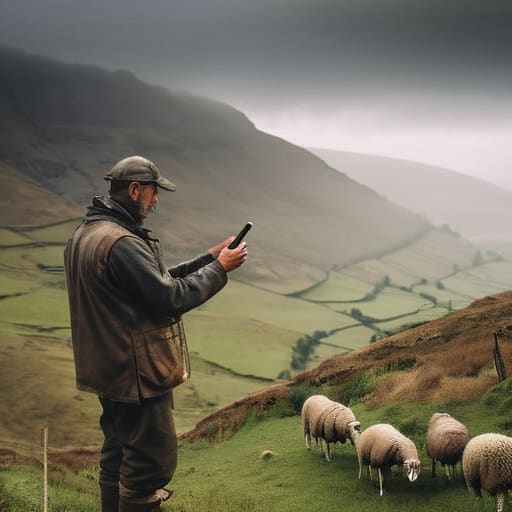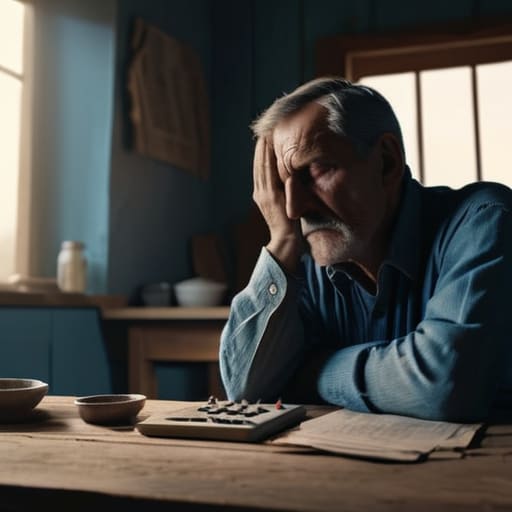
Understanding how farm stress builds up.

Stress Comes From Things You Cannot Control

I remember sitting in the kitchen in the spring of ’98, staring at a stack of invoices and a broken tractor part, listening to the rain hammer against the slate roof. It wasn’t a sudden explosion that broke me; it was the slow, quiet way how farm stress builds when you’re trying to balance a failing margin against a rising cost of feed. People like to talk about stress as if it’s some sudden mental health crisis you can solve with a weekend away or a new app on your phone. They’re wrong. It’s a slow leak, much like a puncture in a tire that you ignore until you’re riding on the rim and ruining the wheel.

I’m not here to sell you a seminar or a way to “reframe your mindset.” I’ve spent forty years making expensive mistakes, and I know that most advice is just fluff written by people who have never had to decide between a new heifer and a new set of tyres. In this piece, I’m going to lay out the actual mechanics of the pressure, from the first bad calving season to the moment the bank starts calling. I’ll tell you how to spot the signs before they cost you your livelihood, and more importantly, how to keep your eyes on the grass and the cash flow instead of drowning in the noise.

Table of Contents

Understanding How Farm Stress Builds

Understanding How Farm Stress Builds over time.

It doesn’t happen all at once, like a sudden frost killing the spring growth. It’s more like a slow leak in a hydraulic line; you don’t notice the pressure dropping until the machine simply won’t lift. For me, it starts with the small, nagging things—a calf that won’t thrive, a broken gate, or a sudden dip in the milk cheque. You tell yourself you’ll sort it tomorrow, but tomorrow is just another day of chasing your tail. Before you know it, those seasonal workload fluctuations have pushed you from being busy to being completely buried.

The real danger is when the external pressures start to bleed into your sleep. You might think you’re just “working hard,” but when you start losing interest in the ewes you’ve spent thirty years perfecting, you’re seeing the first real signs of farmer burnout. It’s the cumulative weight of trying to manage a fluctuating market while the weather refuses to play by the rules. You can have the best breeding line in the district, but if you’re constantly looking over your shoulder at the debt or the rain, you aren’t farming anymore—you’re just surviving.

Key Things to Know

Key Things to Know: Farmer Burnout Signs

If you’re looking for a checklist of symptoms, you won’t find much use in it. In my experience, the real trouble isn’t a sudden breakdown; it’s the slow erosion of your ability to care about the details. You start ignoring the slight limp in a heifer or the way the feed is being wasted, simply because you’re too tired to face the cost of fixing it. Those signs of farmer burnout don’t usually arrive with a bang; they arrive as a quiet, heavy indifference to the very things that used to drive you.

It’s also worth remembering that this isn’t just about your temperament—it’s about the math. You can be the most resilient man in the parish, but managing agricultural debt stress while trying to navigate the impact of climate volatility on farming is a different beast entirely. When the weather turns and the margins vanish, the weight on your shoulders isn’t just mental; it’s a physical pressure that makes every decision feel like a gamble. You aren’t just fighting the elements; you’re fighting a ledger that refuses to balance.

Practical Tips and Steps

Practical Tips and Steps for seasonal management.

If you’re looking for a way to fix the problem, don’t go looking for a self-help book; go looking at your calendar and your ledger. The first thing I learned is that you cannot manage what you don’t track. Most of the time, the pressure isn’t one big explosion; it’s the seasonal workload fluctuations that grind you down. You’re flat out during lambing, then you’re staring at a mounting pile of paperwork in the quiet months, and that’s when the mind starts to wander to the wrong places. Start by mapping out your year—not just the work, but the periods where you’re most likely to snap. If you know the calving season is going to be a nightmare, plan your mental exit strategy before the first cow is even due.

Secondly, stop treating your finances like a dark secret. I’ve seen too many men sit in a quiet kitchen, staring at a bank statement, thinking they’re the only ones drowning. Managing agricultural debt stress isn’t about having the most money; it’s about having a clear, honest view of the numbers so they don’t surprise you at 3:00 AM. If the margins are thin, talk to the bank or your advisor before the interest rates bite. It’s about keeping the cash flow steady so your head stays steady too.

Common Mistakes to Avoid

The first mistake I see is the attempt to outrun the calendar. People think they can push through the seasonal workload fluctuations by sheer force of will, but you can’t negotiate with a lambing season or a hay cut. I’ve seen men try to work twenty-hour days for three weeks straight, thinking they’re being productive, when really they’re just becoming a liability. When you stop sleeping and start making sloppy mistakes with the machinery or the dosing, you aren’t being a hero; you’re just courting a disaster that’ll cost more than the work you’re saving.

The second trap is treating the bank balance like a personal failing. I’ve spent many a night staring at a ledger, convinced that managing agricultural debt stress was a matter of character rather than math. If you treat a bad year of prices like a moral deficiency, you’ll burn out before the next season even starts. Don’t mistake a dip in the market for a lack of skill. If you keep your head down and focus on the grass and the feet, the numbers will eventually follow, but they won’t fix a man who’s already broken.

Final Thoughts

At the end of the day, you can’t fix a broken engine by ignoring the warning lights on the dashboard, and your own head isn’t much different. We spend our lives watching the weather, the markets, and the condition of our stock, but we’re often the last ones to check our own gauges. Whether it’s the weight of managing agricultural debt stress or just the sheer exhaustion of the calving season, ignoring the cracks doesn’t make them go away; it just ensures they’ll break when you can least afford it.

I’ve seen too many good men and women run themselves into the ground because they thought “toughing it out” was part of the job description. It isn’t. It’s just bad management. If you start noticing the signs of farmer burnout—the irritability, the sleeplessness, the feeling that the math will never add up—don’t treat it as a personal failing. Treat it like a disease in the herd: identify it, address it, and get it sorted before it costs you the farm. There’s no profit in being the most hardworking person in the graveyard.

Five Ways the Pressure Starts to Creep In

  • Don’t mistake a busy season for a sustainable one. There’s a difference between the frantic pace of lambing and the slow, grinding exhaustion that comes from trying to outrun a deficit every single month. If you’re running on adrenaline just to keep the bank manager at bay, you aren’t managing a farm; you’re managing a crisis.
  • Watch the small, quiet leaks. It isn’t always the big machinery breakdown that breaks a man; it’s the cumulative weight of the small things—the rising cost of feed, the broken fence line you haven’t had time to fix, and the subtle drop in weaning weights. Those little losses pile up in the back of your mind until you’re waking up at 3:00 AM staring at the ceiling.
  • Stop treating “looking after the stock” and “looking after yourself” as two different jobs. If you’re skipping meals and losing sleep to ensure every cow is fed, you’ll eventually be too broken to notice when the whole system starts to fail. A farmer who can’t think straight makes mistakes that cost more than any vet bill.
  • Beware the “Comparison Trap” at the mart. It’s easy to see a neighbor with a shiny new tractor or a herd that looks perfect on paper and feel like you’re failing. But you don’t know their debt-to-asset ratio or the state of their soil. Comparing your internal ledger to their external show is a fast track to unnecessary misery.
  • Recognize when the “sunk cost” is actually a hole in the ground. Some of us have a habit of pouring more time, more money, and more sweat into a failing system or a bad line of ewes just because we’ve already spent years on them. Knowing when to cut your losses isn’t admitting defeat; it’s protecting your cash flow and your sanity.

The Bottom Line on Staying Level

Don’t mistake a busy calendar for a profitable one; if you’re running yourself ragged on tasks that don’t improve your grass or your margins, you’re just burning daylight and mental capital.

Watch your feet and your finances as closely as you watch your stock; a limping cow or a sudden dip in the bank balance will trigger a spiral of stress long before a major disease ever shows its face.

Stop trying to solve every problem with a new piece of kit or a fancy new management system; most of the time, the solution is simpler, cheaper, and involves looking at your actual numbers instead of what the salesman says they should be.

The Long View

At the end of the day, stress isn’t some sudden storm that blows in from the hills; it’s the slow, steady accumulation of bad weather, rising input costs, and the quiet weight of decisions that don’t have an easy answer. We’ve talked about the importance of watching the cash flow as closely as the weather, the necessity of keeping an eye on the feet of your stock to prevent those small, expensive setbacks, and the danger of letting the paperwork pile up until it feels like a mountain. If you try to tackle every problem at once, you’ll find yourself running on empty before the first frost even hits. You have to manage your mental margins just as strictly as you manage your grazing rotations.

I’ve spent forty years watching seasons turn, and I can tell you that no single bad year or broken piece of kit defines a lifetime in this business. There will be times when the ground is too wet to move and the bank is breathing down your neck, but you aren’t a machine, and you can’t run a farm on grit alone. Take the time to step back from the gate every once in a while and remember why you started this in the first place. Farming is a hard, honest way to live, but if you look after the man as well as the herd, you’ll find the strength to see the next spring through.

Frequently Asked Questions

If I'm already working sixteen-hour days just to keep the head above water, how am I supposed to find the time to actually implement these "practical steps" without the farm falling apart?

You’re right to call me on that. If you’re running on fumes, “management strategies” sound like more bloody work you don’t have time for. But here’s the truth: you don’t implement these things all at once. You don’t fix the whole farm in a weekend. You pick one thing—one broken gate, one bad heifer, or one hour of paperwork—and you do just that. If you don’t find a way to stop the bleeding, the sixteen-hour days won’t matter.

At what point does the stress stop being just "part of the job" and start becoming a genuine threat to the actual survival of the business?

It stops being “part of the job” the moment your head isn’t in the gate anymore. If you’re staring at a broken fence or a sick calf and your first thought isn’t how to fix it, but rather how much it’s going to cost you to care, you’re in trouble. When the stress starts making you skip the evening check or ignore the numbers in the ledger, the business is already dying.

How do I talk to my family or my daughter about the mental toll this is taking without making them feel like I'm failing at running the farm?

You don’t talk about “mental health”—that sounds like something from a brochure. You talk about the pressure. Tell her, “The margins are thinner than I’d like, and the weight of the decisions is sitting heavy.” You aren’t failing the farm; you’re managing the most unpredictable element on it: yourself. If you treat it like a broken piece of machinery that needs maintenance rather than a personal defeat, she’ll understand.

How to look after mental health in farming.

Asking for Help in a Trade That Does Not

I’ve sat through enough seminars in drafty village halls to know that most advice on how to look after mental health in farming is written by people who have never had a calf stuck in a freezing field at three in the morning. They talk about “mindfulness” and “work-life balance” like you can just switch off the pressure of a mounting debt or a dry spell by sitting quietly in a garden. It’s nonsense. You can have the best grass in the county and a healthy herd, but if your head isn’t right, the whole operation will go south faster than a bad debt, and no amount of breathing exercises is going to fix a broken spirit.

I’m not here to sell you a lifestyle or a polished bit of marketing. I’m going to tell you what I’ve learned from forty years of watching the weather, the markets, and my own mistakes. We’ll talk about the real, heavy stuff—the stuff that actually keeps you awake when the house is quiet—and how to manage the invisible drain on your energy without pretending the job is anything other than hard. This isn’t a lecture; it’s just a bit of honest truth from someone who has been in the trenches.

Table of Contents

The Invisible Drain How to Look After Mental Health in Farming

The Invisible Drain How to Look After Mental Health in Farming

It isn’t about sitting in a circle and talking about your feelings; it’s about the quiet erosion that happens when you’re staring at a ledger that doesn’t balance or watching a drought turn your best acreage into dust. For most of us, the pressure doesn’t come all at once like a calving crisis; it’s a slow leak. You start skipping meals, then you stop sleeping, and before you know it, you’re running on fumes. This is the reality of coping with farm financial stress—it’s a constant, low-level hum of anxiety that sits in the back of your throat every time you pick up the phone.

If you want to stay in this game for another twenty years, you have to treat your own head with the same maintenance schedule you give the tractor. You wouldn’t run an engine until it seized, so why do it to yourself? Practical resilience means knowing when the weight is becoming too much to carry alone. It’s about recognizing that agricultural worker burnout prevention isn’t some soft concept from a textbook; it’s a survival strategy. If you don’t manage the man behind the plow, the farm won’t matter, because there won’t be anyone left to run it.

Coping With Farm Financial Stress Before the Bank Calls

Coping With Farm Financial Stress Before the Bank Calls

Most folks think the stress starts when the bank manager starts calling, but by then, you’re already halfway down the hill. The real trouble is the slow, quiet rot of watching your margins shrink every single month while the price of diesel and fertiliser does the opposite. I’ve sat at this kitchen table with a calculator and a ledger, feeling that cold weight in my gut because the numbers just wouldn’t square. Coping with farm financial stress isn’t about magic tricks or finding a new subsidy; it’s about facing the figures before they become a crisis.

If you spend your nights staring at the ceiling, running every possible bad scenario through your head, you aren’t being “diligent”—you’re just burning out. You have to separate the farm’s balance sheet from your own worth as a person. I learned the hard way that a bad year on the books doesn’t mean you’re a bad farmer. It’s vital to look into rural mental health resources that actually understand how a bad calving season or a sudden drop in beef prices hits your psyche. Don’t wait until the accounts are in the red to start talking.

Agricultural Worker Burnout Prevention More Vital Than New Machinery

Agricultural Worker Burnout Prevention More Vital Than New Machinery

I’ve seen men spend forty thousand pounds on a new telehandler to save twenty minutes a day, only to end up staring at a wall at three in the morning because they can’t switch their brains off. We treat our machinery with more respect than our own nervous systems. You wouldn’t run a tractor until the engine seized and the oil turned to sludge, yet we expect ourselves to do exactly that. Real agricultural worker burnout prevention isn’t about a weekend away or a fancy seminar; it’s about recognizing when the engine is running too hot before you blow a gasket.

It’s a hard habit to break, especially when the culture around you treats exhaustion like a badge of honour. But if you’re running on fumes, you’re going to make mistakes—the kind of mistakes that end up in a vet’s bill or a broken fence. We need to stop viewing rest as a luxury and start seeing it as essential maintenance. If you don’t schedule time to step back, your body will eventually schedule it for you, and it’ll usually happen at the worst possible time, like during lambing or a sudden dry spell.

Beating Seasonal Affective Disorder in Farmers When the Light Fails

There is a particular kind of gloom that sets in around November, when the sun ducks behind the hills by three in the afternoon and the mud becomes a permanent fixture of your boots. It isn’t just the cold; it’s the heavy, grey weight of it all. I’ve seen men who can manage a crisis in a calving shed at midnight crumble simply because they haven’t seen a proper bit of daylight in six weeks. Seasonal affective disorder in farmers isn’t some soft, modern concept; it’s a physiological reality that hits hardest when the workload is high and the light is low.

You can’t just “tough it out” when your brain is running on low battery. I’ve learned that if I don’t force myself to step out of the office and get some actual light—even if it’s just a grey afternoon—the fog settles in. It’s about managing your internal margins just as strictly as you manage your feed rations. If you ignore the dip in your mood, you’ll find yourself making poor decisions on the tractor or losing your temper with the staff, and that’s when the real damage starts.

Breaking the Silence in Farming Communities to Save Our Own

We’ve spent generations being taught that if a fence is down, you fix it, and if a cow is lame, you treat it, but if your head is spinning, you just get on with it. That silence is a heavy thing to carry, and it’s heavier than a full trailer of silage. I’ve sat in many a pub or at many a mart, watching men who could manage a thousand head of sheep stare into a pint like it held the secrets to the universe, too proud to admit they were drowning. But there’s no sense in pride if it leaves you bankrupt of spirit. Breaking the silence in farming communities isn’t about sitting in a circle and crying; it’s about having the grit to say to a neighbour, “I’m having a hard season,” before the cracks become canyons.

You don’t need a lecture on resilience training for agriculturalists to know that isolation is a slow poison. It’s the quietness of a farm when the work is done and the house is still that gets to you. We need to treat our mental state with the same practical scrutiny we give our breeding lines. If you see a mate struggling, don’t wait for him to ask for help—he won’t. Just lean on the gate and talk.

Five things that won't fix the price of beef, but might keep you upright

  • Stop treating your head like a piece of kit you can just ignore until it breaks. You wouldn’t run a tractor for five years without changing the oil or checking the belts, so don’t think you can run yourself on nothing but caffeine and stubbornness and expect to finish the season in one piece.
  • Get a proper handle on the books before the numbers start looking like a foreign language. Most of my sleepless nights didn’t come from the weather, they came from the dread of opening an envelope from the bank. Knowing exactly where you stand—even if it’s bad—is better than the slow rot of not knowing.
  • Find one person who isn’t a family member to talk to about the nonsense. When you live and work with the same people, every disagreement feels like the end of the world. You need someone outside the farm gate who can look at your situation and tell you you’re being a fool, or just listen without it affecting the dinner table.
  • Learn to say ‘no’ to the shiny new thing. I’ve seen too many lads take on a massive new contract or buy a piece of machinery they can’t afford just because they thought it would make them look “established.” If the extra work is going to cost you your sleep and your sanity, the margin isn’t worth the misery.
  • Get some daylight in your system that isn’t spent staring at a screen or a ledger. It sounds like something a city person would say, but when the weather turns and you’re stuck in a dark shed or a cramped office doing paperwork, your brain starts to turn to mush. Even a fifteen-minute walk without a phone in your hand makes a difference to how you process a bad day.

The bottom line on keeping your head

Treat your mental state like your soil; if you ignore the depletion for years, you won’t be able to just throw a bit of fertiliser on it to fix the problem when the crop fails.

Stop treating “the grind” as a badge of honour; a farmer who can’t sleep or think straight is just as much a liability to the farm as a broken gate or a sick heifer.

Watch the margins on your own time as closely as you watch the margins on your beef; if you aren’t investing in your own ability to stay in the game, the whole operation is running on borrowed time.

The bottom line

At the end of the day, we’ve spent this time looking at everything from the bank balance to the lack of light in a mid-winter field, but it all circles back to the same truth. You can breed the finest ewes in the district and have the most efficient feeding system money can buy, but if you’re running on empty, the whole system is structurally unsound. We talk about soil health and herd health because we know that if the foundation is gone, nothing else matters. Mental health isn’t some soft, modern concept to be brushed aside; it is the primary infrastructure of your farm. If the person running the operation breaks, the grass doesn’t matter, the cattle don’t matter, and the cash flow certainly won’t save you.

I’ve spent forty years watching seasons turn and markets crash, and if there is one thing I’ve learned, it’s that a farm is more than just an asset on a balance sheet—it is a life. Don’t wait for a total system failure before you decide to make a change or ask for a hand. It takes more grit to admit you’re struggling than it does to pull a double shift in a freezing shed. Look after the person behind the gate, because once that person is gone, the farm is just a collection of fences and hungry mouths. Take care of yourself with the same practical, no-nonsense diligence you give to your best stock.

Frequently Asked Questions

When the weather's turning and the bills are mounting, how do I actually sit down and talk about it without feeling like I'm admitting defeat?

You don’t start by talking about your feelings; you start by talking about the facts. If the ground is too wet to move the cattle or the input costs have jumped twenty percent, talk about that. It’s the same data, just framed differently. Admitting the numbers are tight isn’t admitting defeat—it’s a situational report. Once you’ve laid out the practical mess, the conversation about how it’s weighing on you usually follows naturally.

Is there a way to manage the mental strain of the job without letting the day-to-day work suffer, or is one always going to cost the other?

You can’t run a farm on empty, just like you can’t run a tractor on a half-tank of diesel and expect it to pull a heavy trailer up a hill. If you try to balance it by working harder to “fix” the stress, you’ll just end up breaking something—either a piece of kit or yourself. It’s about triage. You prioritize the tasks that keep the animals fed and the gates shut, then you find the small gaps to step back. It’s not about doing less; it’s about being more disciplined with what you allow to drain you.

How do I help a worker or a family member who’s clearly struggling but won't say a word because they think it's a sign of weakness?

You don’t start by asking how they’re feeling; you’ll just get a grunt and a closed door. You start by noticing the work. If a man who usually keeps his boots clean is letting the yard go to seed, or your daughter is staring at a ledger for an hour without turning a page, that’s your opening. Don’t make it a confrontation. Just sit there, lean on the gate, and mention the work. Sometimes, you have to bridge the gap with a practical task before you can bridge it with a conversation.

How rural isolation affects people in isolation.

Isolation Is an Occupational Hazard Here

You’ll see plenty of glossy pamphlets from the city talking about mental health as if it’s something you can fix with a mindfulness app or a weekend retreat. They make it sound like a clinical problem to be solved, but they’ve never spent a Tuesday in February when the wind is coming off the hills and the nearest soul is three miles away. They don’t understand how rural isolation affects people because they think it’s just about being lonely; they don’t realize it’s the weight of the silence that gets you. It’s that heavy, ringing quiet in the kitchen after the dogs have gone to sleep and the machinery is finally still, making you wonder if you’ve forgotten how to speak to anyone who isn’t a heifer.

I’m not here to offer you any soft-edged platitudes or academic theories that won’t hold water when the weather turns. I’m going to tell you what it actually looks like when the distance between you and the rest of the world starts to erode your grit. We’ll talk about the practical ways to keep your head straight when the yard is empty, and why ignoring the mental toll is just as dangerous to your livelihood as a bad case of foot rot.

Table of Contents

The Invisible Drain How Rural Isolation Affects People More Than Drought

The Invisible Drain How Rural Isolation Affects People More Than Drought

You can look at a dry spell and know exactly how much it’s going to cost you in forage and weight gain; the numbers are right there on the ledger. But you can’t quantify the way the silence starts to settle in when the only voice you’ve heard for three days is your own or the radio in the tractor. The psychological impact of remote living isn’t a sudden storm you can batten down against; it’s a slow leak, like a puncture in a tyre that you don’t notice until you’re riding on the rim.

It’s not just about being physically distant from the next house, though the geographic barriers to social interaction certainly don’t help when the nearest decent pub is a twenty-minute drive on tracks that’ll shake your teeth loose. It’s the loss of that casual, unforced connection. When you’re struggling with a calving or a broken fence, you need more than a text message; you need someone to stand in the yard with you. Without those rural community support systems in place, the weight of the farm starts to feel less like a business and more like a cage.

The Psychological Impact of Remote Living and the Heavy Price of Silence

The Psychological Impact of Remote Living and the Heavy Price of Silence.

It isn’t just about being alone; it’s the way the silence starts to settle into your bones when the only voice you’ve heard all day is your own, or the radio in the tractor cab. You get used to the distance, but there is a genuine psychological impact of remote living that doesn’t show up on a balance sheet. When a fence goes down or a calf is stuck at three in the morning, you realize just how much you rely on a neighbor’s nod or a quick word at the mart. Without that, the walls of the farmhouse start feeling a lot thicker, and the isolation stops being a way of life and starts being a weight.

The real trouble is that when things do go south, the access to mental health services in the countryside is often a joke. You can’t exactly book a Tuesday afternoon appointment when you’ve got a hundred head to move or a broken gate to fix, and most of us aren’t the type to go ringing a helpline. We tend to just keep our heads down and work harder, thinking we can outrun the quiet, but you can’t outwork a lack of connection.

Broken Links Why Geographic Barriers to Social Interaction Kill Morale

It isn’t just the miles on the odometer that get to you; it’s the way the distance makes every bit of human contact feel like a scheduled event rather than something that just happens. When you’re living behind a gate that’s five miles from the nearest neighbour, you stop expecting people to drop by. You start to view geographic barriers to social interaction as a permanent part of the landscape, as fixed as a stone wall or a bad drainage ditch. You stop calling because you don’t want to be a burden, and eventually, you just stop wanting to talk at all.

That’s where the rot sets in. When you lose that easy, unplanned connection—the quick chat over a fence or a nod at the mart—you lose your tether to the rest of the world. You start thinking your problems are yours alone, which is a dangerous way to live. The real trouble is that social connectivity in rural areas isn’t some luxury for when the weather’s fine; it’s the safety net that catches you when the bank calls or a calf dies in the middle of the night. Without it, the world gets very small, and very dark, very quickly.

Loneliness in Rural Communities a Debt No Bank Can Ever Forgive

The problem with loneliness in rural communities is that it doesn’t show up on a balance sheet until it’s far too late. You can account for a broken tractor or a dip in beef prices, but you can’t easily quantify the slow erosion of a man’s spirit when his only meaningful conversation for three days is with a heifer. We tend to treat social connectivity in rural areas as a luxury—something that happens at the mart or the pub if the weather holds—rather than a basic necessity for staying upright.

When you’re tucked away behind three miles of stone walls and a bad track, the distance isn’t just measured in meters; it’s measured in the effort it takes to reach out. Most of us are too proud to admit when the silence starts getting loud, and that’s where the danger lies. We view access to mental health services in the countryside as a secondary concern compared to getting a vet out or fixing a fence, but if the person running the farm has checked out mentally, the whole operation follows suit. It’s a debt that compounds every single day you spend working in a vacuum.

Fixing the Connection Building Better Rural Community Support Systems

You can’t fix a broken fence by just staring at the gap; you have to actually get the wire and the strainer out. The same goes for this. We talk about rural community support systems like they’re something you can just download on an app, but that’s nonsense. Real support isn’t a helpline that rings from a city three hundred miles away; it’s the lad down the road noticing your tractor hasn’t moved from the yard in two days and pulling up to ask if you’re alright. We need more of that local, boots-on-the-ground presence, because digital connectivity is a poor substitute for a handshake.

The real challenge is that improving social connectivity in rural areas requires more than just better broadband. It means creating spaces—actual, physical places—where we aren’t just passing each other in a Land Rover at forty miles an hour. We need hubs that don’t feel like a doctor’s waiting room, because most of us won’t walk through a door if it feels like we’re admitting defeat. If we want to tackle the isolation, we have to build systems that respect the way we live, rather than trying to force a city model onto a landscape that doesn’t work that way.

Five Ways to Keep Your Head Above Water When the Miles Start Getting Long

  • Stop treating a visit to the mart or the local co-op as a mere transaction. If you only go there to buy feed and leave without a ten-minute chat about the weather or the price of silage, you’re leaving the most important part of the job at home. Those small, pointless conversations are the only thing that keeps you tethered to the rest of the world.
  • Learn to distinguish between being “busy” and being “productive.” I’ve seen many a lad spend sixteen hours a day in the yard, working himself into the ground, only to realise he hasn’t spoken a word to another human being in three days. Hard work is fine, but if it’s being used as a shield to avoid people, it’ll cost you more in the long run than a broken tractor.
  • Don’t wait for a crisis to reach out. If you wait until the bank is breathing down your neck or the herd is failing to call a neighbour, you’re already halfway to the bottom of the pit. You have to build the habit of talking when things are going well, so that when the weather turns sour, the lines of communication are already open.
  • Get out of the cab and off the tractor more often than you think you need to. There is a particular kind of madness that sets in when your only view for twelve hours a day is a windscreen and a dashboard. Even if it’s just a walk to the far field or a quick trip into the village for a bit of milk, you need to break the visual monotony before it starts to weigh on your mind.
  • Be honest about the margins, even with yourself. We’re a breed that likes to pretend everything is “fine” when we’re staring at a mounting pile of debt and a lonely house. If the isolation is starting to bite, admit it. It’s not a sign of a weak farmer; it’s just a practical assessment of your current mental stock, and you wouldn’t let a ewe run on nothing but air, would you?

The Bottom Line on Staying Sane

Isolation isn’t just a feeling; it’s a drain on your ability to make clear-headed decisions when the margins are thin and the weather turns.

You can’t fix a broken community with a new piece of kit or a subsidy check; you fix it by making sure the person in the next farm over is still standing.

Stop treating mental health like a luxury for people with time to kill; in this business, a man who’s lost his head is just as dangerous to the farm as a heifer with a broken leg.

The Bottom Line on Being Alone

We’ve spent a lot of time looking at the ledger of isolation, and it’s a grim accounting. We talk about the cost of diesel, the price of concentrate, and the fluctuations in the beef market, but we rarely tally the cost of the silence that settles over a farm when the social fabric starts to fray. Isolation isn’t just a bit of peace and quiet; it is a slow, corrosive drain on the mental grit required to run a livestock business. It breaks the morale that keeps a man or woman going through a hard lambing or a dry summer. If we don’t address the way geographic distance and crumbling community links strip away our resilience, we are essentially letting the farm die from the inside out, regardless of how much grass is in the field.

At the end of the day, a farm is more than just a collection of assets and acreage; it is a life lived in connection to others. You can have the best genetics in your flock and the most modern kit in the shed, but if you’re working in a vacuum, you’re working on borrowed time. We need to stop treating rural loneliness as a personal failing and start seeing it for what it is: a structural risk to our way of life. Look after your neighbours as closely as you look after your stock, because when the weather turns and the margins get thin, it’s the people, not the machinery, that will see you through to the next season.

Frequently Asked Questions

If the isolation is part of the job, how do you stop it from becoming a permanent part of who you are?

You don’t stop it; you manage it like you manage a wet spring. If you let the isolation settle into your bones, it’ll rot your sense of perspective. I’ve found you have to force the social side, even when you’re bone-tired. It means showing up to the mart or the local meeting when you’d rather stay in the yard. You have to keep one foot in the world of people, or you’ll start believing the silence is the only truth.

Is there a way to build a community when everyone is too busy or too tired just to keep their own heads above water?

It’s a fair question, and the answer is usually found in the margins. You can’t expect a man who’s been in the yard since five a.m. to show up for a committee meeting. Community in this business isn’t about town hall socials; it’s about the five minutes spent leaning on a gate or the text sent when a neighbor’s tractor breaks down. If it isn’t practical and doesn’t respect the workload, it won’t happen.

At what point does a man stop seeing the silence as peace and start seeing it as a problem?

It’s when the silence stops being a respite from the noise of the yard and starts feeling like a weight in your chest. When you find yourself driving ten miles just to hear a voice that isn’t your own, or when you realize you haven’t spoken a word out loud since Tuesday morning, that’s when the peace has turned into a problem. It’s the difference between enjoying the quiet and being swallowed by it.