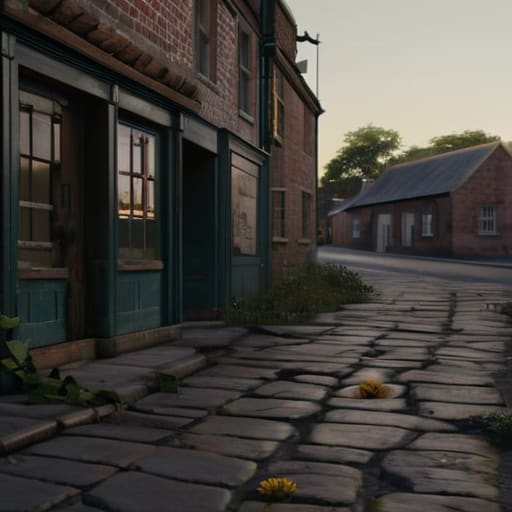
I remember when you could pull the tractor up to the village shop, grab a bag of feed, a pint of milk, and have a ten-minute chat about the weather or the price of barley without even checking your watch. Now, they tell you that everything is more “efficient” because it’s all moved to a smartphone screen, but they never mention the hidden cost of diesel it takes to drive twenty miles just to find a working ATM or a decent butcher. People love to talk about the digital revolution, but when we look at how village services have changed, they tend to forget that a website won’t help you when your delivery driver can’t find your gate or the local post office has shuttered its windows for good.
I’m not here to sell you on some glossy new app or tell you that the loss of our local infrastructure is “progress.” I’m going to look at this through the lens of actual margins—the time lost, the fuel burned, and the sheer practical headache of trying to run a farm when the community around you is thinning out. I’ll tell you plainly which “modern conveniences” are actually just expensive distractions and what we’re truly losing when the village heart stops beating.
Table of Contents
Understanding How Village Services Have Changed

It’s not just a matter of missing the local shop; it’s the way the whole ecosystem of the place has been stripped back. Twenty years ago, if you needed a part for the tractor or a bag of feed, you could find someone within a ten-mile radius who knew your name and didn’t need a spreadsheet to tell you the price. Now, you’re looking at a constant loss of local amenities that leaves the gaps filled by nothing but more tarmac and more commuters. We used to have a rhythm here, tied to the seasons and the people, but that’s been replaced by a sort of hollowed-out convenience.
People talk about the digital transformation in villages as if having a smartphone solves the problem of a closed post office or a pub that’s turned into a holiday let. They say everything is at your fingertips, but a screen won’t help you when you’re trying to coordinate a local harvest or find a mechanic who actually understands a diesel engine. What we’re seeing isn’t progress; it’s a slow, quiet rural community decline that makes it harder for the people actually working the land to stay rooted.
Key Things to Know

If you’re looking for a tidy list of statistics, you’ve come to the wrong place. What I’ve seen from my gate is that the loss of local amenities isn’t just a matter of convenience; it’s a matter of survival for the people left behind. When the local Co-op shuts and the post office moves to a digital-only service, you aren’t just losing a shop; you’re losing the one place where you actually see your neighbours. It’s a slow erosion, and once that social glue dries up, it’s a hell of a thing to try and stick back together.
The push for digital transformation in villages sounds grand on a spreadsheet in London, but it doesn’t account for a broadband connection that drops out every time the wind picks up over the ridge. They tell us everything is at our fingertips now, but they forget that a farmer or an elderly resident can’t always navigate a smartphone just to book a GP appointment. We’re being told that modernization is progress, but if you can’t use the service, it isn’t progress—it’s just a barrier.
Practical Tips and Steps

If you want to make a dent in this, you have to stop waiting for the council or some distant agency to fix things. They aren’t coming. The first step is recognizing that the loss of local amenities isn’t just an inconvenience; it’s a drain on your time and your wallet. I’ve seen it myself—spending an extra hour in the tractor just to reach a decent hardware shop because the local one folded. Start by mapping out what you actually need to survive the winter and seeing who else in the parish is feeling the same pinch. It’s about pooling resources before the cupboard is completely bare.
Don’t get caught out by the digital transformation in villages, either. They’ll tell you that an app or a website replaces a post office or a bank, but a screen won’t help you when the broadband goes down in a gale. My advice? Keep your physical connections strong. If the high street shops are disappearing, look at setting up a local trade exchange or a shared delivery scheme. It’s about defending the margins of your own life by making sure you aren’t entirely dependent on a signal that’s as thin as the grass in a drought.
Common Mistakes to Avoid
The biggest mistake I see is people assuming that the digital transformation in villages is a silver bullet for everything. There’s a lot of talk about how an app can replace a post office or a local shop, but an app won’t help you when the broadband drops out during a storm or when you actually need to speak to a human being about a delivery. Relying solely on “smart” solutions is a gamble that ignores the reality of our infrastructure. If you bank everything on a screen, you’re going to find yourself stranded when the technology fails to bridge the gap left by the loss of local amenities.
Another error is treating the decline of these services as an inevitability rather than a symptom of poor planning. People often wait until the last pub or the last smithy has shuttered before they realize what they’ve lost. It’s easy to get caught up in the general rural community decline and just shrug your shoulders, but that’s how you end up with a village that’s nothing more than a dormitory for commuters. You can’t rebuild a social hub once the foundation has gone, and once that cash flow dries up, no amount of wishing will bring the shop back.
Final Thoughts
At the end of the day, you can’t replace a local mechanic or a decent butcher with a smartphone app and call it progress. We talk a lot about the digital transformation in villages, but a screen doesn’t fix a broken tractor or help you move a heavy feeder when the ground is frozen solid. The truth is, when you lose those small, local touchpoints, you aren’t just losing a shop; you’re losing the glue that keeps a place from becoming nothing more than a collection of houses for commuters.
I’ve watched the loss of local amenities turn too many decent settlements into dormitories. It’s a slow erosion, often disguised as “convenience,” but once the post office goes and the pub turns into a boutique holiday let, the character of the place changes for good. My advice is to stop waiting for the council or a tech company to fix the gap. If we want to stave off rural community decline, we have to be intentional about supporting what’s left and being a bit more stubborn about keeping our own networks alive. It’s not about being old-fashioned; it’s about being practical.
Five ways to keep your head above water when the village stops serving you
- Stop counting on the local shop for your essentials. I’ve seen too many people wait until they’ve run out of milk or bread only to realize the village shop closed three months ago, and now they’re burning twenty litres of diesel just to get to the supermarket. Plan your runs around the weekly heavy lifting, not the daily whim.
- Get your digital tools sorted before you actually need them. They tell you everything is moving online—banking, council forms, even ordering feed—but if you wait until your internet goes down in a storm to realize you can’t access your accounts, you’re in a spot of bother. Have a backup, and learn the systems while you have the time.
- Don’t let your social circle shrink to just your own gate. When the pub or the post office goes, that’s where the information exchange happens. You need to make a conscious effort to keep in touch with the neighbours, because when the local services vanish, the only thing left to rely on is the person living in the next farmstead.
- Watch your transport costs like a hawk. Losing a local service isn’t just an inconvenience; it’s a direct hit to your cash flow. If you’re spending an extra forty quid a week in fuel just to do what used to be a five-minute walk, you need to factor that into your margins or you’ll wonder where the money’s gone by Christmas.
- Invest in community, not just convenience. If there’s a group or a local cooperative trying to keep a service alive, join it. It’s cheaper to pay a small membership fee to keep a village hall open than it is to try and rebuild a community once it’s completely evaporated.
The Bottom Line on What’s Been Lost
Don’t mistake convenience for savings; driving twenty minutes for a loaf of bread or a parcel pickup eats your margin faster than a bad season of silage.
If the local service disappears, the community loses more than just a shop—it loses the eyes on the road and the pulse of the village that keeps things running.
Stop waiting for the council or the big firms to fix it; once a service is gone, the cost of trying to bring it back is usually more than the village can actually afford.
The Bottom Line
At the end of the day, looking at how these services have drifted away is a bit like watching a field go to seed if you aren’t paying attention. We’ve talked about the rising costs of just getting from A to B, the loss of that local social glue, and the way everything seems to be moving behind a screen where you can’t shake a hand or look a man in the eye. It isn’t just about the inconvenience; it’s about the erosion of the margins that keep a rural community viable. If you lose the post office and the local shop, you aren’t just losing a place to buy milk; you’re losing the very infrastructure that makes living out here a practical reality rather than a costly hobby.
I don’t believe in being sentimental for the sake of it, but there is a logic to what we are losing. A village without its services is just a collection of houses, and a collection of houses doesn’t make a community. We have to be more intentional about how we support what is left, whether that’s through local cooperatives or simply making the effort to use the services that still stand. It won’t bring back the old ways, but if we want these places to remain economically sensible for the next generation, we have to value the foundations while they are still standing. It’s about protecting the long-term viability of where we live.
Frequently Asked Questions
Is it actually worth driving twenty miles for a specialist service, or am I better off just paying the premium for someone to come to the farm?
It depends on whether you’re paying for the expertise or just the diesel. If it’s a vet who can fix a complex lameness issue that’ll save your margins, drive the twenty miles; the specialist’s brain is worth the trip. But if it’s just a technician for a piece of kit that’ll likely sit idle by autumn, pay the premium for them to come here. Your time is better spent on the ground, not stuck in a cab.
How much of this "digital shift" is actually about efficiency, and how much is just a way for these companies to cut their overheads at our expense?
It’s a bit of both, but let’s not pretend it’s all for our benefit. Sure, being able to check a market price on your phone while you’re out in the top field is handy. But most of this “digital shift” is just a way for companies to stop paying for real people and physical branches. They call it efficiency; I call it passing the cost of their overheads onto us in the form of wasted time.
With the local shops and post offices going, what's the real cost to a working farm when we have to spend more time on the road and less time on the land?
It’s not just the diesel, though that’s a bloody nuisance. It’s the opportunity cost. Every hour I’m sitting in a queue at the town post office or driving twenty miles for a bag of feed, I’m not checking a fence line or watching a heifer that’s looking a bit off. You can’t put a price on the time you lose being away from the stock, but I can tell you it’s eating our margins alive.
