I spent a good chunk of the nineties listening to salesmen in clean wellies tell me that the secret to a healthy herd was the latest, most expensive drench on the market. They’d talk about “revolutionary breakthroughs” while I was watching my margins bleed out through the soles of my cattle’s feet. The truth is, most of those glossy brochures have no idea how how parasite control should be planned in a real world where the rainfall is unpredictable and the ground is heavy. If you’re just reacting to a sudden dip in condition or a handful of worm eggs in a lab report, you aren’t managing a farm; you’re just chasing your losses around the yard.
I’m not here to sell you a chemical cocktail or a complicated spreadsheet that’ll gather dust in the back of the Land Rover. What I want to do is show you how to look at your grass, your stocking density, and your actual cash flow to build a system that works before the animals start showing the damage. I’ll tell you straight about the mistakes I made—the ones that cost me a week’s profit in a single afternoon—so you can focus on protecting your bottom line instead of just buying more kit.
Table of Contents
- Stop Throwing Money at Worms How Parasite Control Should Be Planned
- The Hidden Cost of Blindly Following the Calendar
- Interpreting Faecal Egg Counts Without Guessing the Results
- Winning the War Through Targeted Selective Treatment
- Avoiding the Dead End of Anthelmintic Resistance Management
- Five Ways to Stop Chasing Your Tail (and Your Cash)
- The Bottom Line on Parasite Control
- The Bottom Line
- Frequently Asked Questions
Stop Throwing Money at Worms How Parasite Control Should Be Planned

Most of you are probably treating your flock or herd like a chemistry set, drenching every animal on a fixed calendar because a salesman told you it’s “best practice.” That’s the quickest way to empty your bank account and breed a super-worm that no drug on the market can touch. If you aren’t thinking about anthelmintic resistance management, you aren’t managing a farm; you’re just subsidizing the parasite population. I learned that the hard way back in the nineties when I realized my “routine” treatments were doing nothing but making the worms tougher.
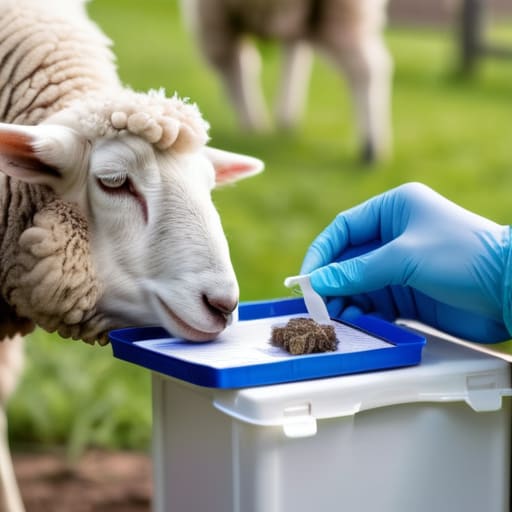
Real control isn’t about the bottle you buy; it’s about interpreting faecal egg counts to see what’s actually happening on your specific ground. You need to stop treating the whole field and start looking at targeted selective treatment. This means identifying which animals are actually shedding and which ones are carrying a light load that their own system can handle. If you can leave the healthy ones alone, you save money on the drug and, more importantly, you keep the drugs working for the animals that truly need them.
The Hidden Cost of Blindly Following the Calendar

The biggest mistake I see is the “calendar farmer”—the man who treats every animal on the same Tuesday in May simply because a salesman’s pamphlet told him to. If you’re doing that, you aren’t managing a farm; you’re just subsidizing the drug companies. Treating the whole lot when only a third of them actually need it is a fast way to bleed cash, and more importantly, it’s a fast way to build anthelmintic resistance management issues that you won’t notice until your drench is about as effective as a glass of water.
You have to look at the ground and the weather, not the date on the wall. If we’ve had a particularly wet spring, your parasite lifecycle management needs to shift, regardless of what the old routine says. I’ve learned the hard way that targeted selective treatment is the only way to keep the margins from disappearing. Instead of blanketing the whole herd, you should be looking at the individuals that actually show the signs, or better yet, spending the time interpreting faecal egg counts to see what’s actually happening in the gut. It’s more work upfront, but it keeps your drugs working and your bank balance intact.
Interpreting Faecal Egg Counts Without Guessing the Results

Now, when you get those results back from the lab, don’t just look for a number and reach for the drench gun. A high count in a single animal doesn’t always mean the whole field is a graveyard of larvae, and a low count doesn’t mean you’re in the clear. The real trick is interpreting faecal egg counts in the context of the animal’s condition and the ground they’ve been standing on. If you’ve got a handful of sheep that look hollow-eyed and are lagging behind the rest, that single high number matters more than a dozen low ones from the healthy ones.
If you treat every animal just because the lab report says so, you’re essentially training the worms to ignore your medicine. That’s the quickest way to ruin your anthelmintic resistance management, and once that happens, you’re well and truly stuck. I’ve learned the hard way that targeted selective treatment—only hitting the ones that actually need it—is the only way to keep the drugs working for the long haul. It keeps the “refugia” of untreated worms in the system to dilute the resistant ones, which is much cheaper than buying a new brand of drench every two years.
Winning the War Through Targeted Selective Treatment
Now, here is where most people lose their nerve. They think that to win, they have to treat every single animal in the field, like they’re fighting a fire with a sledgehammer. That’s not management; that’s just an expensive way to breed super-worms. If you treat the whole lot every time, you’re essentially training the parasites to survive your drugs. That is the core of anthelmintic resistance management, and if you ignore it, you’ll be standing in a field of coughing, wasting sheep with nothing left in the medicine cabinet to fix them.
The real trick is targeted selective treatment. You pick out the individuals that actually need the help—the ones showing the signs or the ones that the egg counts tell you are the heavy lifters in spreading the load. By leaving a percentage of the healthiest animals untreated, you keep a population of “susceptible” worms in the mix. It sounds counter-intuitive to leave some animals “unprotected,” but it’s the only way to keep your drugs working for the long haul. It’s about protecting the efficacy of your kit, just like you’d maintain a tractor rather than just running it until the engine seizes.
Avoiding the Dead End of Anthelmintic Resistance Management
The problem with most modern advice is that it treats every wormer like a magic wand, and if you believe that, you’re heading straight for a brick wall. We’ve spent decades treating every animal, every time, regardless of whether they actually needed it. Now, we’re seeing the fallout in the form of worms that simply don’t care about the chemicals we’re throwing at them. This is the reality of anthelmintic resistance management; it isn’t just a fancy term for a folder in the office, it’s the difference between having a working product in three years or having a shed full of useless white plastic bottles.
If you keep treating the whole mob just because the calendar says it’s June, you are effectively breeding super-worms. You’re selecting for the survivors every single time. Real livestock parasite management strategies have to focus on keeping a “refugia” group—animals that haven’t been treated—to ensure there are still susceptible worms left in the mix to dilute the resistant ones. It feels counter-intuitive to leave some animals “unprotected,” but leaving a bit of weakness in the population is the only way to keep the medicine working for the long haul.
Five Ways to Stop Chasing Your Tail (and Your Cash)
- Stop treating the whole herd just because the calendar says it’s Tuesday; if the grass is dry and the weather’s been biting, you’re likely dosing animals that don’t need it and just feeding the worms.
- Map your ground before you map your drugs; you need to know which corners of the 180 hectares hold the damp and the shade, because that’s where your real trouble starts, regardless of what the bottle says.
- Treat the animal, not the field; a single heavy-wormer in a field is just a free buffet for the survivors, so keep your best performers clean and leave the rest to find their own level.
- Watch the feet as much as the gut; a cow with a heavy worm burden is a cow that won’t move well, and a cow that won’t move well is a cow that’s costing you more in lameness and poor grazing than the drench ever could.
- Keep a notebook that actually matters; I don’t care about fancy software, I care about knowing which paddock had the wettest spring and which ewes consistently drop their condition, because that’s the only data that pays the bills.
The Bottom Line on Parasite Control
Stop treating the calendar and start treating the animal; if you aren’t looking at the grass type or the actual condition of the beast, you’re just paying a chemist to do your thinking for you.
A faecal egg count is only useful if you actually use the number to make a decision, rather than just filing it away as another piece of paperwork that doesn’t change how you manage the field.
Resistance is a slow leak in your bank account, and once your drugs stop working because you’ve overused them, no amount of clever marketing or new kit is going to fix your margins.
The Bottom Line
At the end of the day, parasite control isn’t about following a shiny new protocol or buying every bottle of drench the salesman shoves under your nose. It’s about moving away from that reactive, “wait and see” habit that bleeds a farm dry. You’ve seen the numbers; you know that blindly treating every head in the herd is just a fast way to build resistance and waste your hard-earned cash. If you aren’t looking at your pasture quality, checking your egg counts, and applying treatments where they actually matter, you aren’t managing a farm—you’re just subsidising the worms. Stick to the data, watch the weather, and remember that every treatment must have a clear purpose or it shouldn’t happen at all.
I’ve spent forty years watching men and women try to outsmart nature with expensive chemicals, only to find themselves back at square one when the resistance kicks in. Farming is hard enough without making it harder by ignoring the basics of biology and economics. Don’t get distracted by the latest marketing hype; instead, focus on the fundamentals of grass, feet, and cash flow. If you get those three right, and you manage your parasites with a bit of common sense and a lot of discipline, you’ll find that the margins start to look a whole lot healthier. It’s not about being perfect; it’s about being deliberate with your decisions.
Frequently Asked Questions
If I stop treating every animal on schedule, how do I know I'm not letting the parasite load get high enough to actually tank my weaning weights?
You don’t guess; you look at the animals, not just the calendar. If you aren’t treating everyone, you’d better be watching for the tell-tales: a sudden drop in condition, a dullness in the eye, or a lack of vigor when they hit the trough. But more importantly, you use those faecal egg counts to tell you when the threshold is hit. If the numbers are climbing and the weight gain is stalling, you act. Don’t wait for a catastrophe to justify the cost of a treatment.
How much of a margin do I actually need to set aside for the testing kits and the lab fees before the FEC results make sense for my bottom line?
Don’t look at the lab fee as a cost; look at it as an insurance premium against a massive vet bill or a sudden drop in weaning weights. If you’re running a suckler herd, I budget about £1.50 to £2.00 per head for the whole testing cycle. It sounds like a nuisance on paper, but if that £2 keeps you from drenching the whole field unnecessarily, it’s the cheapest money you’ll spend all year.
At what point does the cost of the extra labor for individual animal inspections outweigh the money I'm saving on the chemical treatments?
It’s a math problem, not a feeling. If you’re spending three hours a day walking the pens just to save twenty quid on a drench, you’ve gone wrong. You have to weigh the hourly rate of your time—or more importantly, your daughter’s time—against the cost of the chemical and the potential loss of a calf. If the labor turns your margin into a deficit, stop. Pick a threshold and stick to it.
