I’ve spent enough money on shiny new forage measuring tools to buy a decent second-hand tractor, and most of them are nothing more than expensive ways to lie to yourself. You’ll see plenty of glossy brochures claiming they have the “complete guide to grass measurement” through satellite imagery or complex software, but all that does is add a layer of digital nonsense between you and the actual field. I remember standing in a wet paddock back in ’98, staring at a patch of rye-grass that looked lush but felt hollow, realizing my “calculated” stocking rate was about to leave my ewes starving by October. If you aren’t getting your boots muddy and actually looking at the structure of the sward, you aren’t measuring anything—you’re just playing with numbers.
I’m not here to sell you a subscription or a piece of kit that’ll sit rusting in the shed come November. What I’ll give you is the truth about what actually works when the weather turns and the margins get tight. This is a practical, no-nonsense breakdown of how to track your forage so you can stop guessing and start managing your cash flow. We’ll talk about the real math behind the tonnage, because at the end of the day, if you can’t account for the grass, you can’t account for your profit.
Table of Contents
- The Complete Guide to Grass Measurement Stop Feeding Your Margin to the Soi
- Why Dry Matter Estimation Matters More Than Your Stock Numbers
- Sward Height Monitoring the Difference Between Profit and Empty Fields
- Mastering Forage Yield Estimation Without Buying Expensive Gadgets
- Smart Grass Biomass Calculation Making Your Pasture Management Techniques W
- Five Hard Lessons from the Field: Measuring What Actually Matters
- The Bottom Line on Your Grass
- The Bottom Line on the Field Edge
- Frequently Asked Questions
The Complete Guide to Grass Measurement Stop Feeding Your Margin to the Soi
You can spend all day squinting at a field and telling yourself it looks “lush,” but looking isn’t the same as knowing. If you aren’t actually performing a proper dry matter estimation, you’re essentially playing a high-stakes game of poker with your bank balance. I’ve seen too many lads overstock a field in May because the sward looked deep, only to watch the ground turn into a dust bowl by July, leaving them scrambling for expensive supplementary feed that eats their entire profit margin before the calves are even weaned.
The reality is that effective forage yield estimation isn’t about fancy satellite imagery or some expensive app that promises to do your thinking for you. It’s about getting out there with a quadrat and a bit of common sense. You need to understand your grass biomass calculation based on what’s actually available to the animal, not what you wish was there. If you don’t know your numbers, you aren’t managing a farm; you’re just hosting a very expensive buffet for your livestock.
Why Dry Matter Estimation Matters More Than Your Stock Numbers
Most young lads I talk to come at the problem from the wrong end. They look at the field, they look at the number of head in the herd, and they think they’ve got a handle on things. They calculate how many mouths they have to feed and assume the grass will simply rise to meet the demand. That’s a dangerous way to run a business. You can have the most impressive stock numbers in the county, but if your dry matter estimation is off, you aren’t farming; you’re just gambling with your feed bill.
The reality is that a field of lush-looking rye grass can be a liar. It might look thick and green, but if the quality is poor or the actual forage yield estimation is wrong, you’re going to find yourself buying in expensive concentrate just to keep the cows from losing condition. I’ve seen many a profitable year evaporate because someone focused on the cattle count instead of the actual grass biomass calculation. It doesn’t matter how many head you have if you don’t know exactly how much energy is sitting in that sward.
Sward Height Monitoring the Difference Between Profit and Empty Fields
You can walk your fields every day and still have no idea what’s actually happening under your boots. I’ve seen plenty of lads rely on “eye-balling” it, thinking they can just judge the lushness of a paddock to decide when to move the cattle. That’s a quick way to find yourself staring at nothing but bare dirt and weeds by mid-July. Real sward height monitoring isn’t about being precious; it’s about knowing exactly when the plant has enough leaf area to recover after a graze without losing its momentum.
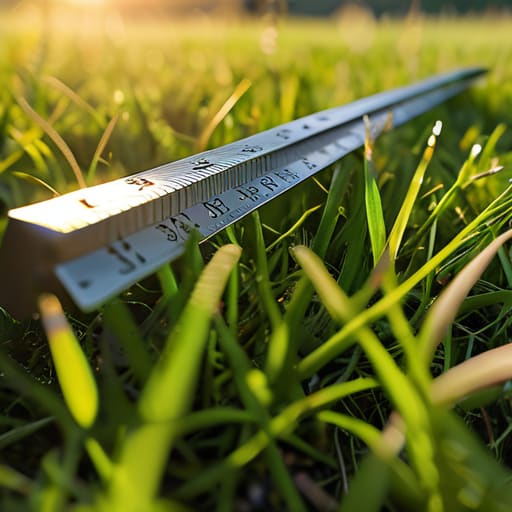
If you let the stock graze it down to the roots, you’re not just losing grass; you’re killing your regrowth and inviting soil compaction. On the flip side, if you leave it too long, you’re letting that energy go into seed heads instead of high-quality feed. Using basic grazing management tools, like a simple rising plate or even just a well-used ruler, takes the guesswork out of the equation. It’s the difference between managing a resource and simply watching your potential profit get trampled into the mud.
Mastering Forage Yield Estimation Without Buying Expensive Gadgets
You don’t need a drone or a piece of kit that costs more than a decent heifer to get a handle on what’s actually growing in your fields. Most of the lads I know get lured in by the shiny new grazing management tools that promise a miracle, but half of them end up gathering dust in the shed because they’re too much of a faff to use when it’s raining sideways in November. Real forage yield estimation comes down to a clipboard, a few square meters of ground, and the discipline to actually do the math.
If you want to get serious about your grass biomass calculation, start with the quadrat method. It’s old-fashioned, yes, but it doesn’t require a software subscription. You clip the sward, weigh it, and dry it—or at least estimate the dry matter—to see what you’ve truly got. It’s about understanding the relationship between the height you see and the actual energy available to your livestock. If you aren’t willing to walk the field and get your boots dirty, you aren’t managing your pasture; you’re just hoping for the best.
Smart Grass Biomass Calculation Making Your Pasture Management Techniques W
Once you’ve got your sward height and a decent idea of your coverage, you have to actually do the math, or you’re just playing at farming. A proper grass biomass calculation isn’t about being a mathematician; it’s about knowing if you have enough feed to carry those ewes through the next three weeks without having to go out and buy expensive, low-quality concentrate to make up the difference. If you estimate 2,500kg of dry matter per hectare but you’re actually sitting on 1,800kg, you aren’t just “running short”—you are actively eating into your profit margin before the sun even goes down.
I’ve seen plenty of lads get caught up in high-tech grazing management tools that promise the world, but the most reliable way to stay on top is to keep your calculations grounded in the reality of your specific ground. You have to factor in the moisture. If the ground is sodden, your dry matter estimation is going to shift, and if you don’t adjust your numbers, you’ll end up overstocking a field that simply can’t support the weight. Don’t trust a spreadsheet more than you trust your own eyes and a bit of basic arithmetic.
Five Hard Lessons from the Field: Measuring What Actually Matters
- Stop looking at the color of the grass and start looking at the density; a lush green field can be nothing but stem and air if you haven’t managed the grazing pressure, and that’s just wasted space where a cow should be eating.
- Always take your measurements in a ‘W’ pattern across the field, not just where the ground looks easiest to walk on, because if you only sample the good bits, you’re lying to your own bank balance.
- Check the rainfall before you even think about your estimates; you can have the best measurement in the world, but if the ground is bone dry or sodden, your dry matter math is going to be a work of fiction.
- Don’t get precious about the timing of your checks—if you only measure when you feel like it, you’re not managing a system, you’re just reacting to a crisis.
- Keep your notes in a way that actually makes sense when the winter comes; a scrap of paper with “lots of grass” written on it won’t help you figure out why your feed bill was double what you budgeted for in February.
The Bottom Line on Your Grass
Stop looking at your livestock numbers as the primary driver of your season; if you don’t know your dry matter, you’re just guessing how much money you’re losing to the soil.
Forget the fancy gadgets that promise a miracle; a simple sward height check and a bit of honest math will tell you more about your margin than any expensive piece of kit gathering dust in the shed.
Management isn’t about maximizing every blade of grass, it’s about timing the graze so you aren’t paying for expensive concentrates just because you let the field get too low.
The Bottom Line on the Field Edge
At the end of the day, you can have the best genetics in the county and the most expensive machinery in the shed, but if you aren’t measuring your grass, you’re just gambling with your margins. We’ve talked about sward heights, dry matter, and why those fancy gadgets often end up gathering dust; the point is that measurement isn’t about being a scientist, it’s about knowing your limits. If you don’t know what’s under the cows’ feet, you’ll never know if you’re truly feeding them or if you’re just watching your cash flow disappear into the soil one missed grazing rotation at a time.
I didn’t learn this from a textbook or a shiny brochure; I learned it by watching my bank balance drop when I overstocked a field that looked lush but was nothing but water and air. Grass measurement is the difference between a farm that survives the bad years and one that actually thrives through them. Don’t wait for a drought or a price crash to start paying attention to your forage. Get out there, get your boots muddy, and start counting the kilograms before the season decides for you. It’s the only way to ensure that what you grow today is actually what you bank tomorrow.
Frequently Asked Questions
If the rain's been coming down for three days straight, how much can I actually trust a sward height reading to tell me the truth about what's in the field?
If it’s been raining for three days, your sward height reading is lying to you. You aren’t measuring grass; you’re measuring water and heavy, slumped blades. The height will look decent, but that’s just wet weight and lack of structure. Don’t trust a single measurement until the ground has breathed a bit and the stalks have stood back up. If you base your stocking on a sodden reading, you’ll be overgrazing a field that’s actually empty.
At what point does the cost of the time spent measuring the grass actually outweigh the extra margin I'm trying to squeeze out of the herd?
It’s the classic trap: chasing a percentage of margin while losing your sanity. If you’re out there with a quadrat and a clipboard every single day on every single paddock, you’re wasting time that should be spent fixing fences or checking feet. You don’t need a census; you need a trend. Measure when the seasons shift or when the weather turns, not because the calendar says so. If the measurement takes longer than the decision it informs, stop doing it.
I can get a decent estimate on my best leys, but how do I account for the patchy ground and the rush in the corners without spending all day on my feet?
You don’t walk every square inch, and you’d be a fool if you tried. If you’re measuring the best ley, you’re only seeing the dream, not the reality. Take three or four representative samples: one from the good ground, one from the patchy bits, and one from the rushy corner. Average them out. It’s better to have a rough, honest number for the whole field than a perfect number for a patch that doesn’t represent the truth.
