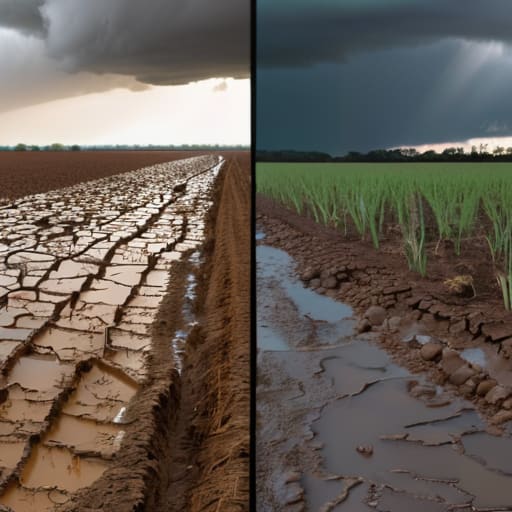
If you listen to the lot on the television or the glossy brochures from the big ag-tech firms, you’d think the world is ending tomorrow because of some grand, abstract theory. They love to talk about carbon credits and global models, but they never seem to mention how climate change affects farming here in the actual dirt under our boots. To them, it’s a political debate; to us, it’s the fact that the grass is drying out in May when it should be lush, or that we’re getting a month’s worth of rain in a single Tuesday afternoon that turns the low ground into a bog. It isn’t about saving the planet for the sake of a headline; it’s about whether your suckler cows have enough forage to carry a calf through a summer that refuses to behave.
I’m not here to sell you a new brand of expensive, “climate-smart” kit that’ll be rusting in the shed by Christmas. What I want to do is look at the hard numbers—the grass, the feet, and the cash flow—to see how these erratic weather swings are truly hitting your margins. I’ll tell you what I’ve learned from forty years of watching the seasons lose their rhythm, focusing on the practical shifts you need to make to keep your head above water.
Table of Contents
- Dying Grass and Shifting Growing Seasons the Real Cost of Change
- How Climate Change Affects Farming Here and Your Bottom Line
- Crop Yield Volatility Why Your Best Seasons Are Becoming Unreliable
- Water Scarcity in Agriculture Managing Scarcity Before the Well Runs Dry
- Building Agricultural Resilience Strategies Through Better Soil Health and
- Five Ways to Stop the Weather from Bleeding Your Bank Account Dry
- The Hard Truths Before Next Season
- The Long View from the Gate
- Frequently Asked Questions
Dying Grass and Shifting Growing Seasons the Real Cost of Change
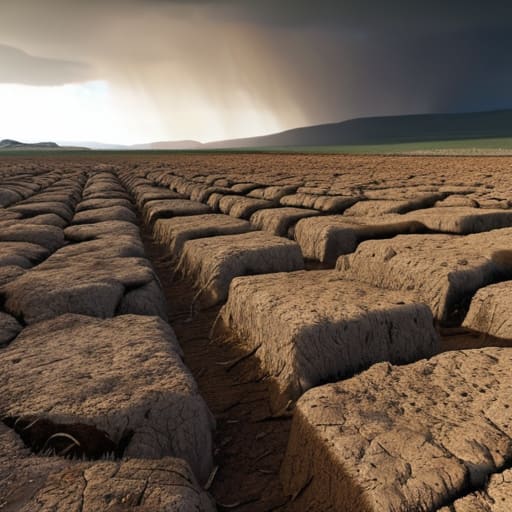
You can talk all you want about global models and atmospheric percentages, but I measure change by the state of my sward in mid-July. We used to have a predictable rhythm—a certain amount of rain, a certain amount of growth, and a certain amount of grazing available. Now, those shifting growing seasons mean the grass is either coming on too fast for the cattle to keep up with, or it’s turning to dust before the lambs have even finished weaning. It’s not just about the heat; it’s the inconsistency. When you get those sudden, violent bursts of rain followed by three weeks of nothing, you aren’t just losing pasture; you’re watching your nutritional security wash straight into the drains.
If you aren’t looking closely at your soil health and climate change, you’re going to get caught out. I’ve seen too many lads try to solve a grass shortage by buying more expensive concentrates, forgetting that the real problem is the ground itself. If your soil can’t hold moisture because it’s been baked hard or stripped of its structure, no amount of bagged feed will fix your margins. You end up chasing a deficit that you can’t outrun.
How Climate Change Affects Farming Here and Your Bottom Line
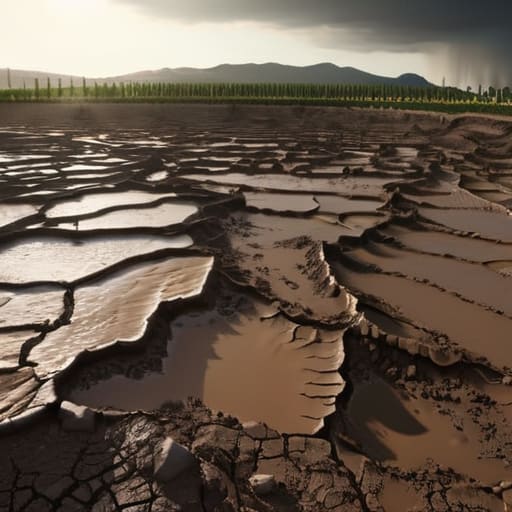
It isn’t just about the thermometer reading a few degrees higher in July; it’s about the unpredictability of it all. When the weather stops following the rules we learned from our fathers, the margin for error disappears. I’ve seen seasons where the rain comes in such violent bursts that it washes the topsoil straight down the hill, only to leave us staring at baked, cracked earth for the next two months. This kind of extreme weather impact on crops and pasture means you can no longer bank on a steady supply of feed. You end up playing a constant, expensive game of catch-up with your stock.
Ultimately, this all hits the bank balance. If you can’t predict when the grass will peak, you can’t plan your weaning or your sales, and that is where the real danger lies. We talk a lot about agricultural resilience strategies in the magazines, but on a suckler farm, resilience is just another word for having enough cash to buy in hay when the ground won’t grow a blade. If your soil health and climate change management isn’t sorted, you aren’t just farming animals; you’re gambling against the sky.
Crop Yield Volatility Why Your Best Seasons Are Becoming Unreliable
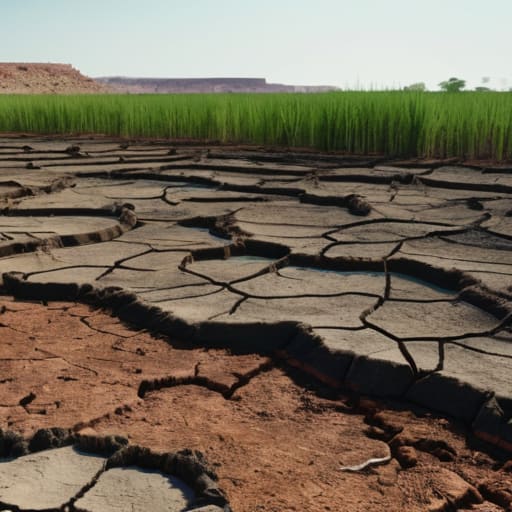
It’s one thing to talk about a dry summer; it’s quite another when you can’t bank on the silage being ready when the cattle need it. We used to be able to plan our year around the calendar, but these days, the calendar is a liar. You’ll have a burst of growth that looks promising, only to have the soil bake hard as a brick two weeks later. This crop yield volatility isn’t just a statistic in a government report; it’s the difference between a full bunker and a hungry herd in February.
I’ve seen too many lads invest in fancy new machinery thinking it’ll solve the problem, but no amount of horsepower fixes a field that’s lost its ability to hold moisture. You can talk about sustainable farming practices all day long, but if you haven’t addressed the fundamental link between soil health and climate change, you’re just whistling in the wind. If the ground can’t hold water during the wet spells or stay cool during the heatwaves, your yields will continue to swing like a pendulum, and your bank balance will take the brunt of it.
Water Scarcity in Agriculture Managing Scarcity Before the Well Runs Dry
Everyone talks about the rain not falling, but they rarely talk about what happens when the ground can’t hold onto what does arrive. I’ve seen it happen three times in the last decade: a month of decent showers followed by a heatwave that turns your best grazing into something resembling a biscuit. If you haven’t looked at your soil health and climate change as two sides of the same coin, you’re in for a shock. High-organic matter soil acts like a sponge; thin, depleted soil acts like a sieve. When that sponge dries out, your cattle start losing condition before you’ve even had a chance to check the troughs.
Managing water scarcity in agriculture isn’t about buying a bigger tank and hoping for the best; it’s about how you manage the land between the rains. I’ve wasted too much money on fancy irrigation kit that ended up rusting in the shed because the electricity costs alone made it a non-starter. Real resilience comes from keeping the ground covered and the structure intact. If you’re waiting for the well to run dry before you start thinking about storage or soil structure, you’ve already lost the margin.
Building Agricultural Resilience Strategies Through Better Soil Health and
You can talk all you want about high-tech weather forecasting, but if your soil is nothing more than a dead sponge, you’re already behind the eight ball. I’ve learned the hard way that the best agricultural resilience strategies don’t come from a shiny new app; they come from what’s happening under your boots. If you aren’t working on the link between soil health and climate change, you’re essentially gambling with your margins. Good organic matter acts like a bank account for moisture—it lets you weather those dry spells without having to scramble for expensive supplementary feed or watch your pasture turn to dust.
It’s easy to get distracted by the latest piece of kit, but most of the “solutions” being sold won’t help when the ground is either baked hard as a brick or sodden as a bog. Real resilience means building a soil structure that can actually handle the extreme weather impact on crops and livestock. If you don’t invest in your ground now, you’ll be paying for it later through increased vet bills and a much tighter cash flow when the seasons stop behaving like they used to.
Five Ways to Stop the Weather from Bleeding Your Bank Account Dry
- Stop chasing the ghost of a “normal” season. I’ve spent forty years thinking I knew when the grass would flush, but the calendar is lying to us now. You need to build your budget around the worst-case weather, not the best, because a single dry spell in a critical growth window will cost you more in supplementary feed than you’ll ever make back in extra weight.
- Watch your soil like a hawk, because it’s your only real insurance policy. If your ground is compacted and lifeless, it won’t hold a drop of rain when it actually falls, and it’ll turn into a bog the second the heavens open. Good organic matter isn’t some luxury for the “green” crowd; it’s the difference between a resilient pasture and a field of dust.
- Diversify your forage, but don’t get fancy. I’m not talking about expensive new exotic mixes that’ll die the first time the temperature swings; I mean having a mix of species that can handle both the soak and the drought. If your entire system relies on one type of grass that hates a dry July, you’re just gambling with your cash flow.
- Invest in infrastructure that actually works, not just what looks good in a brochure. A fancy new feeder is useless if you haven’t sorted your water security. If you’re relying on a single trough or a shallow pond that dries up by June, you’re one heatwave away from a massive drop in stock condition and a very expensive vet bill.
- Keep your eyes on the feet. Erratic weather means more mud in the wet months and harder, thirstier ground in the dry. That shifting ground wreaks havoc on a cow’s feet, and as I’ve learned the hard way, a lame animal is a hole in your pocket that never quite closes. Manage your grazing intensity to protect the ground, or the ground will eventually break you.
The Hard Truths Before Next Season
Stop looking at the weather forecast and start looking at your soil; if you haven’t built up organic matter to hold moisture, you’re just gambling with your cash flow every time the rain stops falling.
Resilience isn’t a fancy new piece of kit or a government grant; it’s about managing your stocking rates to match the grass you actually have, not the grass you wish you had on paper.
Forget the grand theories about global shifts for a moment and focus on the margins—if your breeding decisions don’t account for more erratic calving windows and harder summers, you’ll be working harder just to stay in the red.
The Long View from the Gate
At the end of the day, we aren’t just talking about shifting weather charts or abstract percentages; we are talking about the physical reality of what happens when your grass stops growing in May or your soil turns to dust by July. You can buy the fanciest new tractor or the most expensive precision-ag software on the market, but if you haven’t addressed the fundamental link between your soil health, your water security, and your cash flow, you’re just decorating a sinking ship. The volatility in our yields and the unpredictability of our seasons mean that the old way of “just getting on with it” isn’t enough anymore. You have to manage for the worst-case scenario every single morning, because the margin between a profitable year and a massive debt hole has never been thinner.
I’ve seen plenty of seasons come and go, and I’ve seen men broken by things they thought they could control. You can’t control the rain, and you certainly can’t control the global temperature, but you can control how much resilience you build into your ground and your livestock. Don’t get distracted by the flashy marketing or the latest subsidy schemes that promise a quick fix; focus on the fundamentals of your land. If you treat your soil like an asset rather than just dirt, and if you respect the shifting rhythms of the seasons, you might just find a way to make this still work. It’s going to be a hard climb, but farming is about endurance, and we’ve always been a breed that knows how to weather a storm.
Frequently Asked Questions
If the grass growth is becoming more erratic, does it actually make sense to keep increasing my stocking density, or am I just setting myself up for a massive feed bill when the drought hits?
If you push your stocking rates based on a good spring, you’re just gambling with your bank balance. Increasing density when the growth is erratic is a fast way to trade cheap grass for expensive concentrate. I’ve seen it too many times: a farmer buys more head to chase a bumper season, only to face a massive feed bill when the rain stops. You can’t eat a spreadsheet; if the ground can’t back it, don’t do it.
You talk about soil health, but how much of that is actually going to help when we get these heavy, sodden winters that turn the whole farm into a bog?
It won’t stop the rain, but it stops the farm from turning into a soup. If your soil is compacted and lifeless, that water just sits on top, poaching the ground and killing your grass. Good structure means the water actually moves through the profile instead of pooling. You can have all the organic matter in the world, but if you haven’t managed your drainage and avoided heavy kit on wet ground, you’re just paying to breed mud.
Given the cost of everything right now, is it worth investing in new water infrastructure, or is that just more kit that'll end up sitting in the shed collecting dust?
If you’re looking at a shiny new automated system just to tick a box, keep your money in the bank. But if you’re staring at a dry trough in July and watching your weaning weight drop because the old borehole can’t keep up, then it’s not “kit”—it’s survival. Don’t buy for the sake of it; buy because a thirsty cow is a cow that isn’t converting grass into cash. Invest in reliability, not gadgets.
