I’ve lost count of how many times I’ve seen a young lad walk into a field with a shiny new handheld sensor or a tablet app that costs more than a decent heifer, convinced he’s finally mastered how to measure grass. They think a digital readout is going to save them, but all they’re doing is paying a premium to be precisely wrong. I remember back in ’94, during a particularly wet spring, I spent a fortune on a piece of kit that promised “scientific precision,” only to find it couldn’t tell the difference between a lush ryegrass sward and a patch of weeds if the ground was even slightly damp. You can buy all the gadgets in the world, but if you don’t understand the relationship between the soil, the rain, and the actual available feed, you’re just playing with expensive toys.
I’m not here to sell you a subscription or a piece of plastic that’ll end up in the bottom of a tool shed by Christmas. I want to talk about the practical, slightly muddy reality of assessing what’s actually under your boots. I’m going to show you the methods that actually matter for your margins—the ones that rely on your eyes, a simple quadrat, and a bit of common sense—so you can stop guessing and start managing your cash flow.
Table of Contents
- Stop Guessing Your Pasture How to Measure Grass Before You Waste Money
- The Sward Height Assessment Why Eyeballing Your Field Is Costing You
- Measuring Forage Availability Without Buying Expensive Unused Gadgets
- Mastering Grass Growth Rate Monitoring to Protect Your Cash Flow
- From Turf Density Measurement to Real Profit in the Bank
- Five Ways to Stop Treating Your Pasture Like a Guessing Game
- The Bottom Line on Your Grass
- The Bottom Line on the Grass
- Frequently Asked Questions
Stop Guessing Your Pasture How to Measure Grass Before You Waste Money
Most of the lads I talk to at the mart think they can eyeball a field and know exactly what’s there. They walk the perimeter, look at the colour, and decide the stock is fine. That’s how you end up overgrazing a hill into nothing or, worse, paying for expensive concentrate because you thought the forage availability was lower than it actually was. You can’t bank on a “feeling” when the bank is looking at your cash flow.
If you want to stop playing games with your margins, you need a proper sward height assessment that doesn’t rely on guesswork. I don’t care if you use a simple rising plate meter or a manual ruler; the point is you need a number. When you start grass growth rate monitoring with actual data, you stop reacting to the weather and start planning for it. It’s the difference between knowing you have three weeks of grazing left and finding out the hard way when the cows are staring at you through the gate with nothing but dirt to chew.
The Sward Height Assessment Why Eyeballing Your Field Is Costing You
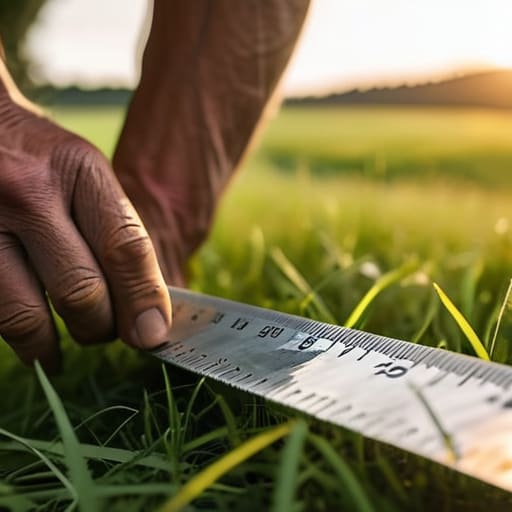
I’ve spent forty years looking at fields, and if there is one thing I’ve learned, it’s that your eyes are the most unreliable tools on the farm. You walk a paddock, see a lush green carpet, and think you’ve got a month of grazing sorted. Then the cows go in, and three days later, you’re staring at bare dirt and a pile of expensive, wasted concentrates because you overstocked a field that wasn’t as deep as it looked. A proper sward height assessment isn’t about being precious; it’s about knowing exactly how much energy is actually under the animal’s nose.
When you rely on “eyeballing” it, you aren’t managing a farm; you’re gambling with your margins. You might think you’re seeing plenty of forage, but you’re likely missing the reality of the nutritional value versus the actual volume. If you aren’t using a simple rising plate or even a well-worn ruler to check the height, you’re just guessing at your measuring forage availability. And in a business where the weather can turn a field from a feast to a famine in a single week, guessing is a luxury we simply cannot afford.
Measuring Forage Availability Without Buying Expensive Unused Gadgets
You’ll see them at the local shows or in the glossy brochures: high-tech sensors that claim to map your entire field from a drone or a satellite. They look impressive, but if you ask me, most of those gadgets are just expensive ways to tell you what you already know when you walk the field. I’ve seen enough “revolutionary” pasture management tools sit in the corner of a shed, gathering dust, because they couldn’t handle a bit of Scottish rain or the reality of a thick, uneven sward.
If you want to get serious about measuring forage availability, you don’t need a computer science degree; you need a calibrated quadrat and a bit of discipline. A simple, well-used quadrat and a handful of sample points across your different field types will give you a more reliable figure than any sensor that hasn’t been tested against a real, heavy-set suckler cow. It’s about consistency over complexity. If you can’t get an accurate reading with a piece of plastic and a notebook, a thousand-pound piece of kit isn’t going to save your margins—it’s just going to make your mistakes more expensive.
Mastering Grass Growth Rate Monitoring to Protect Your Cash Flow
Most of the lads I know treat grass growth like the weather—something that just happens to them, rather than something they can plan for. They wait until the field looks lush before they even think about moving the cattle, and by then, the profit has already been grazed away. If you aren’t practicing regular grass growth rate monitoring, you aren’t managing a farm; you’re just reacting to a series of expensive surprises. You need to know if that field is putting on five millimetres a day or fifty, because that number dictates whether you’re buying expensive concentrate or letting the cows do the work for free.
I’ve seen too many young farmers get blinded by fancy pasture management tools that promise the world but require more time than they save. You don’t need a satellite feed to tell you the truth. You need a steady rhythm of checking your sward height and understanding how the moisture levels are driving that growth. It’s about the predictability of the feed, not the novelty of the tech. When you know your growth rate, you stop making decisions based on how the field looks on a sunny Tuesday and start making them based on what the bank account requires come autumn.
From Turf Density Measurement to Real Profit in the Bank
Now, don’t get it twisted—I’m not interested in the science for the sake of a certificate. If you’re looking at turf density measurement like it’s some hobby for someone measuring grass height for lawn care, you’ve missed the point entirely. On a suckler farm, density tells you how much actual substance is backing up that height. You can have a field that looks lush and tall, but if the base is thin and the stems are hollow, you’re just feeding your cattle air. I’ve seen plenty of men walk a field, see a sea of green, and assume they’ve got a month’s worth of grazing, only to find the ground is practically naked two weeks later when the real pressure hits.
The link between what’s under the hoof and what’s in the bank is shorter than most people realize. When you get your sward height assessment right, you aren’t just playing with a ruler; you are calculating your feed costs. Every extra ton of concentrate you buy because you misjudged your forage availability is a direct hit to your year-end margin. You have to treat every square meter of that field as a line item on a balance sheet. If you aren’t tracking how much weight that grass actually puts on a heifer, you aren’t farming—you’re just hoping for the best, and hope is a very expensive way to run a business.
Five Ways to Stop Treating Your Pasture Like a Guessing Game
- Stop measuring the middle of the field and start looking at the corners and the slopes; if you only measure the easiest bit of ground, you’re lying to yourself about what’s actually available for the herd.
- Get a proper measuring stick or a simple ruler in your pocket every time you walk a field, because “eyeing it up” is how you end up overstocking a field that’s actually running thin.
- Record your measurements alongside the rainfall and the soil temperature, because grass doesn’t grow in a vacuum, and knowing why it stopped growing is just as important as knowing it has.
- Don’t just measure height, measure the density; a field of tall, spindly weeds might look good from the gate, but it won’t put a single pound of weight on a suckler calf.
- Use your measurements to plan your rotations weeks in advance, rather than reacting when the ground is already bare and you’re forced to buy expensive, unnecessary concentrates.
The Bottom Line on Your Grass
Stop relying on your gut feeling; if you aren’t putting a ruler to the sward, you’re just gambling with your feed costs and your margins.
Invest your time in measuring growth rates and density rather than wasting capital on fancy gadgets that’ll end up gathering dust in the shed.
Every centimeter of grass you miscalculate is a direct hit to your cash flow, so treat your pasture management like the bank account it actually is.
The Bottom Line on the Grass
At the end of the day, measuring grass isn’t about playing scientist or satisfying some consultant’s checklist; it’s about knowing exactly what you have before you commit your livestock to it. If you stop eyeballing the sward and start actually recording the heights and the growth rates, you stop being a passenger to the weather and start becoming a manager of your actual margins. You’ll find that the difference between a profitable year and a year spent chasing deficits often comes down to whether you knew you were short on forage three weeks before the cattle actually started looking hungry. It isn’t fancy, and it won’t win you any awards, but accurate data is the only hedge you have against the volatility of the seasons.
I’ve spent forty years watching men lose their shirts because they thought they could feel their way through a grazing rotation. They relied on gut instinct when they should have been relying on a clipboard and a bit of discipline. Don’t let your pride get in the way of a simple measurement; the grass doesn’t care about your ego, it only cares about the nitrogen and the sunlight. If you take the time to master these basics now, you aren’t just managing a field—you are protecting your cash flow and ensuring there is something left to pass down to the next generation. Get out of the cab, get your boots in the muck, and start measuring what matters.
Frequently Asked Questions
What do I do if the ground is uneven or patchy, because a single measurement in one corner isn't going to tell me the truth about the whole field?
If you take one measurement in a corner, you’re not farming; you’re gambling. I’ve seen men lose a fortune because they assumed a lush corner meant the whole field was ready for grazing. You need a pattern—the ‘W’ method works well enough. Hit five or six spots across the field, including the hollows where the water sits and the rises where the soil’s thin. Average them out. It’s more walking, but it’s better than being wrong.
How often am I actually supposed to be out there checking the height before I'm just wasting my time and diesel?
If you’re heading out there every single morning, you’re just burning diesel and wasting daylight. But if you wait until the cattle are looking thin, you’ve already lost the game. I find a good rule of thumb is once a week during the main growing season, or whenever the weather shifts—a heavy soak or a dry spell changes the math entirely. Check the ground, check the rain, and then decide if the grass is actually moving.
Once I've got these numbers, how do I actually turn them into a feeding plan that doesn't end up with me buying too much expensive concentrate?
You don’t turn numbers into a plan; you turn them into a budget. Once you know your dry matter, you stop treating the feed store like a buffet. If your grass numbers are dropping, you don’t immediately rush for the concentrate bags—you look at your stocking density first. Use those measurements to work backward: figure out exactly how many kilos of DM your herd needs, subtract what the field is actually giving you, and only then do you buy the gap. Anything else is just expensive guesswork.
