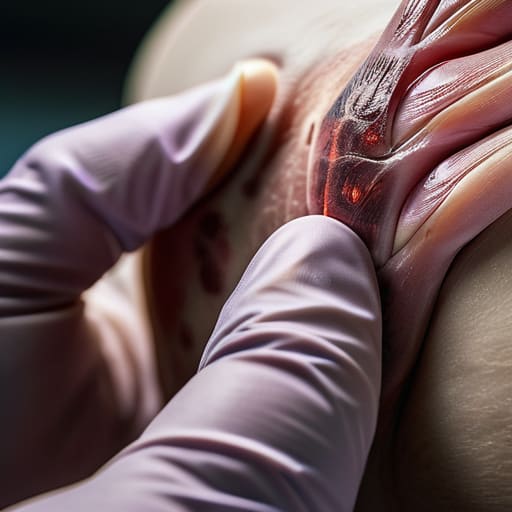
I’ve spent enough time watching salesmen in clean boots try to pitch expensive nutritional software to convince me that “how body condition scoring works” requires a tablet and a subscription. It’s a bloody joke. You don’t need a digital readout to tell you a cow is running on empty; you need to get your hands dirty and actually feel the animal. I remember back in ’94, during a particularly dry spell, I wasted a small fortune on high-spec concentrates because I was looking at the wrong data, rather than just walking the field and feeling the hollows in the flanks of my best breeders. I was looking at spreadsheets when I should have been looking at the ribs.
I’m not here to give you a lecture from a textbook or sell you a piece of kit that’ll end up gathering dust in the shed. What I’m going to do is show you how to use your own two hands to make decisions that actually protect your margins. We’ll talk about the difference between a cow that’s carrying good cover and one that’s just bloated on cheap forage, and more importantly, how that distinction dictates whether you’re making money or just subsidising the vet.
Table of Contents
- Stop Guessing at the Feed Bunk How Body Condition Scoring Works
- More Than Just a Skinny Cow Animal Fat Distribution Assessment
- The Hands on Truth Visual and Palpation Techniques That Matter
- Where the Money Leaks Impact of Bcs on Reproductive Success
- Mastering the Scale Optimal Weight Management for Livestock Profits
- Five Ways to Stop Losing Money to a Bad Score
- The Bottom Line on Body Condition
- The Bottom Line on the Scorecard
- Frequently Asked Questions
Stop Guessing at the Feed Bunk How Body Condition Scoring Works
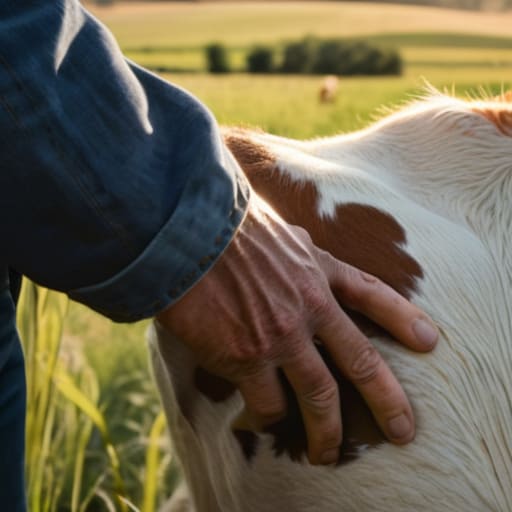
Now, you can stand in the yard and stare at a cow until the sun goes down, but staring isn’t the same as seeing. If you’re just looking at whether she looks “plump” or “thin,” you’re playing a dangerous game with your margins. To do this right, you need a combination of visual and palpation techniques. It’s not enough to just glance at her from the gate; you have to get in close and actually feel the spine, the ribs, and the fat cover over the pelvis. If your hands aren’t doing the work, you’re just guessing, and guessing is a luxury a suckler herd can’t afford.
Most folks use a standard scale, but a number on a page means nothing if you haven’t mastered the animal fat distribution assessment yourself. I’m talking about feeling the transition from muscle to fat around the tail head and the loin. You aren’t just checking if she’s well-fed; you are performing nutritional status monitoring to predict if she’ll actually hold a calf come next season. If you miss the dip in condition now, you’ll pay for it in the calving pen later.
More Than Just a Skinny Cow Animal Fat Distribution Assessment
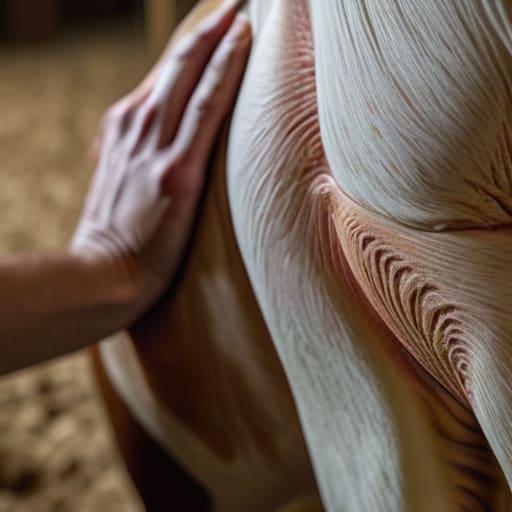
If you think a skinny cow is just a skinny cow, you’re missing the point entirely. It isn’t just about the scale reading; it’s about where that energy is actually sitting. A proper animal fat distribution assessment tells you if the animal is actually holding onto its reserves or if it’s just running on fumes. I’ve seen plenty of cattle that look fine from a distance, but once you get in there and start using proper visual and palpation techniques, you realize they’ve got nothing on their ribs and no cover over their pins.
You have to look at the hollows and the bumps, specifically around the tail head and the spine. If she’s all bone and no muscle, she isn’t going to thrive when the weather turns or the grass dies back. This is where the real money is won or lost; the impact of BCS on reproductive success is far more significant than any fancy supplement you can buy in a bag. If she hasn’t got the fat cover to support a pregnancy, you’re essentially paying to keep a cow that won’t produce a calf.
The Hands on Truth Visual and Palpation Techniques That Matter
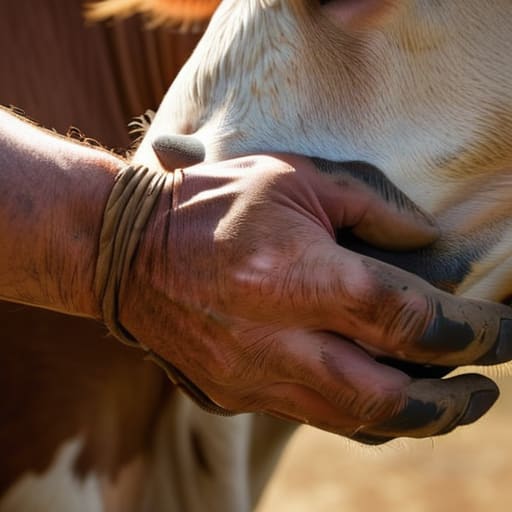
Now, you can stand in the lane and squint at a cow from twenty yards, but that’s just window shopping. If you want the truth, you have to get your hands dirty. Real visual and palpation techniques require you to actually walk up to the animal and feel the architecture underneath the hide. I don’t care how expensive your digital scales are; if you aren’t reaching out to feel the depth of the spine and the thickness of the fat over the ribs, you’re just playing at farming. You’re looking for that specific resistance where the bone meets the flesh—if it feels like a broomstick, she’s failing; if she feels like a keg of ale, you’re wasting money on feed she doesn’t need.
It’s a tactile skill, much like judging the moisture in a soil sample. You’re checking the hooks and pins, feeling for that subtle layer of cover that separates a profitable breeder from a liability. This isn’t about being gentle; it’s about accurate nutritional status monitoring. If you miss the mark here, you aren’t just miscalculating a number on a spreadsheet—you’re missing the early warning signs of a cow that’s about to drop her calf or, worse, fail to conceive entirely.
Where the Money Leaks Impact of Bcs on Reproductive Success
You can have the finest genetics in the county, but if your cows are running on empty, those pedigrees won’t mean a damn thing come calving season. I’ve seen it time and again: a farmer spends a fortune on a bull with a fancy certificate, only to end up with a field of empty cows because he neglected the impact of BCS on reproductive success. A cow that’s too thin won’t cycle, and one that’s too fat is just a walking liability that’ll struggle to get into heat or have a smooth enough calving to keep the calf thriving.
It’s a simple equation of energy, really. If she’s spent the whole winter just trying to maintain her own skin and bone, she’s got nothing left in the tank for a pregnancy. That’s where the real money leaks out—not in the cost of the feed, but in the lost opportunity of a dry cow that should have been producing a calf. When you’re doing your nutritional status monitoring, don’t just look for a healthy animal; look for the margin that allows her to actually perform her one job.
Mastering the Scale Optimal Weight Management for Livestock Profits
You can buy all the high-spec weighing scales in the world, but if you aren’t using that data to drive your decisions, you’re just paying for heavy metal to sit in the yard. Real optimal weight management for livestock isn’t about chasing a number on a digital readout; it’s about knowing whether that number means you’ve got a profitable cow or a walking deficit. I’ve seen lads spend a fortune on precision weighing only to ignore the fact that their ewes are coming into lamb on nothing but bone and prayer.
The trick is to marry the scale with what your hands tell you. A cow might hit the target weight, but if she’s all gut and no cover, she’s going to fail you when the weather turns or the calf comes. You have to look at the trend over time, not just a snapshot on a Tuesday morning. If you aren’t using your nutritional status monitoring to adjust your forage or supplement levels before the animal hits a breaking point, you aren’t managing a herd—you’re just watching it happen.
Five Ways to Stop Losing Money to a Bad Score
- Don’t trust your eyes alone when the sun is out. A cow can look like she’s carrying well in the bright light of a June afternoon, but you won’t know the truth until you put your hands on her spine and ribs on a damp Tuesday morning. If you aren’t feeling the bone, you’re just looking at a coat of hair.
- Watch the movement, not just the frame. A cow might hit the right score on paper, but if she’s lagging behind the rest of the herd or walking heavy, she’s likely carrying too much fat and wasting energy that should be going into her calf. You want a cow that moves with purpose, not one that’s lugging around a useless layer of tallow.
- Consistency is the only thing that stops the guesswork. If you’re scoring your heifers in one field and your dry cows in another, you’ll end up with a mess of data that tells you nothing. Pick a time, pick a place, and use the same hands every single time, or you’ll spend the whole winter chasing shadows.
- Check the rump, not just the ribs. Everyone gets obsessed with the spine, but the fat cover over the tail head and the hooks tells you the real story of her reserves. If she’s all bone in the rear, she hasn’t got the cushion to get through a hard winter, no matter how much grass you think you’ve got in the field.
- Score for the season you’re in, not the season you want. A score of 3 might be perfect for a cow in mid-winter when she’s working hard to stay warm, but if she’s hitting a 3 right as calving approaches, you’ve got a problem. You have to be looking six months ahead, or you’ll be paying for it in empty pens come spring.
The Bottom Line on Body Condition
Stop looking at the animal as a whole and start feeling the bones; if you aren’t getting your hands on the ribs and the spine, you aren’t scoring, you’re just daydreaming.
A cow that’s too thin won’t breed and a cow that’s too fat won’t calve well, and either way, you’re watching your margin disappear into the grass.
BCS isn’t an academic exercise to satisfy a vet—it’s your most practical tool for deciding exactly how much money you’re about to spend on feed versus how much you’re likely to get back at the mart.
The Bottom Line on the Scorecard
At the end of the day, body condition scoring isn’t some academic exercise to keep you busy when the rain is coming down; it is a direct window into your bank balance. You’ve seen how a cow that’s too thin won’t cycle, and you’ve felt the weight of a cow that’s too fat, costing you a fortune in unnecessary maintenance and making calving a nightmare. It’s about the constant tension between the grass in the field and the fat on the animal. If you aren’t walking the pens, feeling the ribs and the spine, and making decisions based on what your hands tell you rather than what a spreadsheet says, then you aren’t managing a herd—you’re just watching it happen.
I’ve spent forty years making mistakes that cost me more than a new tractor, and I can tell you that the most expensive mistake is assuming “they look fine from the gate.” Don’t let the novelty of new tech or fancy supplements distract you from the fundamentals of what is actually happening under the skin. Farming is a game of margins, and those margins are won or lost in the details of how you manage your nutrition and your stock. Get out there, get your hands dirty, and trust your eyes and your touch. That is how you build a farm that lasts for the next generation, rather than one that just survives the season.
Frequently Asked Questions
How do I know if I'm being too soft on them when I'm feeling for the ribs, and how do I stop my own bias from messing up the scoring?
The problem is you’re looking for a “feeling” instead of a fact. If you’re hesitating, you’re being too soft. I used to think a bit of extra fat was a safety net, but it’s usually just a slow leak in the bank account. To stop your own bias, stop scoring by eye first. Use your hands. If you can’t feel the spine through the muscle, she’s too thin; if you have to push to find the bone, she’s too heavy. Stick to the landmarks, not your gut.
If I see a cow is running too thin, is it worth the extra cost of bringing in supplementary feed, or am I just throwing good money after bad?
It depends entirely on the ground and how much of the season you’ve got left. If she’s thin because the grass is poor and she’s got a calf to raise, you feed her; otherwise, you’re just subsidising a losing bet. You have to weigh the cost of the concentrate against the cost of a failed pregnancy or a weak calf. If the math doesn’t work on paper, don’t do it in the field.
How much does the weather and the quality of the spring grass actually change my scoring targets from one year to the next?
You can’t set a target in a vacuum. If you’ve had a wet spring and the ground is poaching, that lush-looking grass isn’t doing half the job it should. You’ll find your cows dropping points faster than you can track them. On the flip side, a dry year means you’re chasing quality that isn’t there. I don’t look at the chart first; I look at the sky and the field, then I adjust my expectations.
