
I’ve lost count of how many “management consultants” have come onto a farm with a shiny tablet and a lecture on how to manage farm labour using some high-level corporate framework. They talk about “human resource optimisation” as if we’re running a software firm in London rather than trying to get cattle into a crush before the heavens open. The truth is, you can’t manage a person with a spreadsheet; you manage them with clear expectations and a bit of common sense. I spent years thinking a higher wage or a fancier piece of kit would solve my staffing headaches, only to realise I was just paying more to mask my own failure to communicate what actually needed doing.
In the following pages, I’m not going to give you any of that polished, textbook nonsense that falls apart the moment a tractor breaks down or a heifer goes rogue. Instead, I’ll tell you what I’ve learned from forty years of making expensive mistakes with people. We’ll look at why your biggest drain isn’t the hourly rate, but the hidden cost of rework, and how to build a system that actually holds up when the weather turns foul.
Table of Contents
- Why Your Biggest Leak Isnt Wages but How to Manage Farm Labour
- The High Price of Bad Agricultural Workforce Planning
- Why Seasonal Worker Retention Strategies Fail in the Field
- Stop Wasting Money on Training That Doesnt Stick
- Compliance and Managing Migrant Farm Workers Without the Headache
- Five ways to stop your labour costs from bleeding you dry
- The bottom line on your people
- The Bottom Line on People
- Frequently Asked Questions
Why Your Biggest Leak Isnt Wages but How to Manage Farm Labour

Everyone gets obsessed with the hourly rate. You sit there with a calculator, trying to shave fifty pence off a wage to make the margins look better, while ignoring the fact that a man who doesn’t know which heifer to pull out of the mud is costing you three times that in lost weight and vet bills. I’ve seen it a dozen times: a lad is hired, he’s told to “get on with it,” and by the time he’s accidentally broken a gate or left a feeder empty, you’ve already bled more cash than his entire month’s salary.
The real drain isn’t the payroll; it’s the lack of farm employee training programs that actually mean something. If you aren’t teaching them the specific rhythm of your land, you aren’t managing a team, you’re just paying for expensive mistakes. True optimizing farm productivity doesn’t come from finding the cheapest hands, it comes from making sure the hands you have don’t have to ask you where the shovel is every twenty minutes. If you don’t invest the time in the training, you’ll spend the rest of the season fixing what they’ve broken.
The High Price of Bad Agricultural Workforce Planning
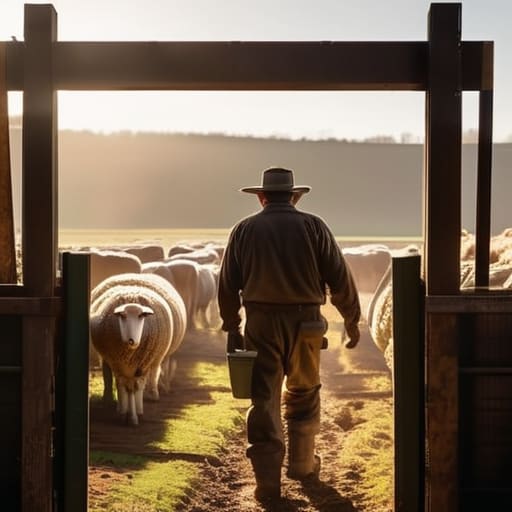
Most people treat hiring like a supermarket run—you wait until the shelf is empty, then you scramble to find whatever’s available. But in this business, that kind of reactive agricultural workforce planning is a fast way to bleed cash. If you’re waiting until the lambing season is hitting its stride to realize you’re short-handed, you aren’t just losing sleep; you’re losing efficiency. You end up paying premium rates for people who don’t know the difference between a heifer and a steer, and by the time they’ve broken a piece of kit or missed a gate, the damage to your margin is already done.
It’s not just about the headcount, either. I’ve seen too many lads walk onto a farm thinking they can just wing it, only to realize they haven’t been given a proper run at any farm employee training programs. When you don’t invest time in showing them how we actually do things here, you’re essentially subsidizing their mistakes. You’ll find yourself spending more time fixing their errors than you would have spent teaching them right the first time. Real planning means having the right hands ready before the grass starts growing, not when it’s already underfoot.
Why Seasonal Worker Retention Strategies Fail in the Field
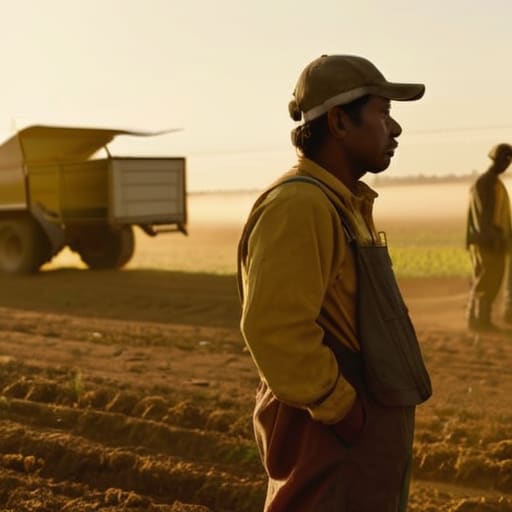
Most people approach seasonal worker retention strategies like they’re reading a manual for a tractor—as if a bit of paperwork and a signed contract will make the machinery run smoother. They think if they tick the boxes for compliance, the hands will stay. But you can’t fix a broken culture with a spreadsheet. I’ve seen plenty of lads walk off a job mid-season, not because the pay was a penny short, but because they spent six hours a day waiting for someone to tell them which gate to open or which field to move into. If your workers are standing around with their hands in their pockets because you haven’t bothered to organise the day ahead, you aren’t just losing time; you’re losing the people who actually want to work.
The real failure usually happens in the gap between the office and the yard. You can invest in fancy farm employee training programs that look great on an audit, but if that training doesn’t translate to the muddy reality of a Tuesday morning in November, it’s just wasted money. True efficiency comes from clarity, not certificates. When you’re managing migrant farm workers who might not speak the local tongue, a clipboard doesn’t mean a thing if the instruction is vague. You need a system that works in the rain, not just in the classroom.
Stop Wasting Money on Training That Doesnt Stick
I’ve sat through enough seminars in drafty village halls to know that most farm employee training programs are little more than a box-ticking exercise designed to make a consultant feel useful. They hand you a glossy folder, talk about “best practices” for an hour, and then leave you to deal with the reality of a wet Tuesday when a worker doesn’t know the difference between a heifer and a steer. If the training doesn’t happen in the mud, under the shadow of the shed, it isn’t worth the paper it’s printed on.
Real skill isn’t learned in a classroom; it’s learned by doing, and more importantly, by being watched. You can spend a fortune on digital modules, but if you aren’t standing there in person to show a lad exactly how to handle a calf without causing a mess or a injury, you’re just burning cash. True competence comes from repetition and immediate correction. If you want to see any real return on your investment, stop looking for a magic course and start focusing on hands-on, practical mentorship that actually respects the pace of the season.
Compliance and Managing Migrant Farm Workers Without the Headache
The paperwork side of managing migrant farm workers is enough to make a man want to retire to a shed with no phone signal. You’ve got the right-to-work checks, the health and safety audits, and the endless trail of documentation that seems to grow every time a new season rolls around. But here is the truth: compliance isn’t just about avoiding a fine from an inspector; it’s about knowing exactly who is on your land and what they are capable of doing. If you treat the paperwork as a box-ticking exercise to satisfy a bureaucrat, you’ll miss the subtle signs that a worker hasn’t understood a safety protocol or a piece of machinery.
I’ve learned the hard way that farm labour compliance and safety isn’t a separate task from the actual farming—it is the foundation of it. If you’re rushing through the induction because you’re worried about the weather or a broken gate, you’re essentially inviting a disaster that will cost you far more than a few lost hours of productivity. You need a system that is as robust as your fences; something that ensures every hand, regardless of where they started, understands the specific risks of your ground. It’s about reducing the chaos so you can focus on the livestock, rather than spending your evenings untangling a mess of legal or physical errors.
Five ways to stop your labour costs from bleeding you dry
- Stop treating training like a box-ticking exercise in the kitchen; if a man doesn’t know how to handle a calf or spot a limp before he’s out in the field, you haven’t trained him, you’ve just given him a pair of boots and a prayer.
- Build a system that works for the person doing the job, not the person filing the paperwork, because if your instructions are too complicated to follow when it’s raining and the light is failing, they simply won’t be followed.
- Respect the rhythm of the season by planning your hardest tasks around when people actually have the capacity to do them, rather than assuming a seasonal hand can work twenty-hour days indefinitely without breaking your machinery or your morale.
- Watch the small mistakes that cost more than a day’s wage, like a poorly secured gate or a missed feed schedule, and realize that a worker who feels too intimidated to tell you they’ve made a mistake is your most expensive liability.
- Invest in people who actually care about the stock, because you can pay the highest hourly rate in the county, but you can’t buy the intuition of a worker who notices a ewe is off her feed before the vet has to be called.
The bottom line on your people
Stop looking at your payroll as a fixed cost and start seeing it as a variable one; if you aren’t planning your labour around the actual workload of the season, you’re either paying people to stand around or paying them overtime to fix mistakes you should have caught in February.
A worker who knows exactly where the gate key is and how your specific tractor behaves is worth twice as much as a ‘highly skilled’ recruit who spends half the day asking where the diesel is kept.
If your training is just a stack of paperwork they sign once and forget, you haven’t trained them—you’ve just bought yourself a bit of legal cover that won’t stop them from breaking a heifer or a fence.
The Bottom Line on People
At the end of the day, managing labour isn’t about finding the cheapest pair of hands or the most sophisticated digital rota; it’s about closing the gaps where your profit bleeds out. We’ve looked at how poor planning, wasted training, and the sheer cost of turnover can hollow out your margins faster than a bad season of drought. If you aren’t treating your workforce like a critical piece of infrastructure—just as vital as your fencing or your tractor—then you aren’t managing a farm, you’re just subsidising inefficiency. You have to stop looking at the wage bill in isolation and start looking at the true cost of a mistake made by a worker who wasn’t properly shown the ropes.
I’ve spent forty years watching men try to automate their way out of a people problem, and I can tell you, it never works. You can buy the best kit in the world, but if the person operating it doesn’t understand the why behind the task, you’re just spinning your wheels. Farming is a hard, seasonal, and often thankless business, and the people who stand beside you in the mud are your most valuable asset. Treat them with the same respect you give your best breeding line, and you might just find that your cash flow stays a little steadier when the weather turns foul.
Frequently Asked Questions
How do I know if I’m actually losing money on labour through poor management, or if it’s just a bad year for prices?
Look at your dead time, not your bank balance. If the price of beef is down, that’s the market—you can’t fight that. But if you’re paying for four hours of labour and only getting three hours of actual work because the kit wasn’t ready or the instructions were muddled, that’s a management leak. If your input costs per head are climbing while your efficiency is stalling, you aren’t just having a bad year; you’re bleeding out.
When the weather turns and everyone's working flat out, how do I keep a seasonal hand from making a mistake that costs me a whole batch of calves?
You don’t fix that with a thicker handbook or a lecture. When the rain is lashing and the calves are coming, a tired man stops thinking and starts rushing. If you haven’t built a system where the right tool is always in the same spot and the “standard way” is the only way, you’re gambling. Don’t ask them to remember; make it impossible for them to do it wrong. Check the work before they leave the pen.
At what point does it stop being cheaper to do the work myself and actually make sense to hire someone else?
It’s not a math problem you solve on a spreadsheet; it’s a question of where your time is actually worth the most. If you’re spending four hours a day fixing a fence or mucking out just to save a day’s wage, you’re losing money. Every hour you spend on grunt work is an hour you aren’t looking at the grass, checking the ewes, or fixing the cash flow. Hire when your time becomes more expensive than their labour.
