
I’ve spent forty years watching people try to sell me a “complete guide to mental health in farming” wrapped in glossy brochures and filled with academic jargon that wouldn’t hold water in a dry July. They talk about “wellness strategies” and “resilience training” as if you can fix a broken spirit with a seminar and a branded mug. But I’ve sat in the cab of a tractor at four in the morning, staring at a field of dying grass while the bank interest ticks up in my head, and I know that no pamphlet can fix the weight of a bad season or a failing herd.
I’m not here to lecture you from a podium or offer some polished, corporate version of support. What I’m going to give you is the truth from someone who has seen the cost of keeping your head down when it should be up. I’ll tell you how the pressure of the margins can rot a man’s mind faster than rot in a silage pit, and why protecting your headspace is just as vital as checking your fences. This isn’t theory; it’s the hard-won reality of staying sane when the weather, the markets, and the machinery all decide to turn against you at once.
Table of Contents
Understanding Complete Guide to Mental Health in Farming

You can have the best grass and the healthiest stock in the county, but if your head isn’t right, you’ll make a mistake that costs you the farm before the first frost hits. People tend to treat mental health like a luxury or a hobby, something you deal with when the calving is done and the weather holds. But that’s nonsense. It’s as much a part of the operation as the diesel in the tractor or the feed in the trough.
When we talk about the reality of this life, we aren’t talking about feelings in a vacuum; we are talking about the crushing weight of financial pressure and farmer wellbeing. It is the constant, low-grade hum of anxiety that comes when the markets dip or a calf goes wrong in the middle of a wet night. You start to see the signs of depression in agricultural workers not as something sudden, but as a slow withdrawal—a man stopping his visits to the mart, or a woman losing interest in the very stock she’s spent years perfecting. It isn’t a weakness; it’s a symptom of a system that asks too much of a single pair of shoulders.
Key Things to Know
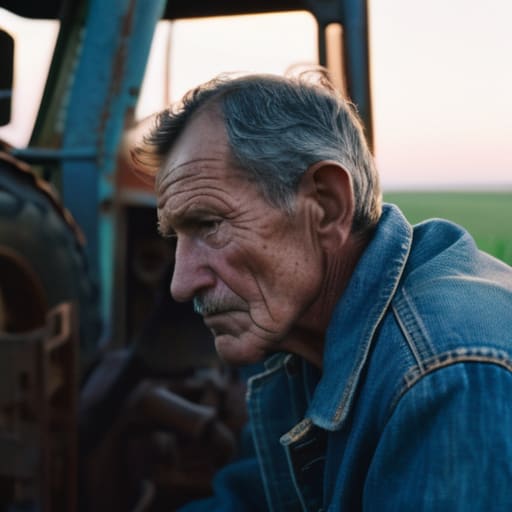
You need to understand that the pressure doesn’t come in a single, tidy wave; it’s a slow leak that drains you while you’re busy looking at the weather forecast. Most of us are trained to ignore the internal rot until the machinery stops working. You’ll see it first in the small things—a sudden lack of interest in the breeding records I’ve kept since ’89, or a temper that flares up over a broken gate that wouldn’t have bothered you a year ago. These are the early signs of depression in agricultural workers, and if you ignore them, you aren’t being “tough,” you’re just being negligent with your most important asset.
It’s also about the rhythm of the year. There is a specific kind of exhaustion that comes with coping with seasonal farm stress, where the workload peaks exactly when your energy hits rock bottom. Between the calving season and the sudden arrival of a wet autumn, the margin for error disappears. If you aren’t watching the gap between your bank balance and your mental state, you’ll find that financial pressure and farmer wellbeing are two sides of the same coin. You can’t fix the books if you can’t think straight.
Practical Tips and Steps

Now, I’m not a doctor, and I won’t pretend a bit of advice from a man with dirt under his fingernails is a substitute for professional help. But I know what it looks like when a man is fraying at the edges. The first practical step isn’t a seminar; it’s recognizing the signs of depression in agricultural workers before they turn into a catastrophic mistake in the yard. If you find yourself staring at a broken fence for twenty minutes without moving, or if the simple task of checking the feed feels like climbing Ben Nevis, you aren’t “just tired.” You’re redlining.
You have to build a system for coping with seasonal farm stress that doesn’t rely on luck. This means scheduling your “off” time as strictly as you schedule your lambing or calving. If you wait for a gap in the work to take a breath, you’ll be waiting until the next decade. I’ve learned that even twenty minutes of quiet that doesn’t involve a spreadsheet or a stockman’s notebook can keep your head level. It’s about protecting the most important asset on this land: your own ability to make a sound decision when the weather turns.
Common Mistakes to Avoid
The biggest mistake I see—and I’ve made it myself more than once—is thinking that “toughing it out” is a badge of honour. We’re bred to work through the rain and the exhaustion, but there is a massive difference between a hard day’s graft and the slow erosion of your sanity. People often mistake the early signs of depression in agricultural workers for just being “tired of the grind.” If you’re finding that the things you used to enjoy, like checking the records on my ewes or even just a quiet pint, feel like a chore, you aren’t just overworked; you’re running on empty.
Another trap is trying to solve every problem in isolation. There’s a certain pride in being the man who handles it all, but when the margins are thin and the weather turns, that isolation becomes a cage. I’ve seen too many men try to manage financial pressure and farmer wellbeing as if they were two separate ledgers. They aren’t. If the bank account is bleeding, your head will follow. Don’t wait until you’re staring at a mounting pile of debt and a broken spirit to look for help; by then, the damage is often harder to mend than a bad heifer.
Final Thoughts
I’ve spent forty years looking at the ground, the weather, and the books, thinking that if I just managed the inputs correctly, the outputs would take care of themselves. I was wrong. You can have the finest genetics in the breed and a perfect calving season, but if you’re running on nothing but caffeine and sheer stubbornness, you’re a liability to your own business. Financial pressure and farmer wellbeing are tied together tighter than a calf to a teat; when the margins thin out, the first thing most of us sacrifice is our own peace of mind.
Don’t wait for a crisis to realize you’re redlining. If you’re noticing the usual signs of depression in agricultural workers—the isolation, the irritability, or that heavy feeling that no amount of profit can fix—then it’s time to stop pretending. It isn’t weakness to acknowledge that the job is hard; it’s basic risk management. Take the time to look up some farming community mental health resources before the pressure forces a mistake you can’t undo. At the end of the day, the farm won’t run without you, and no amount of livestock is worth losing yourself over.
Five things that'll keep your head level when the margins get thin
- Stop treating your own mind like a piece of machinery that doesn’t need servicing. You wouldn’t run a tractor for ten years without checking the oil or listening for a knock in the engine, so don’t expect yourself to run on nothing but caffeine and grit when the weather turns or the prices drop.
- Learn to separate the farm’s balance sheet from your own worth as a man. If the suckler cows fetch a poor price at auction, it’s a bad year for the bank account, not a failure of your character. A bad season doesn’t make you a bad farmer, and it certainly doesn’t make you a failure of a person.
- Find one person who isn’t a customer or a competitor to talk to. Whether it’s a neighbor at the gate or someone in town, you need a place where you can say “the books are a mess” without worrying about it affecting your reputation or your credit rating.
- Watch the signs in your body as closely as you watch the gait of a lame heifer. If you’re losing sleep, snapping at the family, or just staring at the wall for twenty minutes after you get out of the truck, your system is redlining. That’s not “toughness”; that’s a warning light you can’t afford to ignore.
- Build a routine that isn’t entirely dictated by the livestock. If every waking hour is spent reacting to a broken fence, a sick calf, or a late delivery, you’ll lose your sense of self. Even fifteen minutes of sitting in a chair with a cup of tea where you aren’t thinking about the grass or the cash flow can keep you from boiling over.
The Bottom Line on Keeping Your Head Right
You can spend every penny on top-tier genetics and the best forage, but if you’re running on empty, you’ll miss the small signs in the field that end up costing you the season.
Don’t mistake “toughing it out” for good management; a farmer who can’t see straight from exhaustion is just as dangerous to the herd as a broken fence in a storm.
Mental health isn’t some soft luxury for people with too much time; it’s a practical necessity for keeping the cash flow moving and the farm in the family for the next generation.
The Bottom Line
At the end of the day, you can spend every waking hour obsessing over your weaning percentages, the quality of your silage, or the price of diesel, but none of it matters if the person running the show is falling apart. We’ve talked about the signs, the practical steps to keep your head level, and the mistakes that lead to a downward spiral. It isn’t about some fancy wellness seminar; it’s about recognizing that your mental state is just as vital to the farm’s survival as a healthy set of feet or a decent cash flow. If you ignore the cracks in your own foundation, the whole structure eventually gives way, no matter how good the grass looks in the field.
I’ve seen plenty of men and women try to outwork a heavy mind, thinking they can just push through the exhaustion and the darkness. You can’t. You wouldn’t try to run a tractor with a cracked engine block and expect it to pull a heavy trailer up a hill, so stop expecting yourself to function when you’re running on empty. Taking a moment to step back, talk to someone, or simply admit you’re struggling isn’t a sign of weakness; it’s good husbandry. We look after our stock, we look after our land, and it is high time we started looking after the person tasked with doing both.
Frequently Asked Questions
How do I talk to my family or workers about this without making them feel like I'm saying they aren't up to the job?
Don’t make it a sit-down meeting in the kitchen; that feels like a performance review. Bring it up while you’re actually working—fixing a fence or checking a water trough. It keeps the eye contact low and the pressure off. Frame it around the farm’s resilience, not their weakness. Say something like, “The pressure’s been high lately, and I’ve felt it too. We need to make sure we’re all actually coping so we don’t make mistakes when the weather turns.”
When the weather turns and the margins are thinning, how do you actually find time for "mental health" when there's more work to be done?
You don’t “find” time for it; you schedule it like you would a vet visit or a silage cut. If you wait for a quiet moment, you’ll be waiting until you’re retired or bankrupt. When the weather turns sour and the margins are tight, your instinct is to work harder, but that’s when the mistakes happen. Taking twenty minutes to sit in the kitchen with a tea isn’t laziness—it’s maintenance to keep the operator running.
Is there a way to get help that doesn't involve sitting in a doctor's waiting room feeling like a failure for not being able to handle my own business?
I know that feeling well. Sitting in a sterile waiting room while the weather turns and the stock needs tending feels like admitting you’ve lost the run of things. But look, there’s no shame in it. There are phone lines specifically for us—people who understand that a crisis isn’t just a “mood,” it’s a broken fence or a failed auction. Try the Farmer Helpline or even a text service. It’s just another tool in the shed.
